
AI Boom Fuels New Wave of Entrants in China's Crowded Electric Vehicle Market
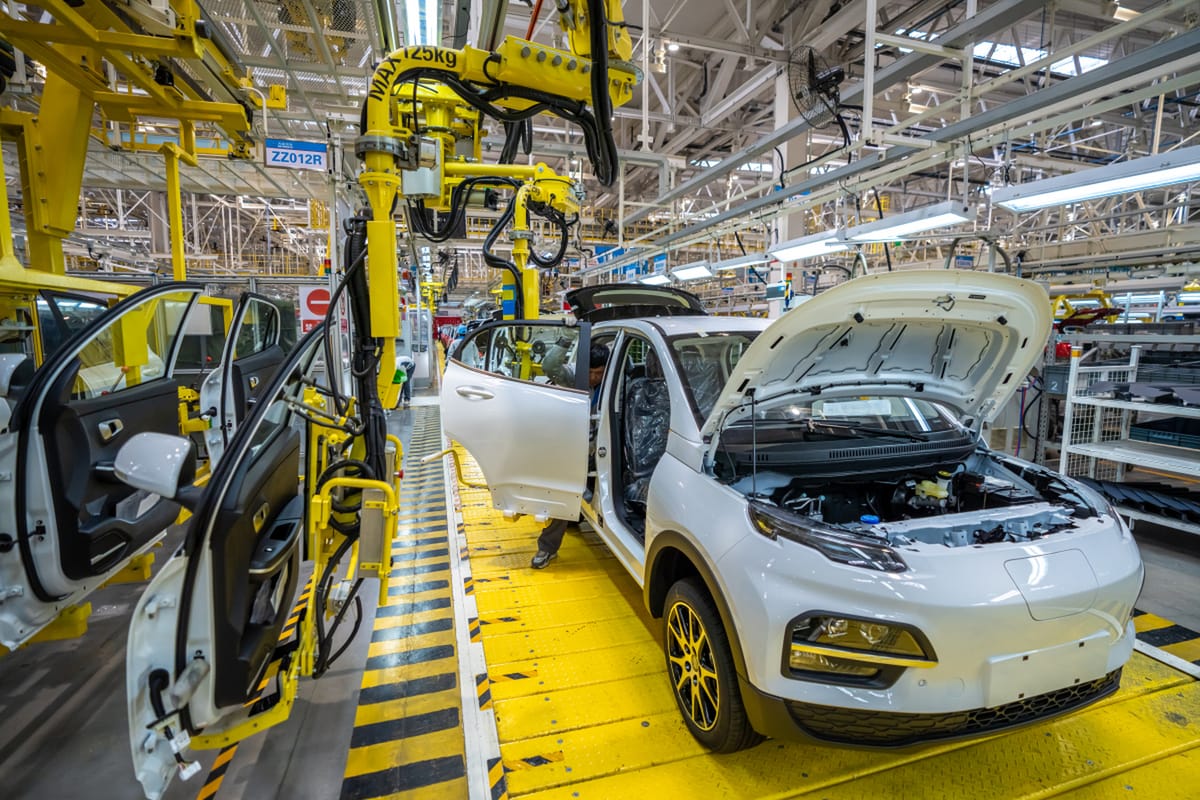
Just as China’s hyper-competitive electric vehicle market appeared to be consolidating around established giants and a few successful startups, a new wave of challengers is emerging. Driven by the artificial intelligence boom, tech firms, e-commerce leaders, and even home appliance makers are entering the fray, shifting the competitive focus from manufacturing cars to defining the future of intelligent mobility.
The latest moves underscore a pivot toward building out the automotive service ecosystem. E-commerce titan JD.com is leveraging its vast logistics network to explore the robotaxi sector, while mapping service provider AutoNavi has been named the first global ecosystem partner for XPeng Inc.'s upcoming robotaxi venture. These developments signal a strategic shift where companies are leveraging core competencies to claim a stake in the lucrative new mobility landscape.
This trend extends to key players in the supply chain who are now moving up the value chain. Contemporary Amperex Technology, the world’s largest battery manufacturer, is expanding its ambition from supplying cells to architecting entire vehicle platforms. The company is developing a "skateboard" chassis for robotaxis and forging partnerships to promote its battery-swapping technology.
This influx of new players, spurred by a supportive policy environment and the promise of AI, is intensifying competition in the world's largest auto market. The battleground is expanding beyond vehicle sales to a comprehensive war over data, services, and the entire technology stack, posing a new challenge to incumbent automakers and promising a further shake-up of the industry.
From Backstage to Center Stage
A key feature of this new wave is the ascent of suppliers and technology service providers from supporting roles to prominent positions in the industry. These companies are not necessarily building cars but are leveraging their expertise to become indispensable partners in the development and operation of intelligent vehicles.
AutoNavi’s partnership with XPeng, aimed at launching a robotaxi trial service by 2026, exemplifies this shift. As automakers increasingly develop autonomous driving systems that rely less on high-definition maps, map providers like AutoNavi are seeking new revenue streams in the burgeoning L4 autonomous driving aena, where their dispatch and routing technologies are critical.
Similarly, JD.com is positioning itself to apply its formidable logistics and operational capabilities to the mobility sector. The company has already registered "Joyrobotaxi" trademarks and this year launched a self-developed L4 autonomous light-duty truck, the JD Logistics VAN, which is already operating in nearly 30 cities. While a company executive has stated JD will not manufacture cars, its strategy is to provide "supporting facilities and services," as seen in its partnership with GAC Aion and CATL to co-develop a swappable-battery vehicle, for which JD provides user insights and sales strategy.
CATL’s ambitions are even more foundational. It is moving beyond batteries to offer its "CATL Integrated Intelligent Chassis" (CIIC), a skateboard platform designed to simplify robotaxi development. Combined with its push for "chocolate" battery-swapping stations in collaboration with brands like Aion and Hongqi, CATL is attempting to transition from a component supplier into a fundamental architect of the EV ecosystem.
Chasing the Consumer Tech Halo
Inspired by the remarkable success of Huawei Technologies Co. and Xiaomi, other consumer-facing companies are attempting to replicate their playbook of leveraging brand loyalty and tech expertise. These new entrants aim to differentiate themselves by integrating their unique product ecosystems into the vehicle.
Japanese electronics giant Sharp Corp., for instance, announced in October it will develop an electric vehicle by fiscal 2027. Built on a platform from Foxconn, the EV concept, codenamed “LDK+,” aims to be a “living room on wheels” by integrating Sharp’s AIoT technology and home appliance know-how. This follows a similar strategy by Sony Group Corp., which partnered with Honda Motor Co. to create the Afeela sedan, a vehicle centered on a high-end in-car entertainment experience set for a 2026 U.S. launch.
However, the success of Huawei and Xiaomi was rooted in delivering highly competitive, mainstream products that offered strong value propositions against incumbent gasoline-powered cars. The niche, high-concept focus of companies like Sharp and Sony may struggle to gain broad market traction and are more likely to cater to a limited audience.
Ambition Meets Reality Check
While ambition runs high, the path to automotive success is fraught with risk, and the bold claims of some newcomers have been met with considerable skepticism. The industry is littered with cautionary tales of companies that underestimated the immense capital and engineering challenges involved.
A case in point is Dreame Technology, a home cleaning appliance company that announced its entry into the auto market in August 2025. The company’s initial concepts drew criticism for their seemingly unrealistic specifications and designs that appeared to directly copy ultra-luxury models from brands like Bugatti and Rolls-Royce, raising questions about its seriousness and respect for automotive safety and engineering.
The fate of WM Motor serves as a stark reminder of the industry's volatility. Once a celebrated EV startup, its collapse left a trail of unresolved customer service issues and unpaid employees, highlighting the profound risks for all stakeholders. As Zhu Jiangming, CEO of Leapmotor, noted, even market leaders face constant and recurring challenges to maintain their position.
Policy Tailwinds and a Crowded Field
This new phase of competition is unfolding against a backdrop of strong government support. China’s "15th Five-Year Plan" has identified new energy and embodied intelligence as key growth drivers, creating a fertile ground for innovation in the intelligent vehicle sector. On a local level, cities like Guangzhou are actively fostering this growth, opening approximately 2,600 kilometers of roads for autonomous vehicle testing and introducing supportive policies for unmanned systems.
This confluence of technological advancement, corporate ambition, and policy support is creating a chaotic yet dynamic period of transformation. While the influx of new players brings fresh ideas and intensifies competition, it also introduces significant risks. The ultimate winners in this expanded ecosystem war are far from certain, but the process is guaranteed to be a massive sorting mechanism that will fundamentally reshape the future of mobility.