
Alibaba Pledges Over 380 Billion Yuan to AI as CEO Outlines ‘Superintelligence’ Vision
Alibaba Group Holding Ltd. is escalating its high-stakes bet on artificial intelligence, pledging to increase capital expenditure and unveiling its most powerful large language model to date as it vies for a top position in the global AI hierarchy.
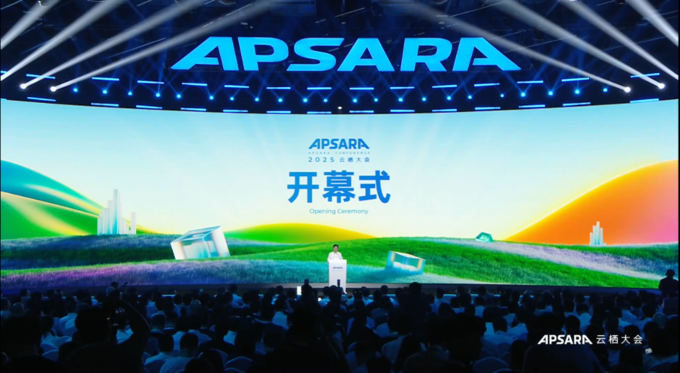
At the company’s 2025 Apsara Conference, Chief Executive Officer Eddie Wu announced that investment in AI infrastructure will expand beyond an existing RMB 380 billion yuan (US$52 billion) plan. The tech giant also launched Qwen3-Max, its latest flagship AI model, signaling an intensified push in the race against global competitors.
The announcements underscore Alibaba’s strategy to position its cloud unit as one of the world's dominant AI platforms. Wu articulated a vision where the market consolidates to just a handful of "super cloud computing platforms." Investors responded positively to the sharpened focus, with the company’s Hong Kong-listed shares rising nearly 5% during the conference.
“Large language models will be the next-generation operating system, and AI Cloud is the next-generation computer,” Wu declared in his keynote address, framing the technology as a fundamental shift in computing that will reshape industries and user interaction.
Unveiling Qwen3-Max
A key highlight of the event was the official launch of Qwen3-Max, which Alibaba Group describes as its largest and most capable model yet. Early benchmarks show the model’s instruct-tuned version ranking third on the LMArena leaderboard, outperforming a preview version of GPT-5-Chat. According to the company, the formally released version features further enhancements in coding and agent capabilities. The model has achieved state-of-the-art results across a comprehensive suite of benchmarks measuring knowledge, reasoning, programming, and multilingual understanding.
Expanding Capital Outlay
Wu confirmed that Alibaba is actively pursuing a massive AI infrastructure build-out and plans to commit even more resources. The current RMB 380 billion program is set to be augmented, with Wu projecting that by 2032, the energy consumption of Alibaba Cloud’s global data centers will be ten times greater than in 2022. This signals an exponential increase in computing power and a long-term commitment to scaling its AI capabilities to meet future demand. In addition to software, the company is showcasing new hardware, including a high-density AI server supporting 144 compute nodes per cabinet and its next-generation HPN8.0 high-performance network architecture.
From AGI to ASI
Looking beyond current capabilities, Wu outlined a long-term vision for the evolution of AI, moving from Artificial General Intelligence (AGI) to Artificial Superintelligence (ASI). He positioned AGI, which he described as a system with human-level cognitive abilities, as merely a "brand new starting point." The ultimate goal, he argued, is ASI—a self-iterating intelligence surpassing human intellect. Wu suggested ASI could create “super scientists and senior engineers” to solve humanity's most complex challenges, such as curing diseases, inventing new materials, and addressing climate change.
The 'Next-Generation Operating System'
Central to Alibaba’s strategy is the concept of the large language model as a new type of operating system. Wu clarified that this does not mean replacing traditional systems like Windows or Linux, but rather that LLMs will become the primary interface for interacting with the digital and physical worlds. In this paradigm, he explained, anyone could create a vast number of applications using natural language, making software development more accessible. This vision supports his forecast that the global cloud market will eventually consolidate around five to six dominant platforms, a race in which Alibaba is determined to be a winner.