
Alibaba, Tencent Forge Rare Alliance in $69M Bet on China’s Neuralink Challenger
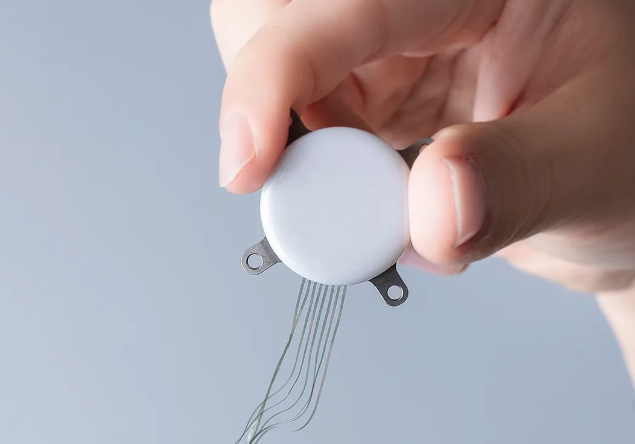
Chinese tech archrivals Alibaba Group Holding Ltd. and Tencent Holdings Ltd. have backed a Shanghai-based brain-computer interface (BCI) startup, injecting RMB 500 million (US$69.4 million) into Jieti Medical as China accelerates its push to challenge Elon Musk’s Neuralink in the race for next-generation human-machine interaction.
The strategic funding round, led by Alibaba and joined by state-backed SDIC Venture Capital, pushes Jieti Medical’s 12-month fundraising total past RMB 1.1 billion (US$152.7 million). Tencent, an early backer, also participated in the round alongside prominent healthcare and tech investors including OrbiMed, Qiming Venture Partners, and Lilly Asia Ventures.
The rare joint investment by China's two internet giants signals a strategic pivot beyond traditional software and cloud computing. It underscores a growing consensus among tech conglomerates that invasive BCI technology could serve as the foundational hardware for the next paradigm of artificial intelligence integration.
Surpassing Neuralink’s Clinical Footprint
Jieti Medical is aggressively scaling its clinical trials, aiming to outpace Neuralink's implant volume by the end of 2026. The startup plans to launch a large-scale, multi-center registration clinical trial by mid-2026, targeting 40 patient enrollments and implant surgeries within the year. Neuralink currently reports approximately 21 clinical trial cases.
In early 2026, Jieti Medical successfully implanted its proprietary 256-channel wireless high-throughput invasive BCI system (WRS02) using its in-house surgical robot. The WRS02 system is currently the only invasive BCI product in China to secure "Green Channel" fast-track approval from the National Medical Products Administration (NMPA) for innovative medical devices. The company previously completed China's first three prospective clinical trials for invasive BCIs in 2025.
Bridging AI and Biological Intelligence
The influx of capital from Alibaba and Tencent provides Jieti Medical with critical infrastructure advantages. Founder Li Xue, a post-90s bioengineering Ph.D., noted that the integration of internet giants brings essential multi-modal AI models and computing power required to process complex neural data.
The partnership aims to build a new ecosystem for intelligent BCI systems, transitioning the technology from medical treatment to a broader human-computer interaction platform. By combining Jieti Medical's hardware with the tech giants' AI capabilities, the companies are positioning themselves to capitalize on the convergence of biological and artificial intelligence.
Expanding Deep Brain Stimulation Pipelines
Beyond cortical interfaces, Jieti Medical is diversifying its product pipeline into neuromodulation. The company has developed a closed-loop, ultra-low damage deep brain stimulation (DBS) system, which has already undergone four clinical research implantations to verify its regulatory functions.
The DBS system, which won first place at the 2025 National Disruptive Technology Innovation Competition, is scheduled to enter formal clinical trials in 2027. This expansion targets a broader patient demographic, including those suffering from Parkinson's disease and epilepsy, potentially unlocking a multi-billion dollar market for neurological therapeutics in China. The participation of state-backed SDIC Venture Capital further aligns Jieti Medical's trajectory with Beijing's "15th Five-Year Plan," which identifies future industries, including advanced neurotechnology, as critical national strategic priorities.