
Alibaba's Chip Gambit: How an 8-Year Investment Play Lifted Market Value by $13 Billion
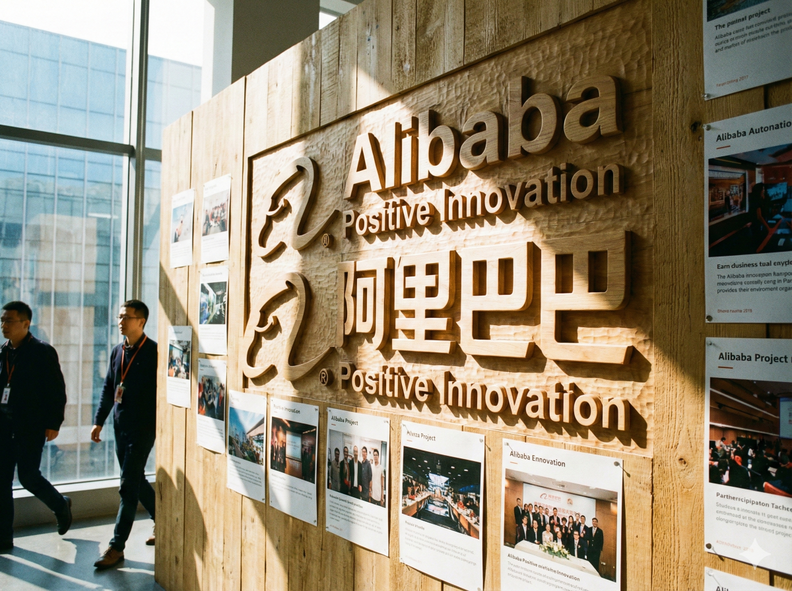
Alibaba semiconductor subsidiary Pingtouge is preparing for an independent public listing, a strategic move that could reshape the Chinese tech giant's artificial intelligence infrastructure play and unlock fresh capital for its chip ambitions. The company's stock surged following the news, adding approximately HK101.2billion(US13 billion) in market capitalization over two trading days through January 23, as investors bet on the value creation potential of separating the chip business.
The anticipated IPO marks a pivotal moment for Alibaba's AI strategy, which rests on four interconnected pillars: Alibaba Cloud as the foundation, Pingtouge providing the silicon backbone, the Qwen large language model, and consumer-facing AI applications. Pingtouge has received what insiders describe as "saturated investment" from Alibaba since its 2018 inception, with management prioritizing product development over immediate profitability.
Unlike domestic competitors focused on single chip categories, Pingtouge has pursued a full-stack approach spanning CPUs, GPUs, storage controllers, and edge computing chips. This comprehensive strategy positions the unit as critical infrastructure for Alibaba's three-year plan to invest 380 billion yuan ($52.3 billion) in AI hardware and pursue Artificial Super Intelligence (ASI) goals.
An independent listing would provide Pingtouge access to public markets for funding while freeing resources for Alibaba to concentrate on large language models and consumer AI products, where competition with ByteDance and other rivals intensifies.
Strategic Architecture of Alibaba's AI Stack
Alibaba's AI ecosystem comprises four distinct layers built over nearly two decades. Alibaba Cloud, launched in 2009, serves as the mothership for all AI operations. Pingtouge, established in 2018 after spinning out from Alibaba's DAMO Academy research division, functions as the tactical foundation by supplying chips that reduce costs, decrease external dependencies, and improve system integration through proprietary silicon.
The Qwen large language model, first released in 2022, leverages computing power from Alibaba Cloud and Pingtouge chips as the foundation for both enterprise and consumer AI products. At the consumer tier, the Qwen app—officially launched in November 2025 but incorporating elements from Quark dating to 2016 and the Tonyi app opened to consumers in 2023—represents Alibaba's primary consumer AI offering, complemented by hardware including Quark AI glasses.
Senior management views Pingtouge's primary objective as effectively supporting Alibaba Cloud services. The relationship between cloud and chip operations extends beyond simple supply arrangements, with internal teams monitoring performance metrics when cloud customers utilize Pingtouge products to assess compatibility and integration quality.
Full-Stack Differentiation in Crowded Market
Pingtouge has distinguished itself through comprehensive capabilities across the semiconductor value chain. Over eight years, the unit has released the Hanguang 800 AI inference chip, Yitian 710 server CPU, general-purpose GPU, Zhenyue 510 storage SSD controller, and Yuzhen IoT edge chips. This contrasts sharply with most domestic chipmakers specializing in single tracks.
Recent listings by Moore Threads and Muxi exemplify the focused GPU approach common among Chinese semiconductor firms. Industry veterans note that Huawei, through HiSilicon and Ascend divisions, represents the domestic benchmark for full-stack chip capabilities, with superior market penetration across smartphones, servers, and automotive applications.
Among major Chinese internet companies, chip strategies diverge significantly. Tencent has released application-specific chips for AI inference, video transcoding, and smart network cards aligned with core businesses. ByteDance pursues similar application-specific development for AI inference, video codecs, and headsets, though speculation persists regarding general-purpose chip exploration. Baidu Kunlun focuses exclusively on AI-specific processors without pursuing traditional general-purpose chips.
Alibaba has implemented a "one cloud, multiple chips" procurement strategy to ensure supply stability and avoid single-vendor dependence. Pingtouge's existence materially reduces Alibaba Cloud's reliance on external semiconductor suppliers. For leading model developers facing persistent computing power shortages, proprietary chips provide effective cost management tools.
Market Implications and Competitive Pressures
An independent Pingtouge listing would generate three primary effects. First, it would partially alleviate Alibaba's capital pressures by establishing a new funding channel through liquid public markets. Second, freed resources could flow toward foundational models and consumer AI products, concentrating firepower in competitive consumer markets. Third, independent status would facilitate Pingtouge's expansion of external customer relationships and market influence.
However, significant challenges persist. Since 2024, intense competition in China's GPU market has triggered fierce talent wars that Pingtouge cannot escape. Formidable competitors including Huawei, Xiaomi, and Baidu wage comprehensive "cloud plus chip" battles against Alibaba's integrated approach.
Simultaneously, Alibaba faces unresolved conflicts on multiple fronts: consumer AI competition with ByteDance and food delivery and retail warfare with Meituan. The Pingtouge IPO represents a strategic maneuver to break relative stagnation, moderately reduce overall pressure, and concentrate resources on breakthrough opportunities. Semiconductor development remains inherently a slow, long-duration endeavor requiring sustained commitment.