
Alibaba’s Wukong AI Agent Review: From Conversation to Execution, A New Era in Enterprise Intelligence
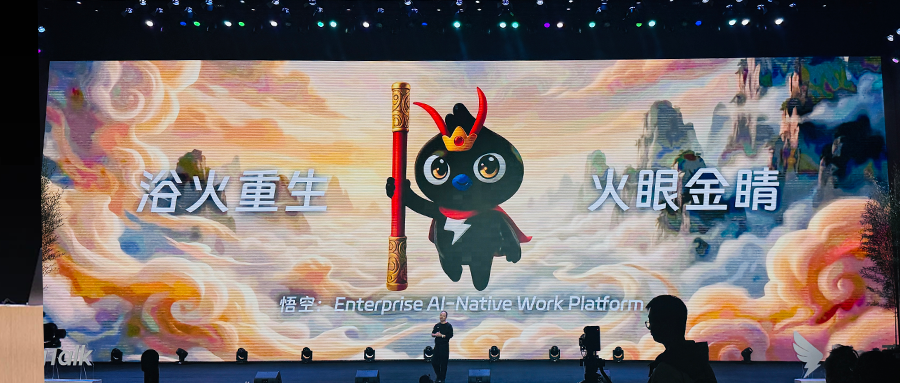
On March 17, Alibaba officially launched the world’s first AI-native enterprise-level Agent platform, Wukong, marking the debut of CEO Wu Yongming’s ATH Business Group. Following the launch of “Qianwen,” Wukong aims to serve Alibaba’s 20 million DingTalk enterprise clients and nearly 800 million DingTalk users, offering an intelligent assistant capable of executing tasks across platforms. We obtained a beta code for Wukong and conducted an in-depth hands-on test. The results indicate that while Wukong excels in task decomposition, multi-platform operations, and creative content generation, it still faces limitations in permissions and fine-grained control.
Core Cognition and Task Decomposition: From Ambiguous Instructions to Actionable Plans
To test Wukong’s basic capabilities, we issued a vague command: “I am opening a new coffee shop in a future tech park next week. Help me plan an online promotion campaign to attract nearby office workers within 3 km.”
Within two minutes, Wukong produced a complete breakdown and execution plan. It generated a full campaign proposal covering opening-week discounts, social referral strategies, and membership lock-in tactics. It also suggested targeted geographic advertising and office-building penetration strategies. Simultaneously, Wukong built a landing page with live booking functionality for both desktop and mobile clients. The entire process consumed approximately 4.6 “compute tokens” , demonstrating a strong ability to understand vague instructions and convert them into actionable outputs.
Wukong also showed agile information retrieval. For instance, when asked to check the availability and cost of the domain example.com, it completed the search and returned accurate registration details within 30 seconds, consuming only 0.7 compute tokens.
Enterprise System Integration: Complex Operations Made Feasible
Next, we tested Wukong in a more complex enterprise scenario, combining third-party platform operations with internal workflow. We instructed: “Find three high-value suppliers for folding camping chairs on 1688, ensure they have the ‘Niutou’ certification, and at least 100 reviews in the last week. Compile the results into a DingTalk spreadsheet with communication records and sample request statuses.”
Using the 1688 skill, Wukong autonomously navigated the platform after a one-time manual login. It corrected two initial search errors, then aggregated product data, supplier information, and communication logs into a clickable DingTalk spreadsheet, delivering accurate results in 5 minutes, consuming 34.7 compute tokens.
In mobile testing, we attempted a scheduled task: “Remind my colleague to drink water and stretch every hour.” Wukong set up a cron job using DingTalk’s workspace capabilities but, due to permission restrictions, the reminders were sent only to ourselves instead of the intended colleague. Similarly, when preparing an email invitation for the 2026 China Generative AI Conference, Wukong generated a fully formatted HTML draft but could not send it externally.
These limitations are partly intentional. Restricting permissions prevents potential security risks, avoids information leaks, and maintains enterprise control. While Wukong is not fully omnipotent, its cross-platform operational capabilities are already impressive.
Creative Content Generation: Accuracy Meets Multi-Modal Output
We further tested Wukong’s creative and multi-modal capabilities. In one task, it generated a 1-minute 36-second animated video themed on the 24 solar terms, pairing each term with an appropriate classical Chinese poem. The video included particle effects like falling petals and a “watercolor dissolve” transition. While the animation lacked dynamic illustrations in some frames, overall output was coherent and visually appealing.
In another test, Wukong created a GDP ranking video of the top ten Chinese cities using the Lightmo style. Data was sourced from official statistics and validated against published rankings. The platform allowed iterative adjustments—for example, adding location markers on a map—though fine-grained control, such as precise map outlines, remained limited.
Additionally, Wukong assisted in e-commerce image optimization, adjusting colors and graphics to appeal to a target audience (e.g., 4-year-old girls). Changes improved visual appeal while maintaining product accuracy, showcasing practical creative utility.
Conclusion: AI Agents Reshape Enterprise Software Interaction
Wukong exemplifies a new generation of AI Agents moving from “conversation” to “execution.” Its coherent task decomposition, multi-platform operations, and multi-modal content generation validate the emerging “AI-as-a-Service” paradigm. Within DingTalk, Wukong has the potential to become an intelligent entry point for millions of enterprises.
However, current permission boundaries and execution transparency highlight areas for improvement. As token-based economics, skill marketplaces, and enterprise permission systems mature, AI Agents are poised to reshape the way software interacts with users. Enterprises that strike the optimal balance between openness and security may gain a decisive edge in the coming AI-driven workflow revolution.
Related Coverage:
Alibaba Launches Wukong, Its First Enterprise-Grade AI Agent Platform
Alibaba Tightens Grip on China’s AI Crown as Qwen3.5 Cracks Global Top Six