
All Eyes on Unitree: Inside the IPO That Will Test the Entire Humanoid Robot Hype
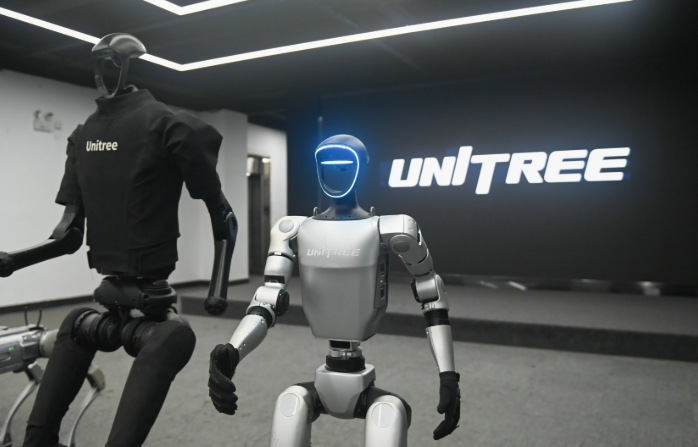
Unitree Robotics, a profitable Chinese pioneer, is heading for an IPO. But its soaring valuation is banking on a humanoid future that may still be science fiction, making its debut a crucial test for an entire industry frothing with hype.
On a popular Chinese second-hand marketplace, a listing for a Unitree G1 humanoid robot tells a story of cooling passion. Once the star of the Chinese New Year Gala and a coveted status symbol fetching rental fees of over 10,000 yuan ($1,380) a day, it can now be had for less than a third of that price. Some owners are quietly trying to offload their units at a discount. The novelty, it seems, is wearing off.
This quiet retreat from a consumer fad stands in stark contrast to the boardroom ambitions at Unitree Technology’s headquarters in Hangzhou. On September 2, the company made two announcements that perfectly capture the paradox at its core. First, it confirmed plans to file for an initial public offering between October and December 2025, a culmination of nine years of work. Second, it issued a cybersecurity notice addressing a "backdoor vulnerability" controversy that had been simmering since April, assuring users that the issue was resolved.
One statement projects confidence and financial maturity; the other hints at the growing pains of a company transitioning from a niche hardware maker to a mass-market intelligent device provider.
For Unitree, a rare profitable player in a cash-burning industry, the path to the public market is more than a capital-raising exercise. It’s a high-stakes stress test of its entire business model and a bellwether for the global embodied intelligence sector. Backed by a roster of China’s biggest tech giants and armed with a recent valuation of 13 billion yuan ($1.8 billion), Unitree must now convince investors of a truth far more complex than a viral video: that its robots can do more than just dance. It must prove they can work, and more importantly, that someone is willing to pay for it.
A Robot That Actually Sells
Before the humanoid hype, there were the dogs. Unitree’s financial stability is built not on bipedal showstoppers, but on a pack of nimble, surprisingly affordable quadruped robots.
While most robotics firms were, and still are, deep in the red, Unitree has been profitable for five consecutive years since 2020. Founder Wang Xingxing revealed at the Summer Davos Forum this year that the company’s revenue surpassed 1 billion yuan ($138 million) in 2024.
The engine of this success is its Go series of robotic dogs. According to the Gaogong Industrial Research Institute (GGII), Unitree sold 23,700 quadrupeds in 2024, capturing a staggering 69.75% of the global market. Its flagship consumer model, the Go2, retails on e-commerce platform JD.com for just 9,997 yuan (about $1,380). This isn’t a pricing war; it’s the result of a "cost revolution" rooted in relentless vertical integration.
Unlike competitors that often act as system integrators, purchasing key components from third parties, Unitree has obsessively pursued in-house development. It designs and manufactures its own motors, gear reducers, controllers, and even LiDAR sensors. This gives the company granular control over its supply chain and costs, a crucial advantage in an era of geopolitical tensions over AI chips and industrial components. With over 180 authorized patents, its technological moat is deep.
"This is not just about making demos," says Peng Deyu, a tech industry commentator. "Unitree has embedded its products into real-world applications. Compared to peers still stuck in the R&D, conceptual, or non-mass-produced prototype stage, this is exceptionally rare."
The company's revenue breakdown, disclosed for the first time in its IPO announcement, tells the story: 65% comes from quadrupeds, 30% from humanoids, and 5% from components. The customer list confirms where the money is coming from. About 80% of its robot dogs are sold into research, education, and consumer markets. Clients include prestigious institutions like Tsinghua University and Westlake University, as well as municipal bodies like the Zhoushan Fire and Rescue Department, which uses them for inspections in hazardous environments. Unitree has successfully navigated the path from technical prowess to product-market fit to profitability—a trifecta that has eluded most of its rivals.
The Specter of Imaginary Demand
Despite its solid foundation, Unitree’s dizzying new valuation isn’t being driven by its dependable quadruped cash cow. It’s fueled by the speculative frenzy around its new line of humanoid robots. And this is where the balance sheet meets the buzz.
The company has become a darling of venture capital. In February 2024, it closed a nearly 1 billion yuan Series B2 round from investors like Shenzhen Capital Group, Meituan, and Sequoia China. Just months later, in June 2025, a Series C round led by a fund from China Mobile, along with Tencent, Alibaba, Ant Group, and Geely Capital, added another 700 million yuan, boosting its valuation from 8 billion to 12 billion yuan—a 50% jump in less than six months. A subsequent investment in July pushed it to 13 billion yuan.
This investor lineup, a who's who of Chinese strategic and financial capital, signifies both a vote of confidence and an immense pressure to deliver. But the reality on the ground is far cooler than the heat in the financing rounds.
The humanoid robots, H1 and G1, which went on sale earlier this year with price tags of 650,000 yuan ($89,700) and 99,000 yuan ($13,700) respectively, have yet to find a sustainable commercial foothold.
"The entire current revenue from Unitree's humanoid robots comes from research, education, and consumer fields," notes Li Rui, executive director at Qishijie Management. "They have not entered the industrial market or standardized B2B scenarios. In other words, the G1 and H1 are still primarily in a 'showcasing muscle, building a brand' phase."
The skepticism is even more pointed in the private equity world. Zhu Xiaohu, managing partner at GSR Ventures, publicly questioned the entire premise earlier this year. "I've asked several CEOs in this field: where are your potential customers? The demand they describe sounds more like scenarios they've imagined for themselves," he said. "Who is really willing to spend over a hundred thousand yuan for a robot to do these jobs?"
For industrial applications, the math is even starker. Wu Yuxing, a corporate strategy expert, points out that the H1's 650,000 yuan price is far above the "break-even point" of around 200,000 yuan that most factories would consider for automation that replaces human labor. With limitations in battery life and the ability to perform complex, non-repetitive tasks, the dream of replacing human workers remains distant. The consumer who buys a G1 robot may find its ability to dance and carry objects amusing, but the novelty's lifespan is far shorter than the product's depreciation cycle.
This is the central challenge facing Unitree as it prepares its prospectus: its products are commercialized, but largely confined to demonstration and education; its technology is advanced, but the consumer market it targets is unformed; and its business is profitable, but the next phase of growth lacks a clear, definitive driver.
A Bellwether for a Generation
Unitree’s IPO is not happening in a vacuum. The year 2025 is shaping up as a watershed moment for China’s humanoid robot industry, with a cohort of companies rushing toward the public markets. UBTech Robotics, a Shenzhen-based rival, already listed in Hong Kong. ZHIYUAN Robotics, another high-profile startup, is planning a backdoor listing on the Shanghai exchange.
Amid this frenzy, Unitree’s path is notably direct. It has eschewed shortcuts like reverse mergers, opting for a traditional IPO. Wang, the founder, has framed it as a "college entrance exam," a chance to present a report card on nine years of effort.
This approach requires a level of transparency that will lay bare the industry's fundamental conundrum. Capital has poured in, with total sector financing rocketing from 1.58 billion yuan in 2020 to 7.23 billion yuan in 2024. But now, the market wants more than just a story. It wants results.
Experts often divide the evolution of humanoid robots into three stages:
- Specialized Robots: Performing tasks too dangerous for humans.
- General-Purpose Robots: Replacing repetitive, high-frequency labor.
- Large Model-Driven Robots: Possessing complex cognitive and interactive abilities.
Unitree’s products are firmly in the early part of stage one, barely touching the edges of stage two. "The AI model level of today's robots is roughly equivalent to where ChatGPT was a year or two before its public release," says Peng Deyu. The gap in cognitive ability, semantic understanding, and autonomous task execution remains vast.
This makes Unitree’s listing a critical "proof-of-concept" for the entire sector. If it succeeds—maintaining a stable stock price and, within a year or two, demonstrating a viable, scalable use case for its humanoids—it could become the turning point. It would prove to investors that the industry can be self-sustaining. It would signal to regulators that embodied AI is a legitimate pillar of hard tech. And it would offer a replicable playbook for other entrepreneurs: vertical integration, aggressive pricing, and a relentless focus on real-world application.
However, if its stock languishes or it fails to transition its humanoids from showrooms to factory floors, it could become a high-profile casualty of premature ambition, reinforcing skepticism that the field is more gimmick than game-changer.
In the glow of the Spring Festival Gala, Unitree’s robots achieved a perfect, nationally televised moment. In the stark black-and-white of a prospectus, the company must perform a far more difficult maneuver: crossing the chasm from captivating narrative to commercial reality.
It is a path all robot makers must eventually walk. Unitree is simply the first to attempt it so directly, under the full glare of the public market.
"A viable model," as one analyst noted, "is worth more than a thousand press conferences."