
Ant Group Enters Humanoid Robot Race With Focus on AI Brains
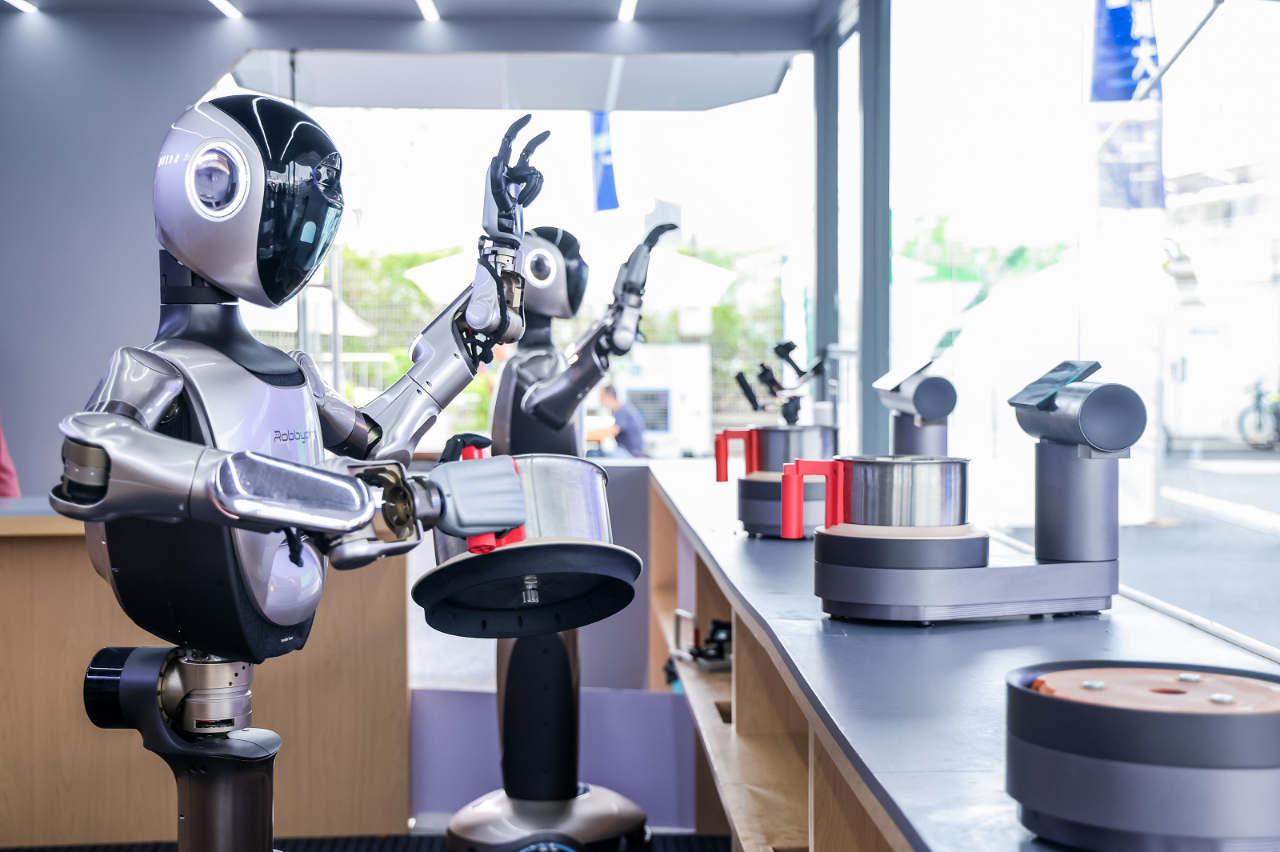
Jack Ma-backed Ant Group has unveiled its first humanoid robot, signaling its entry into the intensifying race to commercialize the frontier technology and a strategic bet that artificial intelligence software, not hardware, will ultimately dominate the next-generation services market.
The fintech giant’s unit, Shanghai Ant Lingbo Technology, also known as Robbyant, showcased its R1 model on Thursday at the 2025 Inclusion Conference on the Bond in Shanghai. The robot demonstrated its ability to act as a tour guide, sort medicine, provide medical consultations, and perform basic kitchen tasks.
Unlike competitors that are focused on hardware development, Ant is concentrating on developing the “brains” for robots. The company sees humanoids as a strategic gateway to popularizing its AI chatbots and large language models, betting that these technologies will fundamentally reshape how humans interact with machines.
The move pits Ant against established US players like Tesla and a growing field of Chinese rivals, including Hangzhou-based Unitree Robotics. The push comes as China, which already has a higher density of industrial robots than the US and Japan, seeks to embed humanoids into increasingly complex roles in daily life and commerce.
A Brain-First Strategy
Ant’s core strategy is to leverage its heavy investment in artificial intelligence. The company views the physical robot as a vessel for its powerful AI models, extending its mission beyond payments and finance to a broader vision of simplifying daily life through digital services.
“If humanoid robots are used in homes, they won’t just help with everyday tasks, they’ll act like super-smart brains, tapping into cloud-based AI to assist with even more things,” said Zhu Xing, chief executive officer of Robbyant. “It makes sense for Ant to be doing this because our goal is to make people’s lives easier.”
This software-centric approach builds on Ant’s development of its own large language model, BaiLing, and its ongoing tests to train AI using more cost-effective, domestically produced semiconductors. The company has been investing significantly in AI to maintain its competitiveness in an era defined by generative technologies from firms like OpenAI and DeepSeek.
Advanced AI Capabilities
Ant claims its BaiLing large model enables the R1 robot to handle end-to-end planning and execution of complex, multi-step tasks. For example, the company said its AI allows the robot to prepare and serve a meal by planning the entire process, and it can theoretically learn new recipes and how to operate different kitchen tools from woks to stoves.
This is made possible by a spatial perception system that helps the robot recognize the relationships between objects, such as a table and the appliances on it.
“The actual physical manufacturing can probably be outsourced relatively easily, but developing a sound and scalable model is key,” said Andy Mok, a senior research fellow at the Beijing-based Center for China and Globalization. “One of the most important prerequisites will be the AI model and not necessarily the manufacturing or engineering.”
Domestic Supply Chain and Phased Rollout
The R1 is constructed using components from Chinese suppliers, including joint modules from Ti5 robot and a chassis from Galaxea AI, a company backed by Ant. The firm is also in discussions with Unitree and Shanghai-listed Orbbec for potential partnerships, according to people familiar with the matter who asked not to be identified as the information is private.
The robot is not yet available for retail sale and Ant has not set a price. Citing safety concerns, the company is testing the R1 in controlled environments, including community care centers, restaurants, museums, and local streets.
Ant’s long-term vision is to develop companion and caregiver robots for daily life, from providing medical assistance to performing household chores. This ambition aligns with its broader expansion into AI-powered healthcare, which includes its investment in Unitree, the launch of an AI app called AQ for analyzing medical reports, and the acquisition earlier this year of the online health-care platform Haodf.com.