
Baidu Takes DuMate Into 55 Million Homes as the AI Agent Race Moves to Hardware
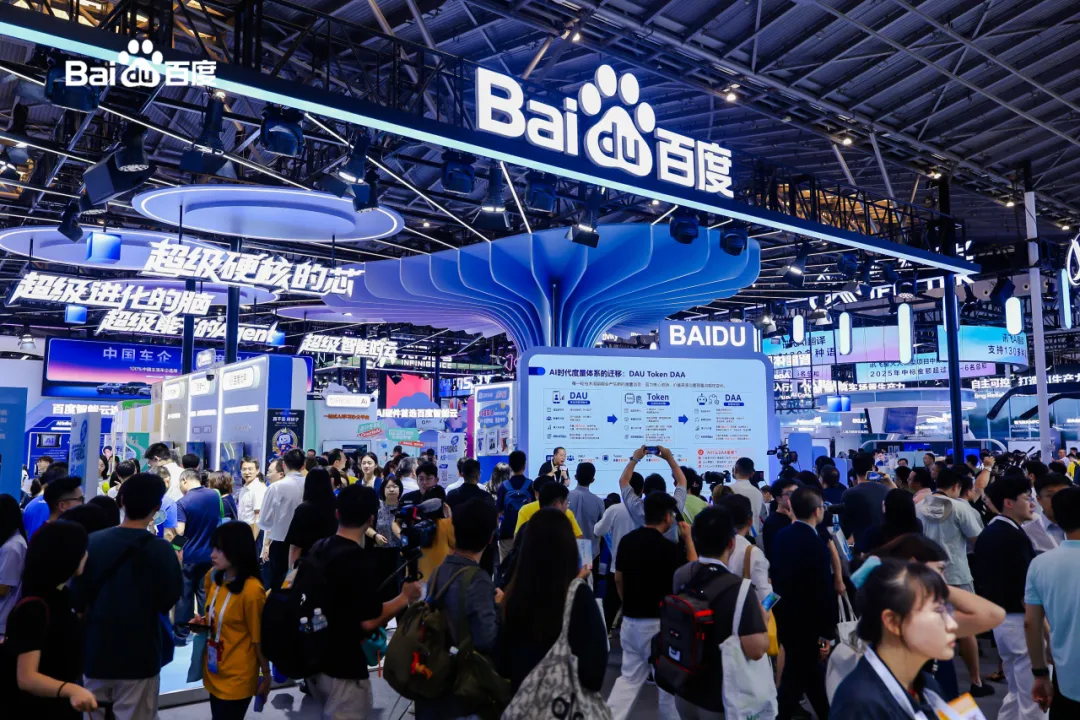
Baidu is embedding its flagship AI agent directly into consumer hardware, using its Xiaodu smart device ecosystem to plant DuMate inside more than 55 million Chinese households — a strategic maneuver that reframes the AI competition from cloud-based user metrics to physical-world penetration.
At the Baidu AIDAY·2026 Xiaodu product launch on September 8, the company unveiled four new hardware devices — the Xiaodu Tiantian Girlfriends Machine Ultra, Xiaodu Smart Screen X9 Ultra, Xiaodu Smart Camera C1500, and Xiaodu Smart Speaker Pro Max — all running on what it calls the "Super Xiaodu" agent architecture, with DuMate serving as the unified task-understanding and execution backbone. The announcement came just one week after Baidu completed its dual-primary listing in Hong Kong on September 1 and gained Stock Connect eligibility on September 7, making the product rollout the company's first major commercial deployment as a fully Hong Kong-listed entity.
Market data underscores the urgency of the hardware pivot. According to the AI Product Index Desktop Rankings for July 2026, DuMate recorded 6.7430 million monthly active users, a month-on-month surge of 1,063.79%, ranking second in the AI office agent category by total MAU and first by growth velocity. Rival Tencent WorkBuddy led on absolute scale with 11.1523 million MAU, up 304.4% month-on-month. The two products have emerged as the dominant duopoly in China's AI office agent segment — but the battleground is shifting.
Duopoly Diverges as Hardware Race Accelerates
The MAU gap between Tencent WorkBuddy and DuMate — roughly 4.4 million users as of July 2026 — tells only part of the story. Baidu's 1,063.79% growth rate, combined with a separately disclosed 60-fold increase in daily query volume, suggests the platform is still in an explosive early-adoption phase rather than a mature plateau.
Critically, the two leaders are now pursuing divergent hardware strategies that could determine long-term defensibility. Tencent has opted to open WorkBuddy's agent capabilities to wearables and personal peripherals — smart glasses, recording cards, microphones, and earphones — targeting individual productivity use cases. Baidu, by contrast, is concentrating firepower on the household as a closed, high-frequency deployment environment.
The logic is commercially sound. Household devices operate within a relatively stable and bounded ecosystem, reducing the integration complexity that has historically fragmented smart home AI. By routing DuMate's agent stack through Xiaodu hardware already present in 55 million homes, Baidu bypasses the costly and uncertain process of building a new user base from zero — a structural advantage that no pure-software competitor can easily replicate.
Homework Management Reveals the Monetization Thesis
The most commercially legible use case Baidu demonstrated is children's homework management — a pain point with high emotional salience and daily recurrence in Chinese middle-class households. Under the integrated workflow, a parent forwards a photo of a homework assignment via a WeChat-connected bot; the task synchronizes to the Xiaodu Smart Screen; the child completes assignments with audio or video check-ins; and completion data returns to the parent's WeChat. Super Xiaodu's computer-vision layer simultaneously monitors posture, distraction levels, and rest intervals, issuing tiered alerts by risk severity.
This is not a feature demonstration. It is a retention mechanism. Daily, habitual use cases — homework supervision, elderly care monitoring, household scheduling — generate the kind of persistent engagement that justifies hardware subsidies and creates switching costs. For Baidu, each active Xiaodu device becomes a durable distribution node for DuMate's agent capabilities, compounding user data and interaction frequency over time.
Full-Stack Architecture Positions Baidu for Platform Leverage
The Xiaodu integration is the consumer-facing capstone of a broader vertical stack that Baidu has been assembling. The company describes its architecture as "chip-cloud-model-agent": Kunlun AI chips at the infrastructure layer; Baidu Intelligent Cloud for compute distribution; the ERNIE large language model as the bridge between cloud and Model-as-a-Service offerings; and application-layer agents including DuMate for general tasks and Apollo Go for physical-world robotaxi deployment.
As the only Hong Kong primary-listed technology company with a fully integrated AI stack of this scope, Baidu occupies a structurally distinct position from peers who rely on third-party chips or cloud infrastructure. That vertical integration becomes a competitive moat specifically when agent deployment requires low-latency coordination across hardware, model inference, and real-time data — precisely the conditions that household AI demands.
Industry Inflection: Benchmarks Yield to Deployment Density
The broader market context amplifies the strategic stakes. Data from Analysys shows that aggregate monthly visits to 17 mainstream desktop-native AI office agents reached 60 million in June 2026, triple the March 2026 figure — a tripling in three months that signals category acceleration but also intensifying crowding in the PC and mobile channel.
Baidu's hardware pivot is, in part, a deliberate exit from that crowded corridor. When every major AI vendor competes on desktop MAU and benchmark scores, differentiation collapses toward marginal gains. By establishing a presence in a high-frequency, device-native environment that competitors cannot enter without their own installed hardware base, Baidu is attempting to define a new competitive dimension before the market fully recognizes it.
The question for investors is whether 55 million Xiaodu households translate into durable DuMate engagement — or whether the integration remains superficial. Baidu has not disclosed activation rates, task completion metrics, or revenue attribution tied to the Xiaodu-DuMate stack. Those figures, when they emerge, will determine whether September 8 marked a genuine strategic inflection or an elaborate product announcement.
Related Coverage:
Baidu’s AI Revenue Tops 50% as Dual-Primary Listing Opens a Repricing Path