
Battle for the Sky: How Insta360 Sparked a High-Stakes War with DJI
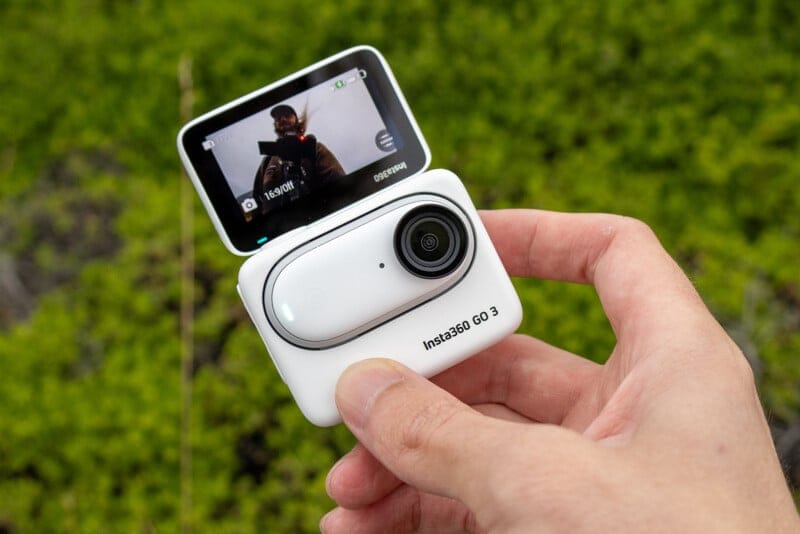
Insta360’s meteoric rise from a niche camera maker to a stock market phenom has culminated in a high-stakes duel with DJI, pitting a software-savvy disruptor against a hardware sovereign in a battle that will define the future of smart imaging.
The late summer of 2025 was supposed to be a victory lap for Liu Jingkang, the 30-something founder of Insta360. His company, formally known as Arashi Vision, had just completed a spectacular public offering, its valuation soaring to nearly $20 billion in under three months. But the celebration was cut short. In late July, DJI, the undisputed king of consumer drones, made an audacious move, launching its first-ever panoramic camera, the Osmo 360, aimed directly at Insta360’s core market.
The response from Liu was swift and defiant. Just two weeks later, Insta360 announced it was entering DJI’s territory, launching a new brand of drones named Antigravity. The move wasn’t just a counter-punch; it was a declaration of war. A company that had perfected capturing the world in 360 degrees was now taking to the skies, challenging an industry titan on its home turf.
This clash of titans—a nimble upstart celebrated for its creative software versus an established giant revered for its engineering prowess—is more than a corporate rivalry. It represents a pivotal moment for China’s technology sector, where two globally competitive firms are battling not for survival, but for supremacy. For investors who have plowed billions into Insta360’s gravity-defying stock, the question is no longer whether the company can dominate its niche, but whether it can conquer an entirely new dimension.
The stakes were laid bare on Liu’s personal Weibo account the day after DJI’s announcement. In a move that blended respect with competitive fire, he congratulated his new rival, then promptly announced a $70 price cut on his own flagship product and offered both cameras—his and DJI’s—as part of a joint sweepstakes. The message was clear: game on.
A Market Stunned
Before it became a challenger to the drone throne, Insta360 was one of the A-share market’s most astonishing success stories of 2025. When the Shenzhen-based company listed on Shanghai's STAR Market on June 11, its shares skyrocketed 274% on the first day, pushing its market capitalization past $9.6 billion.The frenzy didn’t stop there. In less than three months, the stock had septupled from its issue price, valuing the company at over 140 billion yuan (roughly $19.3 billion) by early September.
The market euphoria was backed by blistering growth. The company’s first financial report as a public entity revealed a 51.17% surge in revenue for the first half of 2025, reaching 3.67 billion yuan (about $506 million). This continued a powerful trend seen from 2022 to 2024, when revenues grew at a compound annual rate of 65.25% to 5.57 billion yuan, with net profits more than doubling over the same period.
For a decade, Insta360 had methodically built an empire in the niche but growing world of panoramic cameras. The company now holds a commanding 67.2% of the global consumer-grade panoramic camera market, a position it has maintained for six consecutive years. But its entry into the drone market signals a strategic pivot from category leader to diversified hardware giant, a far more perilous and ambitious undertaking.
The Hacker’s Genesis
Insta360’s culture of aggressive innovation is a direct reflection of its founder. As a software engineering student at Nanjing University in 2010, Liu Jingkang first gained notoriety in China’s tech circles for a stunning feat of reverse engineering. Using just a 10-second audio clip of touch-tones from a journalist’s phone call with internet mogul Zhou Hongyi, Liu successfully deciphered Zhou's private phone number.
That blend of technical prowess and audacious thinking became the blueprint for his company. After graduating, Liu and his college partners founded Insta360 in 2015. Initially based in Nanjing, they quickly realized that building consumer electronics required proximity to the world’s most sophisticated supply chain. “We had to make it, or the company would die,” Liu recalled of the decision to relocate to Shenzhen.
The early days were a blur of relentless work. The team reportedly slept just three hours a night, with Liu himself on the factory floor, tightening screws and calibrating equipment. This hands-on obsession with product perfection laid the groundwork for their breakthrough. In 2016, they launched the Nano, a revolutionary 70-gram device that plugged directly into an iPhone, allowing users to capture 360-degree video and share it instantly on social media. It democratized a technology once confined to expensive, professional rigs.
From there, the company expanded its product matrix to include action cameras, wearable cameras, and professional-grade VR systems, establishing a rhythm of rapid iteration that consistently outpaced competitors.
The Anatomy of Success
Three pillars support Insta360’s colossal valuation: relentless technological iteration, a powerful user-centric ecosystem, and a truly global footprint.
Rapid-Fire Innovation
The company’s product development cycle is famously swift. Over the past decade, it has rolled out over 30 products across 12 distinct lines. Its 2025 flagship, the Insta360 X5, exemplifies this edge. It features a 1/1.28-inch sensor—a 144% increase in area from its predecessor—and a sophisticated architecture combining a 5nm AI chip with two dedicated imaging processors. This capability is fueled by massive investment in research and development. In the first half of 2025 alone, R&D spending doubled from the previous year to 562 million yuan, accounting for over 15% of total revenue.
An Army of Co-Creators
Perhaps Insta360’s most unique advantage is its philosophy of “user co-creation.” The company claims that 80% of its firmware updates originate from user suggestions. This tight feedback loop has led to signature innovations like the “invisible selfie stick” and modular, swappable lenses—features born directly from customer pain points. By leveraging AI-powered editing software that dramatically simplifies the creative process, Insta30 successfully expanded its appeal from a small base of tech enthusiasts to a mass market of vloggers, athletes, and casual creators.
Born Global
From its inception, Insta360 looked beyond China. In the first half of 2025, overseas sales accounted for 72.38% of its revenue. Its market presence is remarkably balanced, with the Americas contributing 23.6%, Europe 21.1%, and Japan and South Korea a combined 7.7%. This global diversification has not only insulated it from single-market volatility but also provided a vast addressable market, fueled by the explosion of short-video platforms and a global rise in outdoor recreational activities, whose participants are expected to grow from 158 million in 2022 to 197 million by 2025.
David vs. Goliath, Remixed
The confrontation with DJI is a clash of fundamentally different philosophies. DJI, founded by the famously low-profile and technically obsessed Wang Tao, built its brand on “professional reliability.” It excels at packaging complex aerospace-grade technology into accessible consumer products. Its Osmo 360 camera is a testament to this, migrating DJI’s vaunted imaging and stabilization tech into a panoramic format. The device boasts a 1-inch CMOS sensor, 8K/50fps recording, and a professional D-LOG M color profile designed for “cinema-grade” editing—a direct challenge to Insta360’s high-end X-series.
Insta360 has countered with a strategy of "creative convenience." Its Antigravity drone is not designed to beat DJI on specs like flight time or obstacle avoidance. Instead, it creates an entirely new category: a panoramic flying camera. It operates on a “shoot first, frame later” logic, capturing a full 360-degree sphere that allows the user to reframe the shot in post-production. Critically, the drone weighs less than 249 grams, a clever design choice that exempts it from registration requirements in many jurisdictions, lowering the barrier to entry for novice pilots.
The cultural differences are just as stark. Where DJI is secretive and engineering-focused, Insta360 is brash and media-savvy, once launching a viral corporate wellness program that paid employees 500 yuan for every kilogram of weight lost and fined them 800 yuan for every kilogram regained. This contrast extends to their market positioning: DJI’s drones target professional creators and outdoor purists who demand reliability, while Insta360’s Antigravity A1 targets entry-level users and creative bloggers who prioritize fun and ease of use.
The Perilous Flight Ahead
Despite its momentum, Insta360’s future growth is fraught with challenges. The drone gambit is both its greatest opportunity and its most significant risk. The consumer drone market, projected by IMARC to exceed $13 billion by 2033, offers a much higher ceiling than cameras alone. But Insta360 faces a formidable "flight technology gap."
DJI has spent over a decade perfecting the core technologies that make a drone reliable: flight control algorithms that ensure stability, robust image transmission systems that deliver clear video feeds over long distances, and sophisticated multi-directional obstacle avoidance. These represent a deep technological moat that Insta360, a newcomer to aviation, cannot easily cross.
Meanwhile, the company must continue to fund its high-intensity R&D in both new and existing categories, with development costs growing from 256 million yuan in 2022 to 777 million yuan in 2024. This burn rate is essential for staying ahead but puts constant pressure on margins.
Competition is also intensifying elsewhere. The smart imaging space is attracting a new wave of startups. One notable entrant is Looki, founded by a former Meituan technology executive. Its first product, a pendant-style multimodal AI camera, targets a similar demographic of outdoor enthusiasts and parents as Insta360's wearable GO series, suggesting the battle for the creator market is becoming a multi-front war.
A New Blueprint for Chinese Tech
The rise of Insta360 is a microcosm of a broader shift in China’s industrial landscape. Its journey—from a niche market entry to global scale backed by relentless innovation and finally validated by capital markets—is becoming a well-trodden path for a new generation of Chinese technology firms. They are proving that the label "Made in China" is being decisively replaced by "Created in China."
The smart imaging industry itself is still far from mature. The attach rate of handheld smart imaging devices to smartphones is a mere 5%, compared to 37% for smart audio and 43% for wearables. This gap signals immense untapped potential.
Ultimately, the competition between Insta360 and DJI may serve to strengthen China’s overall dominance in the sector. DJI's engineering excellence may push Insta360 to improve its hardware reliability, while Insta360’s creative software templates could push the entire industry toward more user-friendly products. The consumer, caught in the middle of this creative crossfire, stands to be the biggest winner. The story of Insta360 is far from over, but its audacious ambition has already provided a new blueprint for innovation.
Whether its new Antigravity drone will truly defy the market’s gravity or burn up on re-entry remains to be seen, but for now, the world is watching it fly.