
BYD's Liu Xueliang on Cracking Japan's Kei-Car Market with Light EVs
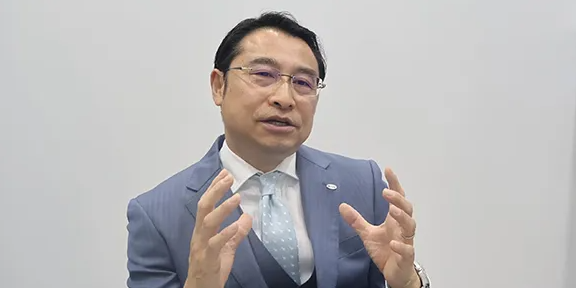
BYD Japan has unveiled its strategy to transform Japan's automotive landscape with the introduction of a light electric vehicle (EV) specifically designed for the Japanese market.
In an interview published by Nikkei Chinese on November 23, 2025, Liu Xueliang, President of BYD Japan and Head of BYD Asia-Pacific Sales, outlined the company's ambitious plans to launch the "RACCO" light EV by summer 2026, marking the Chinese automaker's first entry into Japan's unique kei-car segment—a category of small vehicles with engine displacement under 660cc that has traditionally been dominated by domestic manufacturers.
The announcement comes as BYD intensifies its global expansion amid increasingly fierce competition in the Chinese market.
Speaking at the "Japan Mobility Show 2025," where the vehicle made its public debut, Liu emphasized the company's commitment to serving Japanese consumers across all regions, particularly in rural areas where gas stations are declining and light vehicles serve as essential daily transportation.
This strategic move positions BYD as one of the few foreign automakers to venture into this distinctly Japanese vehicle category, competing directly with established players such as Nissan Motor and Honda Motor Co.
Full Interview Translation:
Liu Xueliang, President of BYD Japan: Competition in China is very intense, and consolidation has already begun. BYD is currently making significant efforts to advance our business in Japan and Europe. Previously, light vehicles in Japan mostly satisfied "second car demand." We hope to eliminate users' concerns about driving range and make it a choice for consumers' first car as well.
China's BYD unveiled a pure electric vehicle (EV) in the light vehicle category (a vehicle specification unique to Japan, referring to small vehicles that meet conditions such as engine displacement of 660cc or less) for the first time at "Japan Mobility Show 2025." In Japan, there is high demand for light EVs as "second cars," and companies such as Nissan Motor and Honda are promoting these types of vehicles. In an interview, Liu Xueliang, President of BYD Japan, stated with full enthusiasm: "We hope to eliminate users' concerns about driving range and make it a choice for consumers' first car as well." (Note: This article is translated from Japanese)
Reporter: BYD will launch the light EV "RACCO (Sea Otter)" in summer 2026.
Liu Xueliang: When we visited regional cities in Japan, we found that light vehicles are the actual transportation tools for daily life, but gas stations continue to decrease. We have also heard voices asking "when will BYD launch a light EV?" We hope that all consumers across Japan will use our products.
The EV penetration rate in Japan is at a relatively low level globally. Precisely because of this, it is crucial to provide consumers with new options. Apart from Japanese manufacturers, (almost) no companies have launched light vehicles. In this situation, BYD hopes to fulfill its responsibility to Japanese society by introducing light vehicles.
Reporter: Please explain the reason for naming this vehicle "RACCO."
Liu Xueliang: We wanted a cute name. Japan has only a few sea otters, and if this continues, sea otters will become extinct. This responsibility lies with humans. We hope this vehicle can become an opportunity for children to think about environmental and global issues.
Reporter: I understand the vehicle offers two models with different driving ranges.
Liu Xueliang: Previously, light vehicles mostly satisfied "second car demand." We hope that by offering two specifications, we can eliminate users' concerns about driving range, and we also hope to provide consumers with the option of making it their "first car." We hope people will purchase BYD's light vehicle as their first car in life.
As a light passenger EV, we have adopted sliding doors for the first time, with a design that is very friendly to women and elderly people who frequently drive light vehicles. Our goal is to achieve an affordable price, but at the same time, we hope users can feel the cost-performance value.
Reporter: Why were you able to develop this vehicle in the short period of approximately one year?
Liu Xueliang: BYD is a company that pursues speed and has long been accustomed to completing design and development in a short time. We fully leveraged the advantages of vertical integration. Through in-house production, we have created economies of scale, thereby minimizing costs.
Reporter: Competition in the Chinese market is becoming increasingly intense.
Liu Xueliang: Competition in China is indeed very intense, and consolidation has already begun. BYD has been an international company since its inception, and we are currently making significant efforts to advance our business in Japan and Europe. We will maintain our convictions and continue to work hard overseas.