
BYD Targets Premium SUV Segment With “Da Tang” Flagship as Product Push Accelerates in 2026
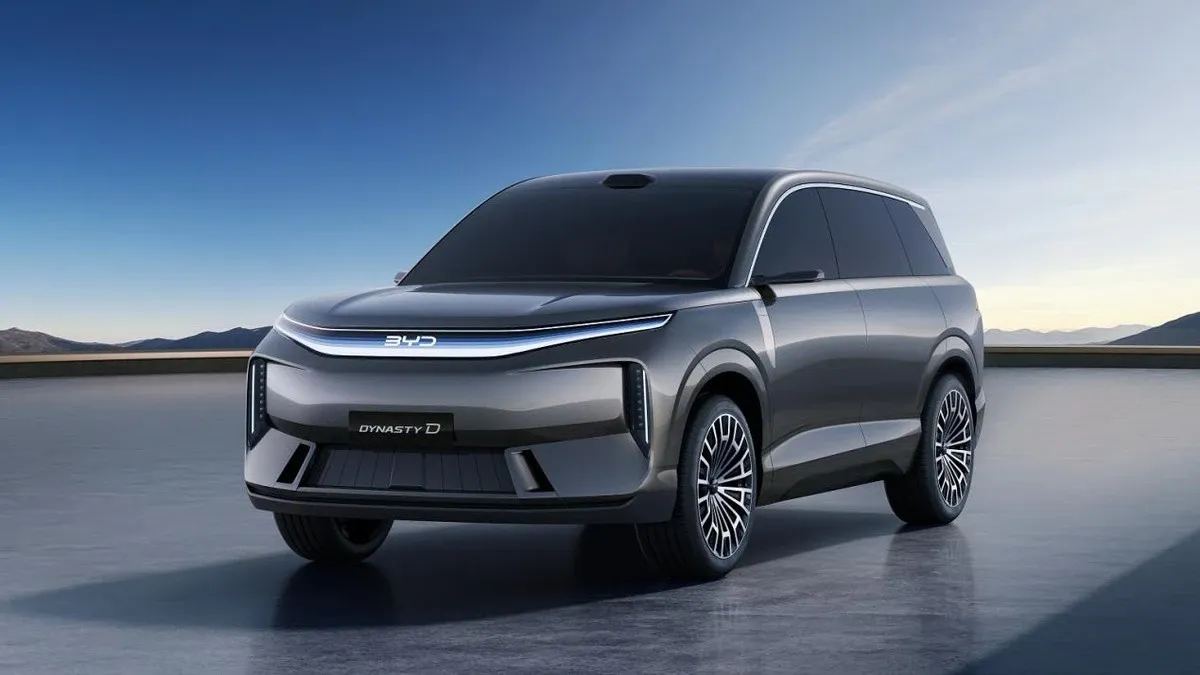
BYD is preparing to broaden its reach into China’s higher-end SUV market as images of an uncamouflaged full-size model from its Dynasty series circulated online, pointing to an imminent launch of a vehicle likely to be branded “Da Tang.”
The model is expected to become one of BYD’s most important new releases in 2026, a year the automaker has signaled will see an intensified product rollout, including both refreshed existing models and multiple all-new vehicles. Positioned above the current Tang lineup, Da Tang is designed to fill a gap in BYD’s core brand portfolio in the RMB 300,000 to RMB 500,000 segment, bridging its mainstream offerings with premium sub-brands such as Denza Automobile and the ultra-luxury Yangwang line.
Market positioning suggests the vehicle will compete directly with large premium SUVs such as Li Auto’s L9, the AITO M9, and similarly sized offerings from German luxury brands. The move underscores BYD’s intention to push decisively into the RMB 400,000-plus price bracket, a segment that remains strategically important but highly competitive.
Design cues closely mirror the Dynasty-D concept car previously unveiled by BYD. The production model adopts a closed front fascia and vertically arranged lighting elements, emphasizing what the company has described as a distinctly Chinese luxury aesthetic. Based on earlier disclosures, the vehicle is expected to exceed 5.2 meters in length, with a width of around two meters and a wheelbase of roughly 3,100 millimeters. A two-tone exterior, clean body lines, and a subtly floating D-pillar are aimed at reinforcing its flagship status.
At the rear, the taillight design incorporates Chinese knot motifs, while badging includes the Da Tang name and a “4.9S” performance emblem, signaling a sub-five-second 0–100 km/h acceleration capability. By comparison, the AITO M9 electric variant claims acceleration as quick as 4.5 seconds, while the Li L9 is rated at 5.18 seconds.
Interior details have yet to be disclosed. However, drawing on the Dynasty-D concept, the cabin is expected to feature a floating central touchscreen paired with an embedded instrument cluster, a flat-bottom steering wheel, and an electronic column-mounted gear selector. A three-row, six-seat configuration is likely, aligning with prevailing preferences in the full-size SUV segment.
Powertrain options are expected to include both plug-in hybrid and fully electric variants. The plug-in hybrid version is projected to deliver 0–100 km/h acceleration of around five seconds, fuel consumption of 6–7 liters per 100 kilometers when operating with a depleted battery, and a combined driving range exceeding 1,300 kilometers. The all-electric version is expected to adopt an 800-volt or higher electrical architecture, enabling ultra-fast, potentially megawatt-level charging. Across the range, BYD’s DiSus intelligent body control system is expected to be standard, with higher trims adding air suspension and rear-wheel steering.
From a competitive standpoint, BYD is positioning Da Tang around its strengths in powertrain integration, energy efficiency, and cost control. Compared with the Li L9, the company is highlighting stronger performance and lower energy consumption, while against the AITO M9 it is emphasizing design differentiation and pricing flexibility. Relative to established European luxury brands, BYD is betting that advanced electrification and intelligent features can offset weaker brand recognition at higher price points.
Pricing will be a critical variable. Industry expectations suggest that a starting price in the RMB 360,000 to RMB 420,000 range (US$50,000 to US$58,000) could give the model a clear value proposition. A price above RMB 450,000, however, risks internal competition with the Denza N9 and could dilute its appeal.
For investors, Da Tang represents a test of BYD’s ability to translate its scale and technology advantages into sustained gains in the premium segment. If pricing and execution align, the model could emerge as a key growth driver in BYD’s 2026 product cycle and strengthen its position across a broader range of vehicle price tiers.