
BYD's Sky Eye 5.0 Launch Poised to Disrupt China's Urban NOA Market in 2026
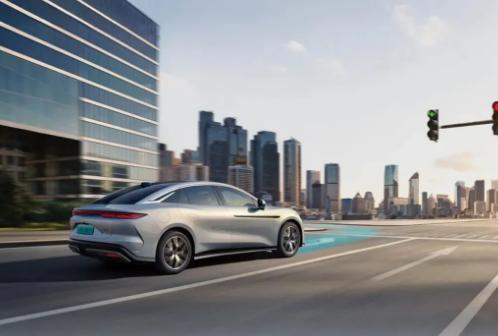
BYD on Jan. 28 officially launched its Sky Eye 5.0 intelligent driving assistance system. The updated platform features a new large model architecture that utilizes reinforcement learning and closed-loop training technologies to enable AI system self-evolution.
According to company specifications, Sky Eye 5.0 delivers significant performance upgrades, setting new industry benchmarks for safety. The system is designed to handle complex driving scenarios—such as passing on narrow roads, navigating around temporary obstacles, managing construction zones, and interacting with low-speed two-wheeled vehicles—with efficiency comparable to human drivers.
The system’s hardware foundation includes LiDAR, five millimeter-wave radars, 12 cameras, and the NVIDIA Orin-X chip, which provides 254 TOPS of computing power. By the end of 2025, BYD’s intelligent driving fleet exceeded 2.56 million vehicles, generating 160 million kilometers of real-world road data daily to support system iteration.
The launch follows a period of aggressive expansion for BYD in the smart driving sector. Data from the Gaogong Intelligent Automobile Research Institute shows that from January to December 2025, BYD—including its sub-brands Denza, Fang Cheng Bao, and Yangwang—delivered 2.14 million vehicles equipped with standard Navigate on Autopilot (NOA) features. This represented a year-on-year increase of more than 40 times, capturing approximately 37% of the total market share for standard NOA deliveries. BYD effectively became the primary driver of the highway NOA market in 2025.
However, BYD faces challenges in the more advanced urban NOA segment, where competitors such as Xiaomi , NIO , Li Auto, and XPeng remain dominant. BYD’s penetration rate for models equipped with urban NOA stands at approximately 6.4%, a figure significantly lower than its peers.
Currently, BYD’s urban NOA capabilities are primarily deployed in the Denza brand and models such as the Tang L and Han L. Public information indicates that Sky Eye 5.0 will likely be integrated into the upcoming Tang and Han 9 series. These models serve as BYD’s core flagships for targeting the premium market segment priced around RMB 400,000 yuan (US$55,400).
Market observers are watching closely to see if the Sky Eye 5.0 launch will align BYD’s high-end intelligent driving strategy with its sales volume.
Looking ahead to 2026, BYD intends to push advanced intelligent driving features into lower price brackets. Recent reports indicate that the Seal 06 GT and Seal 07 EV will be upgraded in 2026 to feature the Sky Eye B-plan, which includes urban NOA functionality. Regulatory filings suggest these new models will be equipped with LiDAR and positioned in the RMB 150,000 yuan (US$20,800) price range.
Competition in 2026 is expected to intensify as major automakers race to democratize smart driving tech. Huawei Technologies is expected to bring its Qiankun ADS urban NCA function to vehicles in the RMB 150,000 yuan bracket this year. Similarly, Chery Automobile recently announced plans to accelerate the rollout of advanced driving features, with its Falcon 500 model adding urban navigation assistance. The Exeed (Starway) ET5, launched in November last year, has already begun aggressively targeting the entry-level urban NOA market.