
Cainiao and Jiushi Merge Autonomous Delivery Operations to Create Industry's Largest RoboVan Fleet
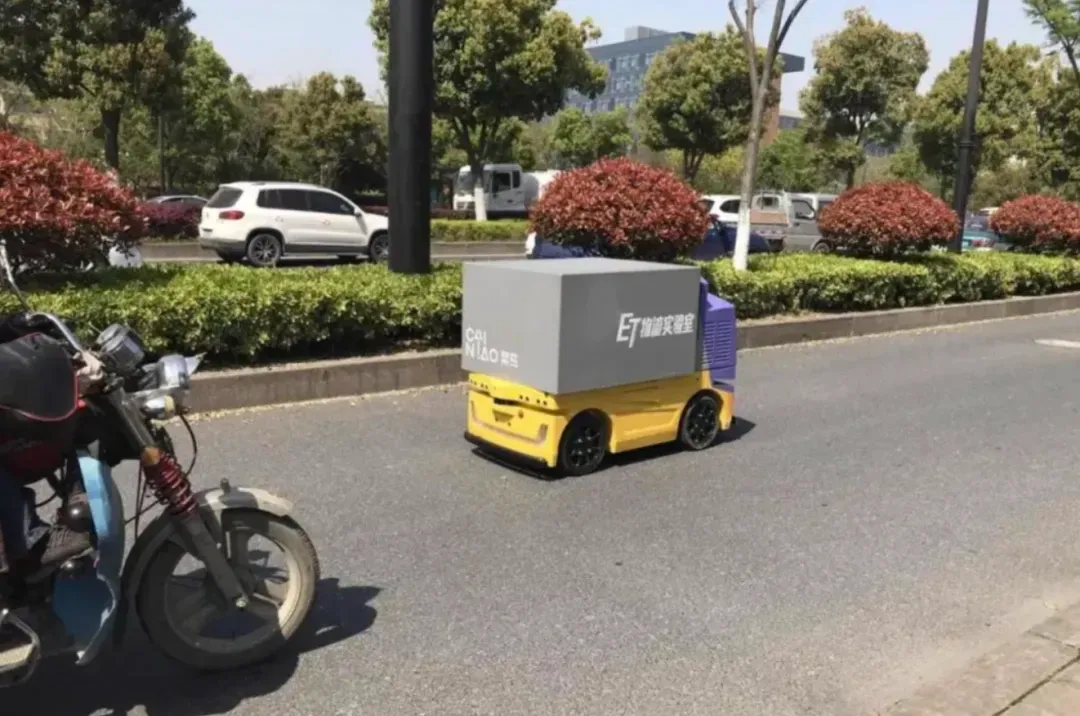
Alibaba-backed logistics giant Cainiao Network has agreed to a strategic integration of its autonomous vehicle business with Jiushi Intelligence, creating what the companies describe as a "super carrier" in the unmanned delivery sector with over 20,000 vehicles in operation.
Under the agreement announced January 29, Cainiao will become a shareholder in Jiushi through a combination of business asset injection and cash investment, while transferring its autonomous vehicle management and technical teams to the startup. The integration marks a significant shift for Cainiao, which will no longer directly manufacture or sell autonomous vehicles but instead leverage its global logistics network to deploy the technology across specific scenarios.
Jiushi Intelligence will gain licensing rights to the "Cainiao Unmanned Vehicle" brand, establishing a dual-brand operating model. The combined entity will operate the world's largest RoboVan fleet, spanning urban and rural areas in China and expanding into the Middle East, Singapore, Malaysia, Europe, and Japan-South Korea markets. The move represents the autonomous delivery industry's largest consolidation to date and signals a broader trend toward ecosystem-based partnerships as the sector pursues commercial viability.
Strategic Repositioning for Both Partners
The integration reflects divergent strategic priorities. For Cainiao, the move represents what industry observers call an "institutional liberation" from the constraints of operating innovative technology within a large corporate structure. Founded in 2015, Cainiao's autonomous vehicle program has undergone multiple organizational shifts—initially housed in the ET Laboratory, later transferred to Alibaba's DAMO Academy, and returning to Cainiao in 2023.
"Cainiao will leverage its global logistics network and ecosystem advantages to apply autonomous vehicles in logistics scenarios," said Wan Lin, CEO of Cainiao Group. The company will focus on deploying the technology through the new joint entity rather than managing the capital-intensive development and manufacturing processes internally.
For Jiushi, established in August 2021, the partnership provides crucial brand credibility and access to Alibaba's ecosystem. The company will gain authorization to use the "Cainiao Unmanned Vehicle" brand while maintaining its status as an Alibaba-invested enterprise. "This integration marks a key milestone as the autonomous driving industry moves from isolated breakthroughs to systematic integration," said Kong Qi, CEO of Jiushi Intelligence.
Differentiated Brand Positioning
The dual-brand strategy will create distinct market positioning. Jiushi Intelligence will focus on full-stack self-developed technology covering all-scenario transportation, serving small and medium-sized business clients while expanding into key accounts. The brand has established partnerships with China Post, Mengniu, and New Hope Group.
The "Cainiao Unmanned Vehicle" brand will concentrate on specific scenarios and major corporate clients, providing deep intelligent supply chain services based on RoboVan technology. According to Li Shangqing, general manager of Cainiao's autonomous vehicle business center, the brand will leverage Cainiao's native large customer service system and Alibaba ecosystem resources.
The combined fleet exceeds 20,000 vehicles, operating across more than 300 Chinese cities and multiple international markets. Both companies will share technical infrastructure and supply chain systems, pooling nearly 100 million kilometers of public road data and advanced algorithm models. Cainiao's team brings expertise in vision-language models and world models, complementing Jiushi's operational scale.
Rapid Scale-Up Through Aggressive Pricing
Jiushi's growth trajectory has been marked by aggressive product iteration and competitive pricing. The company launched its first product, the Z1 model with 1.7 cubic meters of cargo space, in February 2022 for Meituan's community group-buying warehouse deliveries. Between May 2022 and May 2023, Jiushi released five successive models—Z2, Z3, Z4, and Z5.
The breakthrough came in June 2024 when Jiushi unveiled four low-cost autonomous vehicles priced between RMB 39,800 (5,500)andRMB89,800(5,500)andRMB89,800(12,400), offering 10% down payments, zero-interest loans, and purchase subsidies. The launch generated 5,290 orders on the first day—exceeding the company's 2,100-unit annual production capacity and Kong's initial estimate of 300 to 500 orders.
In May 2025, Jiushi released the E6 model at RMB 19,800 (US$2,700) with a monthly Full Self-Driving subscription service priced at RMB 1,800 (US$250). This hardware-plus-subscription model lowered entry barriers for customers while establishing recurring revenue streams. By year-end 2025, Jiushi's fleet reached 16,000 vehicles, cementing its position as an industry leader.
Market Consolidation Accelerates
The integration reflects broader consolidation in China's autonomous delivery sector as companies seek scale and ecosystem partnerships. In September 2025, Neolix initiated a 10,000-vehicle deployment race. Didi has invested in Neolix to launch unmanned delivery services in Qingdao. SF Express has invested three times in Bainiaohe within a year.
Industry costs have declined dramatically, enabling commercial viability. According to Jin Bing, former inspector at the National Post Bureau's Policy and Regulation Department, the cost of 3-to-10 cubic meter autonomous postal vehicles reached parity with conventional new energy vehicles in 2024, creating conditions for mass production. Multiple third-party operators have entered the market, forming closed-loop business models.
The sector encompasses three main participant categories: specialized autonomous driving companies including Jiushi, Neolix, and Bainiaohe; logistics platforms with ecosystem advantages including Cainiao, JD.com, and Meituan; and automotive incumbents such as Desay SV and MINIEYE entering the logistics vehicle segment in 2025.
Global Expansion Plans
The combined entity plans to accelerate international expansion leveraging Cainiao's global logistics network and Jiushi's initial overseas validation. Jiushi has established partnerships with postal services in Singapore, the United Arab Emirates, and Malaysia, with expansion underway in Europe, Japan, and South Korea.
"Through this integration, we can organically connect these advantages and capabilities, improving overall deployment speed and efficiency in global delivery operations and compliance," Li said. The partnership aims to accelerate RoboVan adoption both domestically and internationally, addressing labor shortages in logistics.
According to a Q1 2025 survey by the China Federation of Logistics and Purchasing, China's courier workforce totaled 3.62 million, down 310,000 or 7.9% from year-end 2024. Frontline couriers accounted for 83.6% of the decline, reflecting significant labor attrition in the sector.
With China's micro-van fleet estimated at 15 to 20 million vehicles, autonomous delivery vehicle market penetration remains minimal, suggesting substantial growth potential. The Cainiao-Jiushi integration positions the combined entity to capture this opportunity through complementary strengths in technology development, manufacturing scale, and logistics network access.