
Cambricon Loses $10 Billion in Half-Day Trading on Unverified Revenue Guidance Rumor
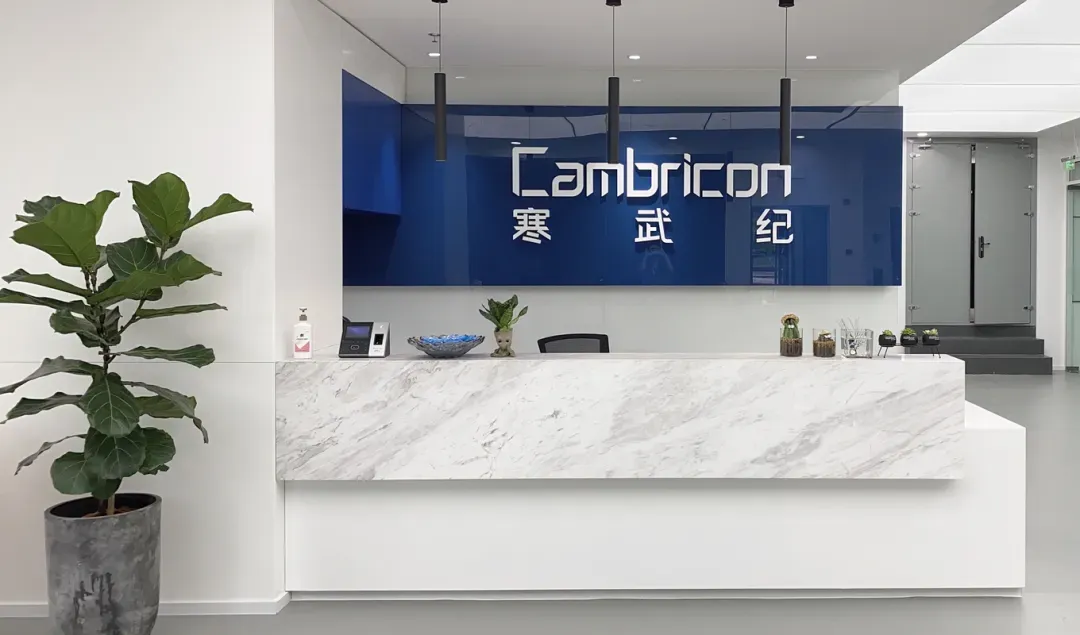
China's leading AI chip maker Cambricon saw its market capitalization plunge by over 70 billion yuan ($9.7 billion) in half a trading day on February 3, 2026, after an unverified screenshot circulated suggesting the company provided disappointing revenue guidance. The dramatic selloff, triggered by an unconfirmed rumor, highlights mounting investor anxiety over intensifying competition in China's domestic AI chip sector, where more than 10 companies are now vying for market share.
The stock tumbled 12.88% by midday trading, with shares breaching key psychological levels of 1,200 yuan and 1,100 yuan. The company's market value contracted from approximately 530 billion yuan to 456.3 billion yuan within hours. The selloff came just four days after Cambricon announced its strongest-ever annual results for 2025.
An alleged screenshot circulating among investors claimed Cambricon indicated in a small-group meeting that 2026 revenue would reach only 20 billion yuan, far below market expectations of 30 billion to 50 billion yuan. For a company that just surpassed 6 billion yuan in annual revenue last year, the rumored figure implied a significant deceleration in growth momentum.
Cambricon swiftly issued a rare statement via its official WeChat account denying the claims: "The company has not recently organized any small-scale meetings and has not issued any annual or quarterly revenue guidance data." A company secretary also told investors the rumors were "definitely false," urging rational assessment amid volatile market sentiment.
Contagion Spreads Across Domestic Chip Sector
The sharp decline in Cambricon's shares rippled through China's domestic AI chip sector, underscoring broader market concerns about valuation sustainability. Moore Threads fell over 4% during the session, while Hygon Information Technology declined more than 2%, and MetaX Integrated Circuits (沐曦股份) dropped over 5%.
The selloff reflects a critical juncture for China's AI chip industry. While the sector is experiencing a golden period of development driven by surging artificial intelligence demand, competition is intensifying rapidly. Beyond the market leader commanding roughly half of domestic AI chip market share, the remaining portion is fragmented among more than 10 players including Hygon, Baidu's Kunlun chip unit, Cambricon, and Moore Threads.
Market dynamics are shifting as major technology conglomerates accelerate in-house chip development. Recent reports suggest Alibaba's chip subsidiary Pingtouge's Zhenwu 810E processor matches the performance of Nvidia's H20 chip and surpasses both Nvidia's A800 and mainstream domestic GPUs. The chip is reportedly suitable for AI training, inference, and autonomous driving applications. Alibaba's integrated ecosystem spanning cloud computing, large language models, and proprietary chips could create formidable competitive barriers.
The impending listings of Kunlun and Pingtouge are expected to end the scarcity premium currently enjoyed by publicly traded AI chip concept stocks, further intensifying market competition.
Record Results Overshadowed by Fourth-Quarter Concerns
The market turbulence came despite Cambricon's announcement on January 30 of its strongest annual performance to date. The company projected 2025 revenue between 6 billion yuan ($830 million) and 7 billion yuan, representing year-over-year growth of 410.87% to 496.02%. More significantly, Cambricon forecast net profit attributable to shareholders of 1.85 billion yuan to 2.15 billion yuan, a dramatic reversal from a loss of 452 million yuan in 2024.
The company attributed the performance surge to sustained demand for AI computing power and improved product competitiveness alongside continued market expansion.
However, fourth-quarter results showed signs of cooling momentum. According to Cambricon's third-quarter report, the company generated revenue of 4.607 billion yuan and net profit of 1.605 billion yuan in the first nine months of 2025. This implies fourth-quarter revenue between 1.393 billion yuan and 2.393 billion yuan, with net profit ranging from 245 million yuan to 545 million yuan.
Even at the upper end, fourth-quarter revenue growth appeared modest on a sequential basis. The projected net profit ceiling of 545 million yuan actually fell slightly below the third quarter's 567 million yuan, raising questions about business trajectory heading into 2026.
Sector-Wide Profitability Challenges Persist
Other domestic AI chip companies also recently released performance forecasts revealing similar patterns of strong revenue growth coupled with persistent losses. Moore Threads projected 2025 revenue of 1.45 billion yuan to 1.52 billion yuan, up 230.7% to 246.67% year-over-year. MetaX forecast revenue between 1.6 billion yuan and 1.7 billion yuan, representing growth of 115.32% to 128.78%.
Despite robust top-line expansion, profitability remains elusive for many players. MetaX anticipated losses of 650 million yuan to 798 million yuan for 2025, with fourth-quarter losses potentially approaching or exceeding the combined total from the first three quarters.
Leverage ratios add another dimension of risk. As of February 2, margin financing balances as a percentage of tradable market capitalization stood at 9.55% for MetaX, 8.26% for Moore Threads, and 2.89% for Cambricon. These leveraged positions can amplify volatility during market stress.
Investors are increasingly focused on fundamental questions about industry consolidation: With more than 10 AI chip companies now publicly listed or preparing for listing, how many will ultimately succeed? Market participants are questioning whether half could face elimination and precipitous valuation declines as competition intensifies and the sector matures.
By market close on February 3, Cambricon's shares had partially recovered, finishing down 9.18%. The episode underscores the fragility of investor confidence in a sector where the number of participants continues expanding even as the margin for error rapidly narrows. The race for dominance in China's domestic AI chip market remains wide open, but tolerance for execution missteps is diminishing.