
"Not Only First, But Respected": China's Battery Titan Sounds Alarm on Industry Suicide
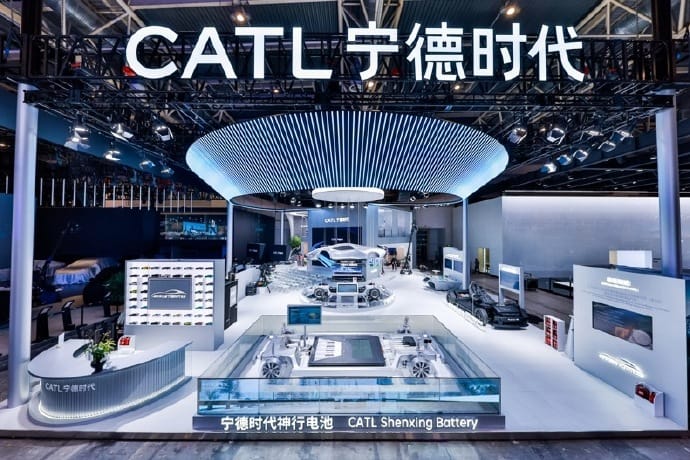
Contemporary Amperex Technology's chairman warned China's lithium battery industry against destructive price wars overseas, calling for a shift toward higher-quality growth as the sector enters the terawatt-hour era ahead of schedule.
Zeng Yuqun, who leads the world's largest battery maker, told industry executives that Chinese companies are undermining their own global standing by slashing prices up to 30% on international projects while promising 50% longer lifespans. Speaking at the 15th Gaogong Lithium Battery Annual Conference in Shenzhen on November 20, he said the industry must "not only be the world's first, but also earn the world's respect."
The remarks come as China's battery sector confronts overcapacity and intensifying competition at home and abroad. Annual lithium battery shipments reached the terawatt-hour milestone in 2024, a year earlier than Zeng predicted five years ago. The rapid expansion has triggered concerns about sustainability and profitability across the supply chain.
Zeng's 13-minute speech marked a rare public call for industry self-discipline from China's most influential battery executive, as domestic manufacturers face rising trade barriers in Western markets while competing aggressively for major projects in Europe, the United States and the Middle East.
Energy Transition Role Demands Quality Focus
Zeng argued that lithium batteries should be viewed as part of the energy sector rather than just transportation, requiring companies to support the broader energy transition. He pointed to surging demand from electric commercial vehicles, aviation, shipping, data centers and robotics as evidence the industry has entered "an era of full-scale incremental growth."
China's new energy vehicle penetration rate has exceeded 50%, while electrochemical storage remains the most economical and reliable option for grid applications under eight hours, Zeng said. He urged companies to invest in quality capacity rather than wasting government and investor resources on low-end production lines.
The chairman emphasized that building a new energy system requires coordinated thinking about power generation, transmission, storage and load management, rather than isolated battery production decisions.
Innovation Gap Threatens Long-Term Advantage
Despite lithium battery technology's complexity—with each ampere-hour cell containing 1 billion positive electrode particles and 700 million negative electrode particles—the industry suffers from severe homogenization and insufficient disruptive innovation, according to Zeng.
"Making lithium batteries is easy; making good lithium batteries is difficult," he said, noting that ion transfer between electrodes must occur seamlessly without side reactions. Many Chinese companies focus on incremental improvements or quick profits through bottomless price competition rather than investing in research and development, he added.
Zeng warned that competitors in South Korea and other countries are concentrating on breakthrough innovations. After recent visits to these markets, he said Chinese manufacturers risk losing their competitive edge over the next 15 years if they continue expanding scale without technological advancement.
He also called for stronger intellectual property protection, arguing that copying stifles innovation and will leave China trailing in international competition.
Reasonable Profit Margins Essential for Sustainability
As a manufacturing sector employing thousands of companies and households, lithium batteries cannot sustain excessive profit margins, particularly in China's low-price competitive environment, Zeng acknowledged. However, reasonable profit expectations are necessary to pursue long-term steady growth and maintain quality employment.
He highlighted that major technology iterations occur every three to five years in the battery industry, requiring production line depreciation schedules aligned with these cycles. Some companies use 10-year depreciation periods that may look good financially in the short term but leave them unable to compete when technology advances.
Quality and reliability over 10-to-20-year lifecycles demand comprehensive testing methods and full-lifecycle management, Zeng said.
The chairman's remarks on overseas competition were particularly pointed, describing Chinese companies' behavior on gigawatt-hour-scale projects in major markets including Europe, the United States and the Middle East as especially fierce this year.
Zeng concluded by calling for heightened industry self-discipline and long-term thinking to build "a lithium battery industry that is not only upward but also virtuous," positioning China's sector as a high-quality world leader that commands global respect.