
CATL Launches Mass-Produced Sodium-Ion Battery for Commercial Vehicles, Targeting China's Northern Markets
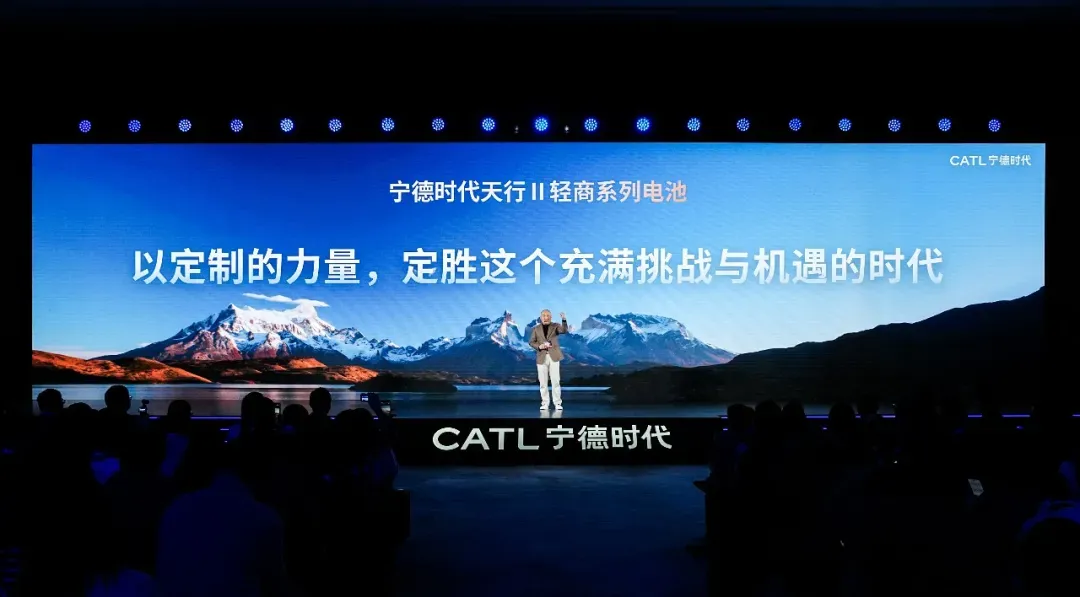
CATL has begun mass production of sodium-ion batteries for light commercial vehicles, marking a pivotal shift in China's electric vehicle landscape where cold-weather performance has long restricted northern market penetration. The company's Tianxing II low-temperature edition, unveiled January 22, retains 92% of usable capacity at minus 30 degrees Celsius and costs 20% to 30% less than lithium iron phosphate alternatives.
The deployment addresses a stark regional imbalance in China's new energy vehicle adoption. While southern provinces have driven light commercial EV sales past 600,000 units in 2024, northeastern provinces lag significantly, with Heilongjiang and Jilin registering penetration rates less than half the national average. Guangdong province alone outsold the entire northeastern region.
The technology breakthrough arrives as China's new energy light commercial vehicle market prepares for explosive growth, with sales projected to exceed 900,000 units in 2026. Industry observers view northern markets as essential to achieving nationwide electrification, given the region's extensive logistics networks, energy infrastructure, and agricultural operations.
CATL Chief Technology Officer Gao Huan characterized the launch as transitioning sodium-ion technology "from laboratory development to mass production," representing not merely improved low-temperature performance but "a safer, more sustainable, and more autonomous energy future."
Cold Climate Performance Unlocks Northern Potential
The geographic disparity in China's electric commercial vehicle adoption stems directly from battery performance degradation in sub-zero temperatures. Conventional lithium-ion batteries lose approximately 50% of range capacity at minus 20 degrees Celsius, creating prohibitive operational economics for logistics companies operating in northern regions.
Northern provinces represent substantial untapped demand for electric commercial vehicles. These regions maintain some of China's highest diesel light truck inventories and face accelerating replacement pressure from tightening environmental regulations. The potential substitution market could reach several million vehicles as fossil fuel vehicles phase out, creating what industry participants describe as a "massive green transportation capacity gap."
The Tianxing II low-temperature edition directly targets these constraints. At minus 20 degrees Celsius, the battery maintains over 92% usable capacity, with performance improving as temperatures rise. At minus 30 degrees Celsius, the system requires no preheating for immediate charging, and can achieve 10-degree incline climbs under full load even at 10% state of charge.
The 45-kilowatt-hour configuration accommodates various vehicle types including medium and small vans and micro trucks. CATL demonstrated extreme safety tolerances through testing including sawing, drilling, and multi-directional compression, with cells continuing to discharge normally after being cut without fire or explosion.
Commercial Viability Through Scale Production
The announcement's significance extends beyond laboratory specifications to confirmed manufacturing capability. CATL plans to deliver the Tianxing II low-temperature edition in both charging and battery-swapping configurations in 2026, representing the first mass-produced sodium-ion battery deployment in the light commercial vehicle segment.
CATL entered sodium-ion battery development in 2021 and has established what the company characterizes as global leadership in the technology. The production launch follows years navigating material stability challenges, manufacturing process optimization, and cost control requirements that separate laboratory prototypes from commercial-scale products.
Production scaling enables CATL to extend sodium-ion technology beyond light commercial vehicles into passenger cars, heavy commercial vehicles, and construction machinery. The company positions sodium-ion batteries not as replacement for existing lithium technologies but as complementary systems optimized for specific use cases and operating environments.
Chen Guangqiang, Executive President of CATL's Logistics Business Division, framed the deployment as providing customers with operational certainty while "building more sustainable and predictable long-term value for the industry."
Cost Structure Advantages Drive Economics
Sodium-ion batteries deliver structural cost advantages stemming from raw material abundance. Sodium reserves in the Earth's crust exceed lithium by more than 400 times, creating inherent price stability and supply security. At production scale, CATL projects sodium-ion cell costs will undercut lithium iron phosphate by 20% to 30%.
For commercial vehicles installing hundreds of kilowatt-hours of battery capacity, the cost differential translates to tens of thousands of yuan in reduced purchase prices. The Tianxing II low-temperature edition's rated cycle life exceeds 10,000 cycles, extending useful life for battery-swapping and leasing business models while improving total cost of ownership calculations.
Operational economics compound the purchase price advantage. Reliable cold-weather performance eliminates downtime from charging delays and roadside assistance calls, maintaining fleet utilization rates through winter months. For logistics operators calculating daily revenue per vehicle, consistent year-round operation fundamentally alters profitability projections.
Industry forecasts anticipate sodium-ion battery demand in light commercial vehicles reaching 100 gigawatt-hours by 2028, driving what analysts term a "second leap" in sodium-ion industrial scale. CATL's mass production launch positions the company to capture substantial share of this emerging market while accelerating broader commercial vehicle electrification.
The technology diversification strengthens China's new energy vehicle supply chain resilience by reducing dependence on lithium resources concentrated in specific geographies. Multiple battery chemistry options tailored to distinct operating requirements create what industry participants describe as a more robust and adaptable powertrain ecosystem supporting China's global electric vehicle leadership.