
CATL's Battery Swap Network Surpasses 700 Stations as Industry Bets on Power Exchange Model
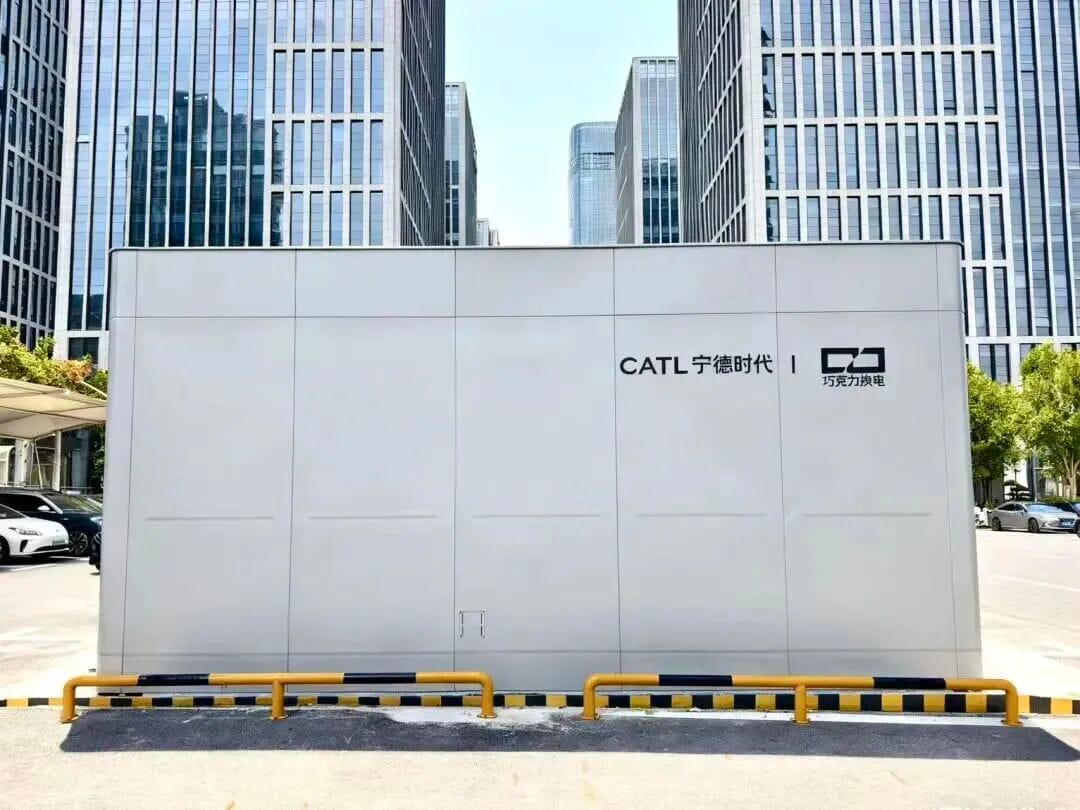
Contemporary Amperex Technology has announced its battery swap network has exceeded 700 stations, marking a significant expansion in an infrastructure model that industry players increasingly view as critical to electric vehicle adoption. The move comes as major Chinese automakers including GAC, Geely, Chery, and FAW's Hongqi brand join swap-station alliances, betting that standardized battery exchange will become as ubiquitous as gas stations despite heavy upfront investment requirements.
CATL founder Robin Zeng characterized battery swapping as a capital-intensive, long-cycle business that has historically deterred automakers from participation. However, declining battery costs and rapid technology improvements are now making the economics more viable, according to company statements.
The expansion reflects broader industry momentum toward battery swapping as an alternative to charging infrastructure. Nio, the pioneer in this space, took a decade to build 3,500 swap stations across 550 Chinese cities, with weekly sales surpassing 10,000 units for the first time in October 2024.
The shift signals growing confidence that battery swapping can generate recurring revenue streams independent of vehicle sales, positioning infrastructure operators as power retailers with captive customer bases.
Economic Viability Improves
CATL's accelerated deployment stems from three factors reshaping the business case for battery swapping, according to Zeng. Battery costs, previously accounting for one-third of total vehicle costs, have declined substantially, reducing the capital requirements for large-scale station networks. As deployment reaches critical mass, swapping costs are expected to approach home charging rates.
Rapid technology advancement provides additional justification. Vehicles purchased three years ago lack current fast-charging capabilities and safety features available today, but swap-station subscribers can access the latest battery technology through what amounts to a membership service model. Future solid-state batteries could integrate into existing vehicles through standardized interfaces.
This differs fundamentally from removable phone batteries, which users swapped only for charging without technology upgrades. Battery swapping enables continuous access to improved specifications as technology evolves.
Station operators maintain unified inspection protocols to remove degraded batteries from circulation, a quality control mechanism unavailable to individual vehicle owners charging at home.
Operational Efficiency and Grid Management
Swap stations function as distributed energy storage facilities, addressing persistent pain points in charging infrastructure. During peak travel periods such as Chinese New Year, charging stations experience severe congestion, with many units offline due to delayed maintenance. Fast-charging technology requiring 30 minutes to reach 80% capacity can service only 16 vehicles in eight hours.
Battery swapping completes power replenishment in three minutes, matching refueling speeds through pre-charged battery inventory. Stations optimize electricity costs by charging during off-peak hours when rates are lowest, then deploying batteries during daytime demand.
Zeng projects battery swapping, home charging, and public charging stations will each capture roughly one-third of the power replenishment market. The ride-hailing sector represents a core use case—delivery drivers for platforms already rely on battery swap stations for electric scooters due to time constraints that make charging impractical.
As battery costs decline and station density increases, the model is expected to penetrate the ride-hailing vehicle market, which currently finds swapping prohibitively expensive.
Revenue Model and Industry Adoption
The expanding alliance of automakers including BAIC Group, Dongfeng's Shenlong Automobile, GAC Aion, Geely, Chery, FAW Hongqi, and Changan positions battery swapping as a recurring revenue business comparable to commercial real estate. Standardized swap-compatible vehicles create a captive customer pool generating steady subscription income.
Third-party access to swap networks amplifies this effect, establishing infrastructure operators as power retailers with resilient cash flows independent of vehicle manufacturing margins. During grid disruptions preventing home charging, swap stations with substantial battery inventory provide essential backup capacity.
The strategic shift reflects expectations that solid-state battery commercialization will render hybrid vehicles obsolete, concentrating profitability in infrastructure rather than pure electric vehicle sales. While automakers may face margin pressure as EV adoption accelerates, swap station operators stand to capture sustainable returns from power distribution services.