
China Has a Chance to Lead in the “Physical AI” Era, XPeng CEO He Xiaopeng Says
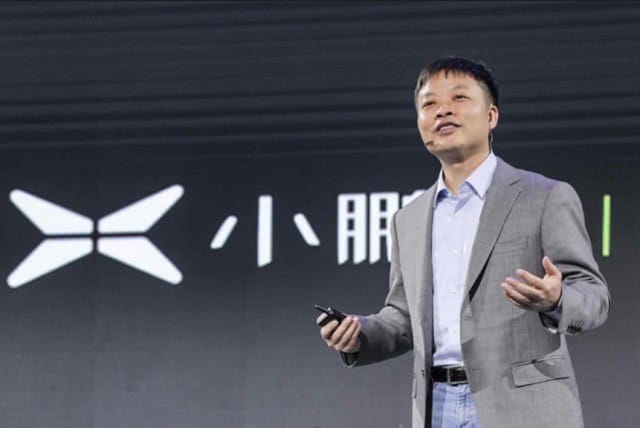
Chinese Entrepreneur Magazine published an interview on March 11, 2026, featuring He Xiaopeng, chairman and chief executive officer of XPeng and a deputy to China’s National People’s Congress. The interview was conducted during China’s annual “Two Sessions,” when policymakers and industry leaders outline priorities for technology, regulation and industrial development.
The discussion centers on what He calls “Physical AI”—the convergence of AI capabilities from the digital world with physical, mobile hardware such as smart cars, robots and flying vehicles. The topic is drawing attention as China’s government signals a push toward a “new form of the intelligent economy,” and as companies compete to commercialize next-generation autonomous driving, embodied intelligence and the low-altitude economy.
Below is the full translated text, preserving the original structure (with edits noted in the source as “abridged”):
During this year’s Two Sessions, He Xiaopeng, a deputy to the National People’s Congress and chairman and CEO of XPeng, submitted three proposals focused on autonomous driving, humanoid robots and flying cars.
XPeng is among the domestic companies simultaneously deploying across these three tracks. He said he is both excited and under pressure.
“Artificial intelligence can not only integrate with the digital economy; it can integrate even more with intelligent terminals. When AI capabilities in the digital world combine with hardware in the physical world—mobile cars, robots and so on—it will give rise to ‘Physical AI.’ This means robots will gradually gain the ability to understand, interact with and change the world, which will bring disruptive changes to productivity and production relations,” He said, judging that 2026 will be the first year that “Physical AI” is implemented in China.
Against this trend, He said he feels greater urgency. He hopes that within 2026 he can use AI to completely rewrite the logic of autonomous driving, and has set a target: by the end of 2026, achieve a 5x to 10x improvement in capability on top of current performance. As model capabilities continue to improve, system stability is also expected to improve markedly, transitioning from “multiple takeovers per 100 kilometers” to “one takeover per 1,000 kilometers or even per 10,000 kilometers.”
He also addressed the current development of humanoid robots. He does not believe 2026 will be a shakeout year for the industry, and said a reshuffle will not happen until at least 2027 or 2028. In his view, the industry is still exploring how to manufacture efficiently and has not yet reached the stage of full-chain, large-scale mass production.
“The core of current policy is encouragement. Humanoid robots are unlike cars and airplanes; they pose relatively less risk to social safety. Issues like data security and societal harm can be standardized later, once the industry becomes larger,” He said.
During the Two Sessions, He accepted interviews with media including Chinese Entrepreneur Magazine. The following is an edited transcript (abridged):
On the intelligent economy: Physical AI will have significant scope
He Xiaopeng: This year’s Government Work Report proposed for the first time “building a new form of the intelligent economy,” which was a pleasant surprise for us.
We see that in 2025, the value added of China’s core digital-economy industries increased to more than 10.5% of GDP. In the “15th Five-Year Plan,” it is clearly proposed that the share of value added of the core digital-economy industries in GDP should reach 12.5%. Artificial intelligence can not only integrate with the digital economy; it can integrate even more with intelligent terminals. When AI capabilities in the digital world combine with hardware in the physical world—mobile cars, robots and so on—it will give rise to “Physical AI.” This means robots will gradually gain the ability to understand, interact with and change the world, which will bring disruptive changes to productivity and production relations. Smart cars, Robotaxis, flying cars and robots all belong to intelligent agents and are also applications of Physical AI. Taking humanoid robots as an example, as the physical carrier of AI and the core form of embodied intelligence, they are at the eve of an explosion similar to the new energy vehicle industry more than a decade ago.
Part of this is also what XPeng will do over the next five to 10 years. I believe that over the next 10 years, cars will shift from new energy to a completely new kind of car that is smarter and more like a robot. To do this well, the key is to make AI truly land in the physical world. At present, AI applications in the digital world are already widespread, but the physical world is only just starting. From my perspective, there are two kinds of AI in the physical world: one is mobile hardware; the other is non-mobile, such as televisions, cars and robots. Its implementation difficulty is far higher than in the digital world, because it involves many issues such as safety and data privacy. But I think 2026 is the first year that “Physical AI” is implemented in China, and this trend will become more and more obvious in the next five years.
Against this trend, in 2026 XPeng hopes to use AI to completely rewrite the logic of autonomous driving and replace the traditional rules-driven approach. At the same time, we are transplanting a lot of experience from the automotive field into the robotics field.
Over the next five years, we have three priorities: first, promote the scaled implementation of Physical AI, including mass production of flying cars, robots and Robotaxis; second, go from China to the world—lay a solid foundation in organization, products and technology in 2026, and accelerate globalization in 2027–2028; third, XPeng’s R&D investment has consistently exceeded 10% of total revenue. I am confident that in the second half of 2026 or next year we will see technology begin to convert into commercial profit, which in turn will feed back into improved technological capabilities.
On autonomous driving: In the next one to three years, L4 will accelerate implementation
He Xiaopeng: At present, China’s new energy manufacturers are at a critical stage of technology iteration: moving from the rules-driven era to end-to-end, and from end-to-end toward the era of ultra-large models.
About two or three years ago, when I visited different countries in Europe and Asia, I saw various technical routes. But today, the progress speed of Chinese manufacturers is the fastest, whether XPeng or other peers. I think China will chart a diversified path and eventually go global. Compared with most overseas manufacturers, China’s current lead is quite obvious.
Under this system, how to go from China to overseas has instead become a new challenge for China’s autonomous-driving manufacturers. In the past, our accustomed model was: technology matures overseas first and is then introduced to China. But today, when Chinese companies enter overseas markets, some can follow this path, while others need to adjust according to local laws and regulations, especially in automotive safety.
XPeng’s VLA architecture considered this issue specifically from the beginning of its design. Taking the second-generation VLA as an example, we have a particularly prominent capability—driving especially robustly and safely on small roads. Looking globally, road infrastructure in China and the US is very complete, but many roads in Europe are facilities from decades or even more than a hundred years ago and have basically not changed; in Asia, especially Southeast Asian countries, conditions vary widely—some places’ vehicles do not even have rearview mirrors, and scrapes may not even count as traffic accidents—because they are simply too common.
So I have always believed that whether one can drive well and intelligently on small roads beyond main roads, in parking lots, or on road sections without traffic signs, is the key for autonomous-driving software to truly go global. That is why XPeng chose to build a technical system capable of full-scenario generalization—this is very important.
In fact, many countries are moving even faster than China in terms of regulatory change for autonomous driving, because they are more sensitive to regulations.
At this year’s Two Sessions, I also proposed “Suggestions on accelerating the promotion of autonomous driving technology from L2 to L4, and improving regulations and management policies,” hoping to, on the basis of solid L2 safety supervision, push policy to leap directly from L2 to L4, simplifying the intermediate L3 step.
Because from my observation, three layers of capability are maturing simultaneously. The first is the software foundation. In the past, we relied on writing rules to do autonomous driving; now we are comprehensively shifting from rules-driven to AI-driven. This paradigm shift has reached a critical point. The second is the hardware foundation. Previously, to do L4, both hardware and software required redundancy design, which could not be achieved in the past. But in the second quarter of 2026, XPeng will mass-produce a brand-new factory-installed mass-production vehicle with hardware redundancy. I believe once hardware takes the first step, subsequent progress will accelerate. The third is policy and regulation. In February, the US revised its traffic regulations to allow 90,000 fully driverless vehicles on the road. It can be said that software, hardware and regulations are all changing. But it takes three years to set a law or regulation; if we set L3-related policy in 2026 and then move to L4, that could be three years plus another three years—too long. I believe that China’s technological growth today, together with our strength in AI, already meets the conditions for setting L4 regulations.
Coming back to ourselves, the VLA architecture is a fundamental transformation internally for XPeng. In the past, we kept thinking about how autonomous driving goes from China to the world, and how to cross from L2 to L3 and L4. But the more we advanced by piling up rules and stitching different capabilities together, the more we discovered that real-world traffic scenarios are too complex and too changeable. So starting in 2024, we tried another way of thinking: use larger-scale models and our own computing power to build a new technical paradigm.
Around this time last year, we released the first demo version. I remember clearly: it was both good and not good—“good” in that its upper bound was very high and it showed astonishing capability; “not good” in that its lower bound was very low, stability was insufficient, and costs were very high. A year later, on March 11, 2026, XPeng’s second-generation VLA will open user test-drive experiences at 732 stores nationwide; in late March, it will gradually begin full rollout to users. If we use a score analogy, in the past the upper bound of assisted driving was 100 points; today, this system’s capability can reach 10,000 points or even tens of thousands of points.
Another important change is the improvement of infrastructure. When we connect the entire chain—computing power, data, compilation, quantization, deployment, simulation, and physical-world testing and calibration—iteration speed becomes very fast. Recently, we had an internal assessment: progress in the past four weeks is roughly equivalent to a full year of development speed in previous years.
A huge value and significance of XPeng’s second-generation VLA is that for the first time it has run through the complete process from massive, continuous, multimodal information input to motion-control command output in the physical world—whether it is how a car drives, or specific commands in the future such as a robot helping you fetch a bottle of water, the underlying logic has been proven through. The success of this paradigm means the next core task is how to better engineer it, achieve larger-scale application, and move toward an economic and commercial closed loop—these are exactly what we are going to do.
I believe that as XPeng officially launches the second-generation VLA in the second half of 2026, about three to six months later China’s autonomous-driving market will see a major change. Why three to six months? Because users typically need about three months of observation and understanding time when buying a car.
Over the past period, XPeng has continued to improve infrastructure. Today, our infrastructure is more mature than a few months ago. The goal I set internally is: by the end of 2026, on the existing basis, improve capability by another 5x to 10x. Next year there may be several-fold improvements as well. At that time, the industry will evolve from multiple or even dozens of takeovers per 100 kilometers today, to a few takeovers per 1,000 kilometers, and then to one or a few takeovers per 10,000 kilometers. This will be a qualitative leap.
In the previous decade, China completed the rise of new energy vehicles. I believe the next decade will be the decade in which China’s new energy vehicles move toward robotization and higher-level driverless capabilities. I believe that with policy, regulation and technology advancing together, in the next one to three years we will accelerate seeing L4 implementation, and within five years we may even see true realization of L5.
On humanoid robots: In 2027–2028, the industry will enter a shakeout period
He Xiaopeng: In 2026, XPeng plans to establish a full-chain mass production base for humanoid robots in Guangzhou. The biggest difference of this production base compared with the past is that previously, the mass-production scale of humanoid robots was very small—last year, nationwide there were only 10,000 to 20,000 units—and it was still a consumer-goods production logic. But for a truly humanoid robot, the first requirement is automotive-grade; I hope it will even be higher than automotive-grade. Because a car has only one engine; if it breaks, that is a big deal. But a robot has seventy to eighty joints; if one breaks, it cannot move. The probability of problems is much higher—this is the essential difference.
Another difference is that in the future, a truly humanoid-robot factory should have some positions where robots manufacture themselves. Today, everyone is still exploring how to produce efficiently and has not yet reached the stage of full-chain, large-scale mass production.
We hope that within the next year we can achieve robots entering the production line to produce themselves and tighten screws, but we have not achieved that yet. Being able to enter factories, enter homes and do commercial sharing does not mean being able to sell externally. Because from scientific research to product, to commodity, to mass production, these are completely different stages.
After years of exploration, XPeng has chosen a route different from many companies. Many companies first do industrial scenarios and enter factories. But in China, entering factories in the early stage is not wise, because what workers do is more complex and more comprehensive, and robots are very hard to do well in the first phase. So we let XPeng robots first enter the three easiest commercial scenarios: sales assistance, guided tours and guided patrols, to solve basic problems first.
Returning to the industry level, I think the current homogeneity phenomenon in the humanoid-robot industry is normal; any industry is like this in the early stage. But personally, I think from 2027 to 2029, global humanoid robots will begin to differentiate—most will become smarter, and a small part will become less and less human. Robots or embodied intelligence is a huge industry; it does not necessarily all have to be humanoid. XPeng chose especially human-like humanoid robots, because we only make a few types, mainly to meet household, commercial and industrial needs, hoping to have scale and strong relevance to automobiles. If we do well in the future, we will open cooperation to enter more industries.
Of course, the healthy development of the industry also depends on policy guidance. I think the core right now is encouragement. Humanoid robots are unlike cars and airplanes; they pose relatively less risk to social safety. Issues like data security and societal harm can be standardized later, once the industry becomes larger. So the proposals I brought this time also hope that China’s humanoid robots will not all focus on bodies, joints and remote control, but will think more about the brain, cerebellum and data. In fact, some engineers are already moving in this direction. Robots are dozens of times harder than cars. Three years from now, perhaps most robot companies will transform, because the technical, funding and resource thresholds required for high-level intelligence are too high. But there will be many, many kinds of robots, and there are still many opportunities for entrepreneurs.
Talking about the future industry landscape, I think in 2027 and 2028 the humanoid-robot industry will enter a shakeout period. The premise for a shakeout is that one or two big players emerge and make relatively good products; others realize they cannot do it—either they transform or they follow.
On flying cars: XPeng is doing many “firsts”
He Xiaopeng: Seeing this year’s Government Work Report upgrade the low-altitude economy from an “emerging industry” to an “emerging pillar industry,” I was very excited. This shows that after several years of development, people have seen the huge potential of the low-altitude economy in construction, military, and new scenarios in the future economy. In another five years, I think it may take another step up. The biggest feature of this industry is that it is especially hard to do and especially slow, a bit like China’s automotive industry in the 1990s. Although technology investment and funding are keeping up, the pace still cannot speed up. But it will definitely profoundly change our life and work patterns.
But returning to reality, the challenges we face are also huge. We are the first company that wants to truly implement a passenger-carrying flying car, and we have encountered too many hurdles—the biggest hurdle is not knowing how many more hurdles there are ahead. No one has obtained a passenger-carrying airworthiness certification, and there is no precedent for pilot training—for example, how to take the licensing exam. Previously, airplanes were not produced on assembly lines; we have to build an assembly-line factory ourselves. We also have to explore where we can fly, how to build flight camps, and how to raise the safety factor to civil-aviation grade.
We are doing many “firsts.” There are no detailed rules, only a broad framework; we cannot find a clearly responsible regulatory department, and there is no clear assignment of responsibility. If we want to get an approval, we have to communicate and apply in many places. That is why, as a deputy to the National People’s Congress, I have continuously called for this in my proposals.
However, I also see some positive changes. I believe that in the new five years, after the low-altitude economy is elevated to a higher level, with inter-departmental coordination and corporate technological innovation, there is a strong opportunity. Although the process may be slower and harder than imagined, the eventual scale and impact will definitely be bigger and broader than imagined.
On going overseas: Chinese companies must go global
He Xiaopeng: XPeng is a company that attaches great importance to globalization, but compared with other companies, we have indeed moved a bit slowly.
In the process of going overseas, we encountered many difficulties. For example, our original organizational structure was not built for globalization; at the product level, not until the second half of 2026 will there be a large batch of models targeting both global and China markets. Beyond internal issues, we have also encountered many external challenges—for example, autonomous driving has not yet been implemented globally due to laws and regulations; we hope it can be widely rolled out next year. There are also issues including EU taxation, localized manufacturing, supply chains and more. These issues have made us suffer “painfully but happily” in 2026. But I believe that in 2027–2028, everyone will see a huge improvement in XPeng’s overseas capabilities.
Chinese companies must go global, and they will definitely step into many pitfalls. If you do not step into pitfalls, you will never become a big, good global company. So I also particularly look forward to the future Government Work Report giving more guidance on how Chinese companies should go overseas, and I also look forward to more legislation to protect our overseas investments and rights.
This article is from the WeChat public account “Chinese Entrepreneur Magazine” (ID: iceo-com-cn), author: Ren Yafei, editor: Ma Jiying, published by 36Kr with authorization.