
China's 3D Printers Bring Labubu Craze Home, Sparking a Consumer Boom
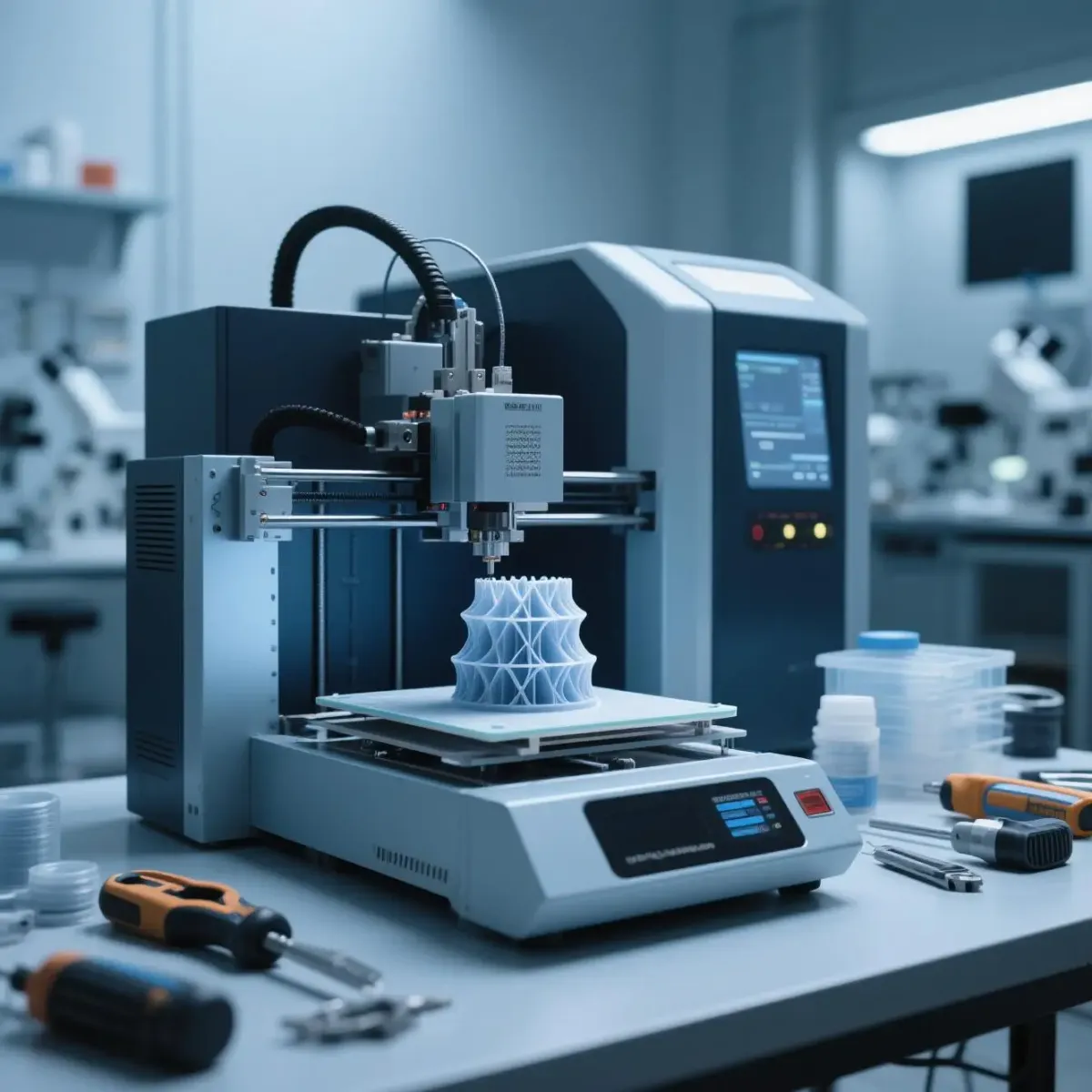
A new wave of affordable, high-performance 3D printers from Chinese firms is transforming the technology from a niche hobby into a mainstream consumer phenomenon. This surge in "at-home manufacturing" is reshaping the global consumer electronics landscape, empowering users to create everything from custom toys to functional household goods and fueling a rapidly growing market.
Driving this trend are industry leaders like Bambu Lab and Creality, which have made the technology more accessible than ever. Underscoring the market's maturation, Shenzhen-based Creality filed for an initial public offering in August 2025, aiming to become the first publicly listed company in the consumer 3D printing sector.
The consumer segment's rise comes as the industrial market faces a downturn. The entry-level 3D printer market, defined as devices priced under $2,500, saw shipments jump 26% in 2024, according to UK-based research firm CONTEXT. In stark contrast, the industrial-grade market declined by 17%. Chinese suppliers were responsible for 96% of global entry-level shipments last year, cementing the country's dominance.
This explosion in popularity, however, raises critical questions for investors and the industry about the long-term viability of the trend. Firms are betting that continuous user engagement and a lucrative consumables business can sustain growth, but they must also navigate challenges ranging from market saturation to user concerns over maintenance and safety.
From Users to 'At-Home Creators'
The driving force behind the 3D printing boom is a dramatic shift in its user base, expanding from tech-savvy hobbyists to a broad demographic that includes students, families, and design professionals. A key catalyst for this expansion has been the development of vibrant online communities and extensive model libraries that significantly lower the barrier to entry.
Platforms like Creality Cloud and Bambu Handy, the official apps for the two leading brands, host millions of ready-to-print 3D models. Users with no modeling experience can simply download a file and start printing, turning the machines into veritable "Aladdin's lamps." Creality Cloud boasts over 4 million registered users and 1.5 million models, while some popular designs on Bambu Handy have been downloaded thousands of times.
To encourage content creation, these platforms often reward designers with points or credits that can be exchanged for printing materials or cash. The integration of AI, which allows users to generate models from simple text prompts, is further simplifying the creative process, although experienced users note that these AI-generated models can be difficult to fine-tune.
Price Plunge Fuels Market Expansion
The consumer 3D printing market’s rapid growth is underpinned by decades of technological iteration and falling prices. Once costing tens of thousands of yuan, mainstream consumer models now typically retail for between RMB 1,500 yuan (about $210) and RMB 8,000 yuan, placing them within the budget of an average household.
This price reduction is largely due to the widespread adoption and improvement of Fused Deposition Modeling (FDM) technology. While less precise than professional-grade Stereolithography (SLA), FDM is significantly cheaper and sufficient for most consumer applications. Modern machines now offer features like multi-color printing, speeds of 500mm/s, and 0.2mm precision, capable of producing a small, detailed toy in just over two hours.
Government policy is providing another tailwind. In September 2025, China's Ministry of Commerce and other departments officially included desktop 3D printing devices in a national subsidy program for digital consumer products. This has pushed the price of some entry-level models to just over 1,000 yuan, further stimulating mass-market adoption. As a result, the global consumer 3D printing market reached $4.1 billion in sales in 2024 and is projected to maintain an average annual growth rate of over 30% through 2029.
Shenzhen's New Hardware Champions
The epicenter of this new hardware revolution is Shenzhen, where a cluster of companies leverages the Pearl River Delta's robust electronics and precision manufacturing supply chain. This ecosystem has fostered an "one super, many strong" competitive landscape.
The undisputed market leader is Bambu Lab. Founded in 2020 by a former executive from drone giant DJI, the company shipped 1.2 million units in 2024, capturing a 29% market share. Its workforce includes numerous engineers and product managers who also hail from DJI.
Trailing in second place is Creality, a firm established in 2014 that shipped 700,000 units in 2024. According to its prospectus, the company's revenue from 3D printers stood at 1.416 billion yuan in 2024. Other key players in this competitive space include Anycubic and AnkerMake.
Beyond Hardware: The Lucrative Consumables Market
Unlike many consumer electronics with a one-time purchase model, 3D printers generate recurring revenue through the sale of consumables. This "razor-and-blade" strategy is becoming a crucial component of the business model.
The primary consumable is filament, typically sold in one-kilogram spools for 50 to 100 yuan on official e-commerce stores. One spool can print approximately ten non-solid, blind-box-sized figures. As users continuously print new items, filament sales create a steady and profitable income stream for manufacturers.
Creality’s prospectus highlights this trend: its revenue from consumables grew from 3.0% of its total in 2022 to 11.4% in 2024. Globally, the 3D printing consumables market saw a compound annual growth rate of 42.3% from 2020 to 2024, outpacing the growth of the hardware itself.
Navigating Growth Pains and Future Hurdles
Despite the explosive growth, the industry faces significant hurdles to achieve long-term, sustainable adoption. A key concern is market saturation—the risk that printers will end up "gathering dust" once the novelty wears off. In an apparent move to diversify, Creality’s fastest-growing business line between 2022 and 2024 was not printers or consumables, but laser engravers, which saw revenue grow more than tenfold.
Companies are also working to broaden the application of 3D printing beyond toys, positioning it as a tool for creating practical items like mouse casings, bicycle seats, and custom electronic enclosures. Bambu Lab, for instance, sells low-cost electronic components to complement its 3D models, encouraging a "geek culture" of functional creation.
Technical and safety issues also remain. Novice users often report difficulties with maintenance and repairs, such as clogged nozzles. Furthermore, the FDM process, which involves melting plastic filament, poses potential safety risks. These include fire hazards in high-frequency use and health concerns related to the release of microplastics. Some users mitigate these risks by purchasing enclosed models with AI-powered smoke detection and ensuring proper ventilation.
These challenges represent the final frontier for consumer 3D printing to cross before it can transition from a trendy gadget to a standard household appliance. Yet, the community's response reveals the core of this manufacturing revolution: as the power to create is placed in everyone's hands, the solutions to these problems are now being printed by the users themselves.