
China’s Anthropic? UBS Sees 30% Upside in Zhipu AI
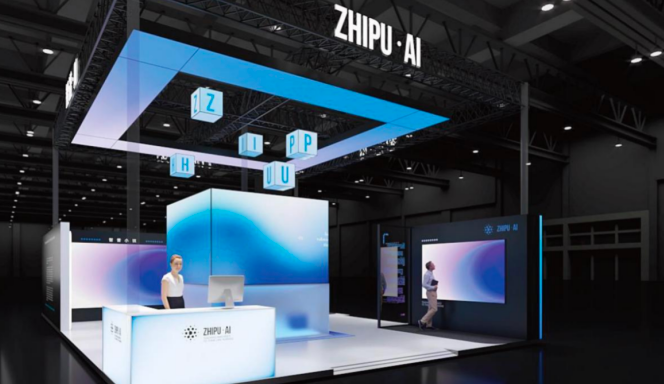
UBS Securities Asia Limited on April 20, 2026 initiated coverage of Knowledge Atlas Technology JSC Ltd.—better known as Zhipu or Z.ai, trading in Hong Kong under ticker 2513.HK—with a Buy rating and a 12-month price target of HK$1,160.
The initiation comes as the stock already trades at HK$891, up nearly 8x from its January 2026 IPO price—making the call anything but a layup. Yet UBS argues the market may still be underpricing what could become China’s most credible challenger to Anthropic in the global foundation model race.
The Thesis: Replicating Anthropic—But Faster
The core thesis is straightforward, if ambitious: Zhipu has effectively replicated Anthropic’s playbook—focusing on frontier coding and agentic capability—and is executing it at a faster pace, albeit from a smaller base.
The Anthropic Parallel: More Than a Narrative
UBS grounds the comparison in specific metrics. Both companies concentrate on coding performance and long-horizon task completion—defined as the duration of tasks (in human-equivalent time) an AI agent can complete with a 50% success rate.
Anthropic’s Claude Opus 4.6 leads globally at around 12 hours on the METR benchmark. Zhipu’s GLM-5.1, launched April 8, 2026, reaches roughly eight hours—ranking first among open-source models globally.
On SWE-bench Pro, GLM-5.1 scores 58.4, second only to Anthropic’s Claude Mythos Preview at 77.8. According to Artificial Analysis, it ranks seventh globally in overall model intelligence.
Monetization: Smaller Base, Faster Growth
The monetization trajectory is where the comparison becomes more striking.
Anthropic’s ARR grew 3.3x—from US$9 billion in December 2025 to US$30 billion by April 2026.
Zhipu’s ARR surged 6.4x—from US$39 million in December 2025 to US$250 million in March 2026, over just four months.
The scale gap remains massive—but the growth velocity does not.
Revenue Mix: From Government to API
Zhipu’s current revenue mix reflects a company in transition.
On-premise deployments—localized LLM installations for enterprises and government clients—accounted for 74% of revenue in 2025, generating RMB 534 million (US$77 million). This segment grew at a 114% CAGR from 2022 to 2025, with UBS projecting 81% CAGR through 2027.
Government traction is meaningful. In 2025, Zhipu secured 57 public-sector LLM projects worth RMB 254 million (US$37 million), ranking fifth domestically behind iFlytek, Baidu, Volcano Engine, and Alibaba Cloud.
Its shareholder base—including Meituan, Ant Group, and government-backed funds—provides structural access to enterprise and public-sector demand.
However, UBS sees the real inflection in the API business.
Open platform revenue accounted for 26% in 2025 (RMB 190 million) but is projected to reach 78% by 2027 (RMB 6.19 billion), implying a 470% CAGR.
The driver: rapid token consumption growth fueled by agentic frameworks such as OpenClaw, alongside improving pricing power.
Pricing Power: Defying the Commodity Narrative
In a sector defined by price competition, Zhipu’s pricing dynamics stand out.
API pricing has increased 83% year-to-date as of March 2026, including a 30% hike in February for its Coding Plan.
Yet demand accelerated: token usage grew roughly 3x month-over-month in March 2026, according to OpenRouter data. GLM-5.0—its highest-priced model—also saw the highest usage share.
UBS attributes this to a strong cost-performance advantage. GLM-5.1 and GLM-5.0 achieve over 90% of Anthropic’s performance at only 20–30% of the price—leaving room for further monetization as capabilities improve.
Nine of China’s top 10 internet companies are already customers. UBS estimates that equipping all employees at those firms with Zhipu’s Max coding plan (RMB 375/month) would imply over RMB 4.6 billion in annual revenue potential.
Valuation: Expensive—But Possibly Not Enough
Zhipu trades at 145x 2026E price-to-sales, based on projected revenue of RMB 3,208 million (US$466 million)—a clearly premium valuation.
UBS derives a market cap of HK$532.8 billion (US$67.5 billion) and a target price of HK$1,160.
A sum-of-the-parts cross-check yields similar results:
- 60x P/S on on-premise business: HK$69.2 billion
- 100x P/ARR on cloud (US$600 million ARR): HK$473.5 billion
Total SOTP: HK$543 billion.
In a bull case scenario, if ARR reaches US$1.2 billion by December 2026 and a 54x P/ARR multiple is applied (in line with OpenAI and Anthropic at similar stages), valuation could reach HK$1,384 per share—implying 55% upside.
Risks: Execution, Competition, and Cash Burn
UBS outlines a bear case target of HK$650 (27% downside), driven by slower model iteration, weaker cloud adoption, and pricing pressure.
More structurally, key customers—including major internet platforms—are developing in-house models, posing potential churn risk.
Other constraints include:
- Compute supply limitations
- Geopolitical restrictions on hardware access
- Data regulation risk
Losses remain significant. UBS forecasts net losses of RMB 5.16 billion in 2026 and RMB 4.75 billion in 2027, with EBIT breakeven only by 2029.
As of December 2025, cash stood at RMB 7.8 billion, plus RMB 4.5 billion from IPO proceeds—providing runway, but further financing (A-share or Hong Kong placement) is likely.
Bottom Line
The investment case ultimately hinges on one core assumption:
That Zhipu’s model capability gap with global leaders continues to close faster than its cash burn expands.
If that holds—and if China’s enterprise AI adoption curve is indeed at an early inflection point—UBS may be right that even a “frothy” valuation is not fully pricing the upside.
Related Coverage:
Zhipu Reframes Itself as a Scalable AI Platform as API ARR Accelerates