
China's Carmakers Are Flooding the World. The Hard Part Is Just Beginning.
Facing a brutal price war at home, Chinese auto giants are on an unprecedented global expansion, from the fjords of Norway to the factories of Brazil. But navigating local politics, labor disputes, and cultural divides will determine if they can build lasting empires.
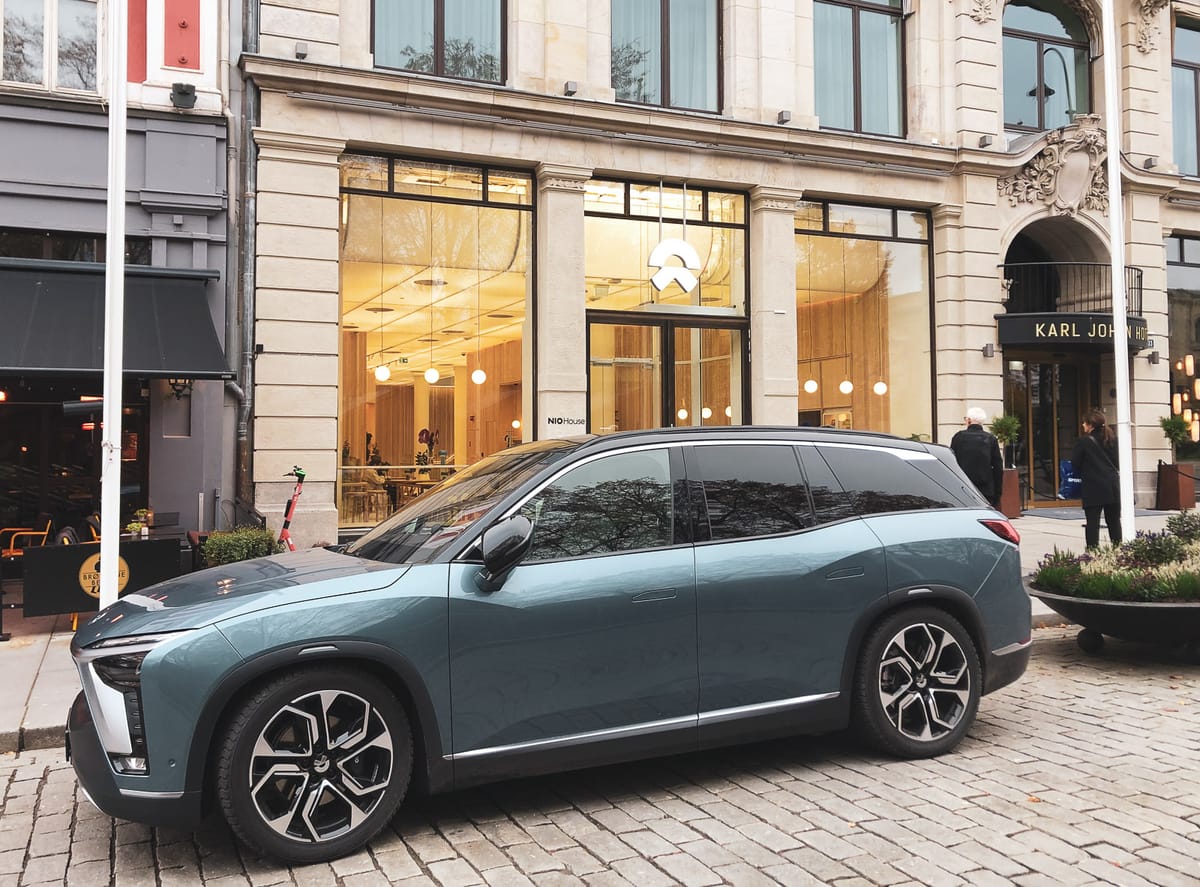
In a chic corner of Oslo’s main boulevard, Karl Johans gate, the scent of matcha lattes mingles with the hushed reverence usually reserved for art galleries. Visitors lounge on minimalist furniture, many drawn in by social media buzz about the cafe. Downstairs, however, lies the main attraction: sleek, futuristic electric vehicles. “I can’t believe this is Chinese,” a tourist might murmur, admiring the lines of a NIO sedan. This is the NIO House, less a dealership than a cultural embassy, a soft-power outpost for China’s automotive ambitions in one of the world’s most discerning EV markets.

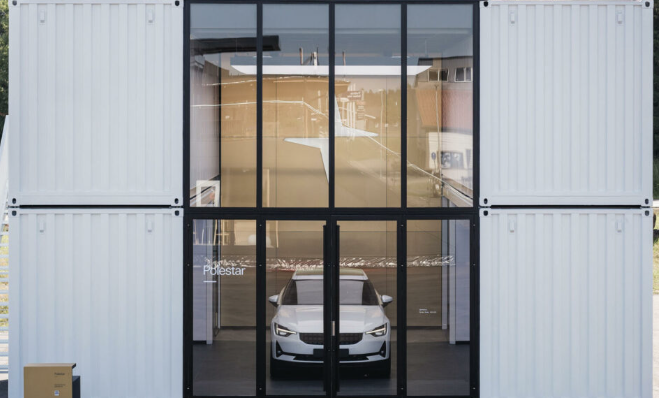
A few hundred kilometers north, in Umeå, Sweden, a town nudging the Arctic Circle, another Chinese-owned brand, Polestar, has a showroom. It’s a stark testament to a new reality: the Chinese auto industry’s global push is no longer a distant plan, but a present-day invasion reaching the planet’s farthest corners.
This isn’t just a hunt for new customers. It’s a flight for survival. Back home, a vicious price war has shredded margins, leading to an industry-wide mantra: "Go global, or go bust." What began as a strategic option has become a desperate necessity, unleashing a multi-billion-dollar wave of steel, batteries, and capital across the globe.
The result is a staggering surge. In 2024, China officially surpassed Japan as the world's largest auto exporter, shipping 6.41 million vehicles. By the first half of 2025, that figure had already hit 3.48 million, according to the China Passenger Car Association. "If you lined them up end-to-end," boasted Lü Dalang, a spokesman for China's customs authority, "they would stretch from Beijing to Rome."
But as Chinese brands plant their flags from the Persian Gulf to Cape Horn, they are discovering that selling cars is the easy part. Building a sustainable global business—navigating complex labor laws, geopolitical minefields, and the subtle art of winning local trust—is a far more treacherous journey.
A Tale of Two Strategies
The Chinese automotive armada is not a monolith. It’s advancing on two distinct fronts, reflecting a generational and strategic divide within the industry itself.
The Nordic Gambit: Winning Hearts and Minds
For China’s newer, premium EV players like NIO and Xpeng, Europe represents the ultimate prize. They are eschewing a price-dumping strategy for a more sophisticated, capital-intensive “brand-first” approach. Their battleground is Scandinavia, a region with deep environmental consciousness and high consumer expectations.
NIO’s choice of Norway as its first European beachhead in 2021 was deliberate. The country’s aggressive pro-EV policies offered a receptive market. But instead of just shipping cars, NIO shipped its entire ecosystem. The NIO House concept, a blend of showroom, café, and exclusive clubhouse, was airlifted from Shanghai to Oslo. The goal: to build a community, not just a customer base.
This high-touch strategy extends to critical infrastructure. Recognizing that range anxiety is a major barrier—especially in a country of long distances and brutal winters—NIO and Xpeng are investing heavily in building out their own charging and battery-swapping networks along key highways. NIO now operates 29 such stations across Norway, Sweden, and Denmark. It’s a costly, long-term bet on convincing skeptical Europeans that a Chinese brand can offer the same—or better—service and reliability as a German legacy automaker.
"They're not just selling a product; they're selling an experience and a solution to the biggest EV pain point," says Michael Dunne, CEO of the Asia-focused automotive consultancy ZoZo Go. "It’s a massive cash burn, but it's the only way to compete with the likes of Audi and Mercedes on their own turf."
Polestar, owned by Geely which also controls Swedish icon Volvo, has a home-field advantage. Leveraging the Volvo network, it has established 21 showrooms across Sweden, with its Umeå location marking its northernmost reach. This deep integration has paid off: Polestar is now the third best-selling car brand in Sweden, outperforming even Tesla.
The Emerging Market Playbook: Volume and Value
While the EV upstarts woo Stockholm’s elite, China’s old guard—marques like Chery and Changan that are fading in their hyper-competitive domestic market—are quietly dominating elsewhere. Their strategy is a masterclass in pragmatism, honed over two decades of global operations: a "rural-encircling-the-city" approach that targets Latin America, the Middle East, and Russia.
Their weapon of choice is the KD, or "knock-down" kit. Instead of exporting fully assembled cars, which incur high tariffs, they ship disassembled vehicle parts to be assembled in local factories. This simple maneuver drastically cuts costs and allows them to hit irresistible price points.
Chery, whose QQ model was a domestic hit over 20 years ago, has perfected this model. The company now has KD factories in Egypt, Malaysia, and Brazil. When Western and Japanese brands fled Russia after the 2022 invasion of Ukraine, Chery rushed in to fill the vacuum, taking over former Volkswagen and Mercedes plants to assemble its kits. The result? Chery’s sales in Russia quadrupled in 2023 to nearly 200,000 units. Today, four of the top five best-selling car brands in Russia are Chinese.
In Brazil, Chery partnered with local auto giant CAOA in 2014, leveraging their manufacturing facilities and distribution network. By 2024, it was selling over 60,000 cars a year, securing a firm place in the country’s top ten. Changan has pursued a similar path, focusing on the Middle East, where it has built over 100 retail outlets in Saudi Arabia and operates its largest global flagship store in Riyadh.
The Ultimate Bet: Building a Global Empire
Somewhere between the high-end Nordic gambit and the pragmatic emerging market play sits BYD, the Shenzhen-based behemoth that has become China’s undisputed EV champion. Backed by Warren Buffett’s Berkshire Hathaway, BYD is pursuing the most ambitious strategy of all: full-scale localization of its entire supply chain.
After a blistering start, with its overseas sales rocketing from a few thousand to over 417,000 in 2024, BYD is now moving beyond simple exports. It is building a global manufacturing footprint at a breathtaking pace. In Brazil's Bahia state, a 5 billion real ($1 billion) complex of three factories has just started rolling cars off the production line. In Thailand, Hungary, Uzbekistan, and Indonesia, new plants with capacities of 150,000 vehicles each are under construction or in planning.
The strategy is clear: build where you sell. Great Wall Motor, another major player, is bringing a dozen of its Chinese suppliers, including battery titan CATL, along with it to Brazil, aiming for 60% local parts sourcing by 2026.
"This is the Japanese and Korean model from the 1980s and '90s on steroids," notes a Frankfurt-based auto analyst. "They understood that to truly conquer a market, you must become a local employer, a local taxpayer, and a local partner. BYD is executing that playbook faster and at a greater scale than anyone before."
A World of Headwinds
But this global blitz is running into friction. The very speed and scale of the expansion are creating a host of new, complex problems.
In Brazil, BYD’s factory construction became mired in a labor scandal. Brazilian authorities accused a contractor of subjecting Chinese construction workers to "deplorable conditions," including confiscating passports, forcing extreme overtime without days off, and housing them in cramped quarters. The case became a flashpoint, highlighting a deep cultural and regulatory clash between Chinese operational norms and Western labor protections.
Geopolitics is proving to be an even bigger obstacle. BYD’s plans for a $1.2 billion factory in Mexico to serve the U.S. market were reportedly shelved amidst rising Sino-American tensions and the threat of steep tariffs. In Europe, its planned €4 billion factory in Hungary—a key beachhead inside the EU single market—has reportedly faced delays, prompting rumors of a pivot to a new plant in Turkey, outside the bloc. BYD has publicly denied any change in plans for Hungary, but the incident underscores the precariousness of billion-dollar investments in a volatile world.
"The boardrooms in Shanghai and Shenzhen are realizing that global expansion isn't an engineering problem to be solved with capital and efficiency," says a former executive at a German automaker in China. "It’s a delicate dance of politics, culture, and public relations. One misstep in one country can damage your brand reputation globally."
The established order is also fighting back. Both the EU and the U.S. have launched probes into Chinese government subsidies, threatening tariffs that could derail the export-led model. As Chinese cars gain market share, from 6% of Europe's EV market in April 2025 for BYD alone, the political and competitive pushback is only set to intensify.
Back in the serene NIO House in Oslo, a customer sips her latte, insulated from the gritty realities of port logistics, labor negotiations, and geopolitical chess matches. The car downstairs is a marvel of design and technology. But the real test for China’s auto giants will not be won in gleaming showrooms. It will be determined in the union halls of São Paulo, the regulatory chambers of Brussels, and on the factory floors they are racing to build around the world.
The line of cars, as one Chinese official boasted, could already stretch from Beijing to Rome. But as these companies are now learning, building the road to get there is the real journey.