
China's Desktop 3D Printing Sector Crosses Consumer Threshold as Production Models Shift From Workshop to Distributed Networks
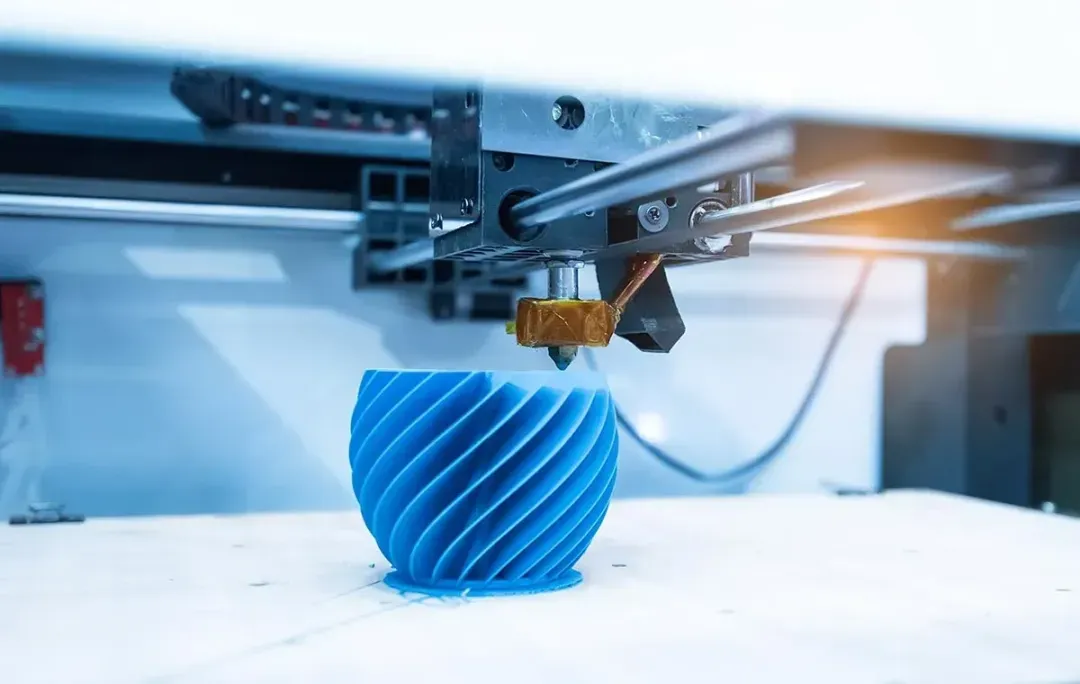
China exported 4.48 million 3D printers in the first eleven months of 2025, marking a 29.6% year-on-year increase, with desktop models accounting for over 99% of shipments. This surge reflects a fundamental repositioning: consumer-grade additive manufacturing has exited the hobbyist niche and entered mainstream adoption, driven not by incremental hardware improvements but by a convergence of demand-side behavioral shifts, AI-enabled accessibility, and strategic capital redeployment into ecosystem infrastructure. The transition mirrors Apple's 2007 recasting of mobile phones from communication tools into platforms for personalized creativity—a comparison that industry observers now invoke to describe 3D printing's current inflection point.
From IP-Driven Impulse Purchases to Grassroots Manufacturing Infrastructure
The velocity of China's desktop 3D printer adoption stems from a recalibration in use cases. Historically positioned as prototyping equipment for makers and engineers, these devices now serve a consumer base seeking tangible expression of digital creativity. The mid-2025 frenzy surrounding LABUBU—a collectible character whose scarcity drove consumers to purchase printers costing several thousand yuan to produce knockoffs at material costs below 50 yuan per unit—exemplifies this shift. On MakerWorld, a community platform operated by Bambu Lab, the most popular LABUBU model accumulated nearly 20,000 downloads, demonstrating latent demand for customization tools that bypass traditional manufacturing and retail markups.
This behavioral pattern catalyzed the proliferation of "3D printing farms"—decentralized operations clustering dozens to thousands of consumer-grade machines for small-batch contract manufacturing. Operators of these facilities, who emerged initially to capitalize on viral product cycles like fidget toys and novelty items, now function as critical nodes in an informal production network. Their presence across e-commerce platforms and cross-border marketplaces has effectively transformed consumer hardware into light industrial capacity, validating commercial viability while simultaneously educating broader audiences through visible output. China's first-quarter 3D equipment production grew 44.9% year-on-year, outpacing both industrial robots (35.5%) and new energy vehicles (31.7%)—sectors that command far larger absolute capital bases and policy support.
Capital Influx Targets Usability Bottlenecks as AI Dismantles Design Barriers
Investment activity in China's 3D printing sector reached approximately 8.4 billion yuan across 100 financing events in 2025, a 115.4% increase from the prior year and the highest total on record. This capital concentration addresses two historical friction points: design complexity and print reliability. Generative AI models now convert text prompts or reference images into printable 3D files within minutes, collapsing workflows that previously required CAD proficiency. Tencent's Hunyuan3D and similar tools have effectively reassigned modeling labor from humans to algorithms, lowering the skill floor from technical competency to linguistic description.
Parallel advancements in machine vision enable real-time monitoring for common failure modes—bed adhesion issues, filament tangles, warping—with automated interventions that improve success rates for novice users. These developments attracted investors ranging from Hillhouse Capital and Meituan's venture arm backing Fastrcraft Technology to DJI's strategic investment in Creality, signaling recognition that consumer 3D printing represents an emerging category of intelligent hardware platforms rather than a niche manufacturing segment. High-profile backers are positioning for ecosystem control rather than unit economics, as evidenced by funding allocations toward content libraries, community features, and supply chain integration rather than purely mechanical innovation.
Ecosystem Competition Supersedes Hardware Specifications in Emerging Value Architecture
Market leaders have pivoted from device differentiation toward closed-loop ecosystems that bundle content, materials, and social infrastructure. Bambu Lab's MakerWorld platform enables one-click printing of community-uploaded models, creating network effects where content depth becomes a switching cost independent of printer specifications. Fastrcraft's integration with print-on-demand workflows embeds its devices into cross-border e-commerce supply chains, routing overseas custom orders to domestic farms for zero-inventory fulfillment using commodity PLA filament. Creality's collaboration with over 2,300 YouTube creators in technology and lifestyle verticals demonstrates platform thinking, where brand value derives from aspirational association rather than technical superiority.
This architectural shift redefines competitive moats. As Shenzhen's supply chain compresses hardware margins—China now controls over 90% of global desktop 3D printer market share—sustained profitability migrates toward consumables, software services, and transaction facilitation within proprietary ecosystems. The strategic question facing manufacturers is whether recurring revenue models can mature before commoditization erodes development budgets necessary for ecosystem maintenance. User retention presents parallel challenges: converting one-time experimental purchases into habitual creative workflows requires continuous content replenishment and friction reduction that many hardware-centric organizations lack institutional capability to execute.
Distributed Production Models Test Boundaries of Manufacturing Localization
The rise of print farms operating consumer-grade equipment challenges conventional assumptions about manufacturing scale and geography. These operations demonstrate that for certain product categories—low-volume customized goods with high design variance—coordinated networks of inexpensive machines can achieve unit economics competitive with centralized injection molding or CNC fabrication. This model proves particularly viable in cross-border contexts where regional production circumvents tariffs, reduces shipping times, and enables rapid iteration without tooling investments.
However, structural constraints remain. Material limitations confine most consumer applications to thermoplastics with modest mechanical properties, restricting addressable use cases despite expanding design freedom. Quality consistency across distributed nodes lacks the process controls of traditional manufacturing, creating variance that limits premium positioning. Intellectual property ambiguity surrounding user-generated models—as illustrated by the LABUBU phenomenon—introduces legal exposure that platforms have yet to systematically address through licensing frameworks or content moderation protocols.
The sector's trajectory depends on whether ecosystem orchestrators can convert hardware distribution into durable platform businesses before price competition exhausts capital reserves. China's dominance in manufacturing and export volumes positions domestic firms to set global standards for this category, but the transition from tool supplier to infrastructure provider requires organizational capabilities distinct from hardware engineering. The 2025 adoption surge confirms consumer readiness; the sustainability of that demand will determine whether 3D printing achieves the ubiquity its proponents anticipate or remains confined to episodic viral cycles.
By ChinaBiz Insider Analysis Desk