
China’s Driverless Trucks Quietly Take the Global Lead
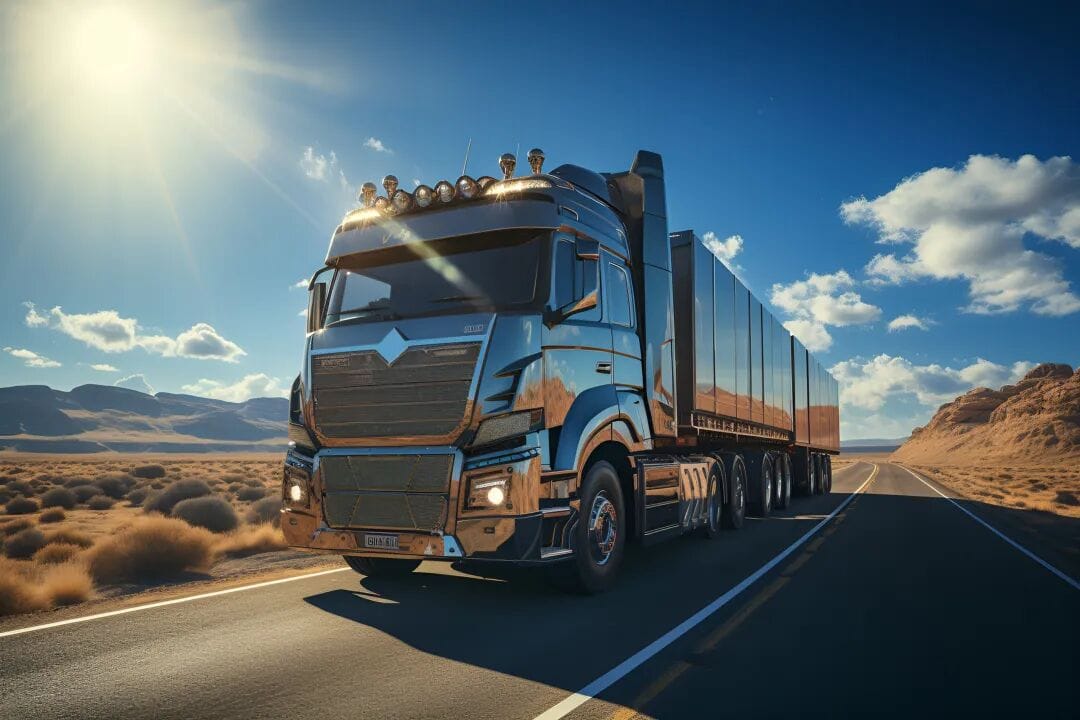
China has emerged as the world’s largest operator of autonomous heavy trucks, leapfrogging traditional leaders in less than a year by focusing on harsh, labor‑scarce industrial environments rather than consumer robotaxis.
From open‑pit coal mines in Inner Mongolia to container terminals in Ningbo and Tianjin, driverless trucks are moving from trial deployments into early commercial operation, reshaping cost structures in some of the country’s most critical logistics arteries.
Data from Global Data show that between July 2024 and July 2025, the number of autonomous haulage trucks in operation worldwide rose from 2,080 to 3,832, with China accounting for 2,108 units, ahead of Australia’s 1,173.
Behind that jump is a deliberate strategy: deploy first in closed or semi‑closed sites where safety risks and labor shortages are acute, iterate rapidly in the field, and only then push toward broader commercialization.
Policy support and infrastructure build‑out have underpinned the shift. A national “vehicle‑road‑cloud integration” pilot framework launched in early 2024, along with extensive 5G and BeiDou coverage, is enabling L4‑level unmanned operations in designated mining, port and highway corridors.
At the same time, a domestic supply chain for sensors, computing platforms and autonomous driving software has driven down system costs, enabling new “transportation‑as‑a‑service” models that lower upfront capital needs for operators.
China’s Edge in Harsh, High‑Risk Freight Corridors
China’s autonomous truck push is centered on logistics scenarios that human drivers increasingly shun: remote open‑pit mines, 24‑hour container terminals and long‑haul freight corridors with high accident risk.
Industry data indicate that unmanned heavy trucks in China have entered a phase of small‑scale commercial operation and are transitioning from pilot demonstrations toward broader deployment. The sector is evolving along three main axes: expanding in mining and industrial parks, maturing in port operations, and breaking through in highway line‑haul.
By late November 2024, China Energy had deployed 461 unmanned mining trucks across 12 open‑pit coal mines. These vehicles have accumulated more than 7.6 million kilometers of operation and transported over 58 million cubic meters of material, achieving an average operational efficiency of 87.3% compared with human‑driven trucks. At an open‑pit coal mine in Hulunbuir, Inner Mongolia, winter temperatures reach minus 30 degrees Celsius; in the winter of 2023, a sudden cold snap left one‑third of drivers too ill to work.
The introduction of 100‑tonne unmanned mine trucks by companies such as Huaneng Ruichi has altered that calculus. These vehicles now perform automatic loading and unloading, route planning and real‑time obstacle avoidance. In extreme cold, their equipment failure rate has fallen below 10%, while operating efficiency is up 20%. For a fleet of 100 mining trucks, the shift can replace around 15,000 tonnes of diesel annually and cut carbon dioxide emissions by about 48,000 tonnes.
Ports form another core deployment arena where technology is more mature and fleet sizes are larger. At Ningbo Zhoushan Port and Tianjin Port, start‑ups such as FABU Technology have deployed L4 autonomous terminal tractors. By the end of 2024, 102 such vehicles were operating at the Meishan terminal in Ningbo. Running without guide rails and relying on high‑definition maps and multi‑sensor fusion, they autonomously handle short‑haul moves between quay cranes and container yards. For a 100‑vehicle fleet, annual labor savings are estimated at over RMB 65.6 million (US$9.0 million), with operating costs down by as much as 95%.
On highway corridors, full end‑to‑end driverless operation remains restricted, but hybrid models are emerging. Pony.ai and TrunkTech are piloting “highway autonomous + manual last‑mile takeover” schemes on routes such as Beijing–Shanghai and Chengdu–Chongqing.
In April 2024, Pony.ai and Sinotrans launched what they describe as China’s first L4 autonomous heavy‑truck cross‑provincial freight service, running daily between Beijing and Tianjin. The service has transported nearly 500 standard containers and logged over 45,000 autonomous kilometers.
In January 2025, Pony.ai secured China’s first nationwide license for cross‑provincial driverless truck platooning tests. TrunkTech says its platooning model has cut comprehensive operating costs by 20%, with per‑vehicle gross margins reaching six times those of traditional operations.
These mining, port and trunk‑line scenarios may appear peripheral, but together they form the backbone of China’s road freight system. Their shared characteristics—high danger, high work intensity and high dependence on human labor—have made them fertile ground for driverless heavy‑duty vehicles.
From Latecomer to Leader: System‑Level Advantages
Global Data’s figures highlight the speed of China’s catch‑up. In July 2024, China operated just 562 autonomous mining trucks and drill rigs, compared with roughly 1,000 in Australia. By July 2025, China’s fleet had surged to 2,108 units, a near 3.75‑fold increase, while Australia’s count rose more modestly to 1,173.
A key differentiator has been China’s deployment logic. Rather than waiting for fully generalized L4 capability, Chinese companies have prioritized real‑world usage in constrained environments, improving technology as they solve concrete problems. This contrasts with “technology‑first” approaches in the US and Australia that emphasize idealized autonomy before large‑scale deployment.
Policy has reinforced this pragmatism. In January 2024, five ministries including the Ministry of Industry and Information Technology, the Ministry of Public Security, the Ministry of Natural Resources, the Ministry of Housing and Urban‑Rural Development and the Ministry of Transport jointly issued a notice launching pilot projects for “vehicle‑road‑cloud integration” for intelligent connected vehicles. Under this framework, selected regions are experimenting with L4 driverless truck operations in defined scenarios.
The market backdrop is vast. In 2024, China’s road freight volume exceeded 30 billion tonnes, and port container throughput reached 330 million TEUs, about 30% of the global total. The country also leads in the number and scale of open‑pit coal and metal mines. Yet these sectors are grappling with aging driver workforces—average ages in mines exceed 45—rising 24‑hour port labor costs, and elevated accident risks due to fatigue on long‑haul routes and in hazardous work zones.
These operational pressures have created strong incentives for solutions that demonstrably save money, enhance safety and improve efficiency. Once an unmanned truck fleet proves it can reduce accidents and lower per‑tonne transport costs at a mine or port, follow‑on orders rapidly expand deployment.
China’s broader digital infrastructure has amplified this effect. By September 2025, the country had built more than 4.705 million 5G base stations, extending low‑latency coverage across many mines, ports and expressways. The BeiDou Navigation Satellite System provides high‑precision, all‑weather positioning, reducing dependence on costly differential GPS. In multiple pilot corridors, roadside sensing units and edge computing nodes enable cooperative “vehicle‑road‑cloud” operations where vehicles, infrastructure and cloud platforms share perception and control tasks.
This architecture eases the performance burden on onboard sensors, improves robustness in dust, rain, fog and nighttime conditions, and helps contain system costs. By contrast, many Western deployments still rely on “standalone intelligence” in each vehicle, anchored in expensive lidar and high‑end computing, which complicates economic scaling.
Cost, Local Supply Chain and New Business Models
Rapid commercialization of unmanned heavy trucks has also depended on cost‑competitive hardware and flexible business models.
Historically, imported autonomous mine‑truck systems were expensive, often commanding several million yuan per unit. Software was closed, upgrades were difficult, and local service was slow. China’s domestic ecosystem has altered that equation. Lidar units from Hesai Group and RoboSense are now priced at roughly half the level of comparable foreign products. Computing platforms such as Huawei MDC from Huawei Technologies and Journey chips from Horizon Robotics offer relatively low‑cost processing power tailored to autonomous driving.
Software and systems integrators—including Mainline Technology, Tage Idriver and Eacon Mining Technology—provide end‑to‑end perception and decision‑making stacks and can rapidly customize vehicle control logic to match specific mining or port conditions. This local, vertically integrated supply chain has shortened deployment cycles and reduced total system costs for operators.
Commercial models are evolving in tandem. Rather than selling vehicles outright, some Chinese providers now offer “transportation‑as‑a‑service” (TaaS), charging clients per tonne‑kilometer transported. Under this model, vehicle procurement, operations and maintenance, insurance and software upgrades are bundled into a single service contract, significantly lowering upfront investment for mid‑sized mines and regional ports. The approach has broadened access to automation beyond China’s largest energy and logistics groups.
Australia and other early leaders in autonomous haulage are not lagging in core technology, but they face constraints from more closed ecosystems, higher system costs and slower iteration cycles. China, by contrast, has combined large‑scale application scenarios with fine‑grained local engineering and a cost‑efficient industrial base, allowing it to overtake incumbents despite entering the field later.
Going Global: From Equipment Export to Standards Influence
Chinese autonomous truck providers are now testing their competitiveness abroad, positioning themselves for the next wave of intelligent freight globalization.
As early as 2021, Westwell Technology deployed its self‑developed Q‑Truck new‑energy autonomous terminal tractors at Khalifa Port in Abu Dhabi, creating what is described as the Middle East’s first commercial terminal with mixed human and unmanned operations. The company has since expanded into ports such as Laem Chabang in Thailand and Veracruz in Mexico.
At these sites, Q‑Truck fleets integrate in real time with terminal operating systems to execute automated container handling and short‑haul transport. Overall operational efficiency has risen by about 30%. The vehicles are fully electric, supporting port decarbonization efforts; when powered entirely by renewable electricity, each unit can cut annual carbon emissions by roughly 50 tonnes.
In mining, several Chinese companies are piloting overseas deployments. Eacon Intelligent Technology has launched a localization trial of driverless mine trucks in the Kalgoorlie mining region of Australia. In Thailand, Beijing TAGE Zhixing Technology has joined Siam Cement Group (SCG), Advanced Info Service (AIS), Huawei and Yutong Group to build the country’s first 5G‑enabled autonomous driving smart mine.
These export efforts align closely with the infrastructure needs of many Belt and Road countries. Manufacturing upgrades in Southeast Asia are driving rapid growth in port throughput amid shortages of skilled dockworkers.
In the Middle East, sovereign wealth funds are investing heavily in smart logistics infrastructure as they seek to diversify beyond oil. In parts of Africa and Latin America, mining remains a pillar industry but struggles with low transport efficiency, high accident rates and environmental pressures. Chinese autonomous truck solutions—combining mature technology, flexible commercial structures and adaptable local deployment—are increasingly seen as tools for industrial upgrading in such markets.
China’s influence is also beginning to extend from equipment to rule‑making. For example, Jiushi Intelligent has participated in revisions to Singapore’s TR‑68 technical standard for autonomous driving, seeking to align Chinese technical approaches with overseas regulatory frameworks. These engagements are still nascent but point to a shift from technology follower to active participant in global intelligent freight standards.
Over the longer term, as carbon‑neutrality commitments tighten, electrified and automated heavy‑duty transport is likely to move from niche to norm. China’s scale advantage in driverless heavy trucks positions its suppliers to play a significant role in the emerging global smart logistics architecture.
For now, the trucks criss‑crossing China’s mines, ports and highways do so largely out of the public eye, without splashy product launches or consumer marketing. Yet their progress from pilot projects to thousand‑unit fleets suggests that one of the most consequential applications of autonomous driving technology may be unfolding far from city centers—quietly but at industrial scale.