
China's EV Charging Network Faces Stress Test as 380 Million Electric Vehicle Trips Expected During Spring Festival Rush
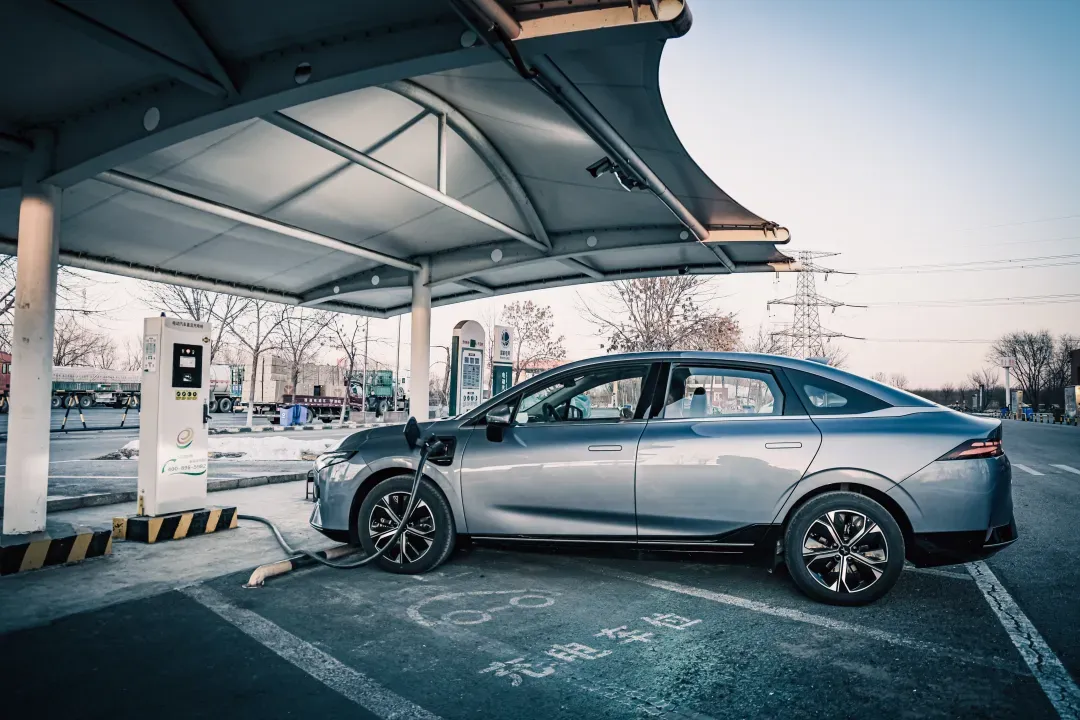
China's electric vehicle charging infrastructure is confronting its most severe test yet as the nation's 2026 Spring Festival travel rush unfolds, with an estimated 380 million new energy vehicle trips expected during the 40-day period from February 2 to March 13. The surge in EV travel, driven by the country's rapidly expanding fleet of 43.97 million new energy vehicles, is exposing critical gaps in charging capacity along highways and rural areas despite China operating the world's largest EV charging network.
The anticipated 9.5 billion cross-regional trips nationwide during this year's Spring Festival period marks a historic high, with new energy vehicles now emerging as a primary mode of transportation. However, the massive spike in demand has triggered hours-long queues at highway service area charging stations, revealed charging blind spots in counties and townships, and highlighted significant efficiency drops in cold weather conditions—transforming "range anxiety" into what industry observers are calling "charging panic."
The charging crisis reflects deeper structural challenges beyond simple supply constraints. While China boasted 20.09 million charging facilities by December 2025 and over 98% of highway service areas equipped with charging infrastructure, the concentration of demand along major travel corridors during peak periods has overwhelmed capacity. The National Energy Administration reported a national vehicle-to-charger ratio of approximately 2.19:1, yet this average masks severe shortages during holiday travel peaks.
The situation is further complicated by technical limitations, including battery performance degradation in freezing temperatures common across northern China and parts of the south during the Spring Festival period, alongside maintenance system inadequacies that leave broken chargers unrepaired during critical high-demand windows.
Supply-Demand Mismatch at Peak Hours
The core challenge stems from the fundamental incompatibility between tidal-wave travel patterns and static infrastructure deployment. During Spring Festival return and departure peaks, charging demand surges exponentially while supply remains fixed, with many highway service areas still operating lower-power AC chargers. The infrastructure expansion cycle presents an additional constraint—new charging stations require at least six months to construct due to complex power capacity upgrades, meaning additional capacity cannot address immediate Spring Festival needs.
The geographic distribution of China's EV fleet amplifies the problem. In 2025, 12.93 million new energy vehicles were newly registered, pushing total national inventory to 43.97 million units. This rapid growth has outpaced infrastructure development in key corridors, particularly the "71118" main thoroughfare network that carries the heaviest Spring Festival traffic.
Cold weather compounds these difficulties significantly. Sustained low temperatures across northern regions and freezing rain in southern areas have severely impacted battery performance. Energy transfer efficiency within battery cells drops in cold conditions, reducing both charging efficiency and driving range, forcing more frequent charging stops while simultaneously limiting charger output below rated capacity.
Infrastructure Gaps in Rural Regions
China's charging network has long exhibited pronounced imbalances—dense in cities but sparse in rural areas, concentrated in eastern regions while thin in central and western provinces. This structural inequality becomes acutely visible during Spring Festival when millions of urban EV owners return to their hometowns. Counties, townships, and remote road segments suffer from inadequate charging coverage, leaving returning travelers struggling to find available facilities.
Addressing this rural charging deficit has become a policy priority. In September 2025, the National Development and Reform Commission outlined plans requiring at least 14,000 new DC charging guns in townships currently lacking public charging stations by the end of 2027, targeting complete coverage of rural public charging infrastructure.
Highway service area capacity also requires targeted reinforcement. Authorities have shifted strategy from universal coverage to prioritizing major trunk routes. In June 2025, the NDRC mandated that charging facilities exceeding 40% utilization during major holidays receive high-power upgrades first, followed by plans announced in September to install or retrofit 40,000 charging guns rated at 60 kilowatts or above across highway service areas by end-2027.
Technology and Business Model Innovation
Long-term solutions demand fundamental advances in battery technology and diversified charging approaches. Current lithium-ion battery limitations in cold weather and charging speed are driving research into solid-state and sodium-ion alternatives. Solid-state batteries, considered the ultimate battery format, transitioned from laboratory concept to development phase in 2025, with small-scale vehicle installations and demonstration operations planned for 2027 and mass production expected around 2035.
Sodium-ion batteries are progressing faster. The world's first mass-production passenger vehicle equipped with sodium-ion batteries is scheduled to launch in mid-2026, with scaled production anticipated by 2027. These technologies promise improvements in energy density, charging efficiency, and cold-weather performance that could fundamentally alleviate range and charging concerns.
Building a multi-modal energy replenishment system represents another critical pathway. Single-mode charging infrastructure cannot accommodate concentrated Spring Festival demand, necessitating integrated "charging plus battery swapping plus mobile charging" networks. Battery swapping enables three-minute energy replenishment, effectively addressing slow charging speeds and queue congestion, while mobile charging provides emergency response capabilities for remote areas and locations with broken chargers.
Industry Players Scale Up Investments
Major industry participants have announced concrete expansion roadmaps. Contemporary Amperex Technology(CATL) has outlined the most detailed plans, targeting over 3,000 "Chocolate" battery swap stations across 140-plus cities in 2026, with simultaneous highway network franchise development and a long-term goal of 30,000 stations. Its "Qiji" swap network for commercial vehicles aims for 900 stations in 2026, expanding trunk coverage to "five horizontal, five vertical" routes, ultimately building an 180,000-kilometer national swap network covering 80% of trunk logistics capacity by 2030.
CATL is also driving battery swap standardization through partnerships with NIO, Changan Automobile, GAC Group, and other automakers to enable cross-brand, cross-model compatibility. The battery manufacturer's entry provides core technological support for optimizing energy replenishment systems.
Automakers are increasingly building proprietary networks to create differentiated charging experiences. NIO operates the most mature infrastructure, combining battery swapping, charging, and mobile charging. The company plans to add 1,000 swap stations in 2026, bringing its total above 4,600, while advancing its "County-by-County Swap Access" initiative to gradually cover all 2,800-plus county-level administrative regions nationwide. NIO's fifth-generation swap stations, launching in first quarter 2026, will reduce swap times to under two minutes and accommodate multiple vehicle models from NIO, Onvo, Firefly, and swap alliance partners through telescopic robotic arm technology.
BYD Company is focusing on megawatt-level ultra-fast charging, planning over 15,000 second-generation megawatt flash-charging stations in 2026 using a three-tier "flagship station plus satellite station plus community station" architecture covering urban areas and key highway locations. Flagship stations equipped with megawatt chargers can deliver 400 kilometers of range in five minutes.
Leading charging operators including TELD and Star Charge are accelerating deployment. TELD will prioritize county and township network densification in 2026 while coordinating with highway ultra-fast charging construction, while Star Charge plans to shift strategic focus entirely to county markets during the year.
The Spring Festival charging stress test marks both an extreme pressure examination and a transformation catalyst for China's energy replenishment infrastructure sector. Developing comprehensive charging capacity cannot be achieved overnight but requires sustained, coordinated efforts across the entire industrial chain.