
China's eVTOL Boom Hits Reality Check as Subsidies Fade
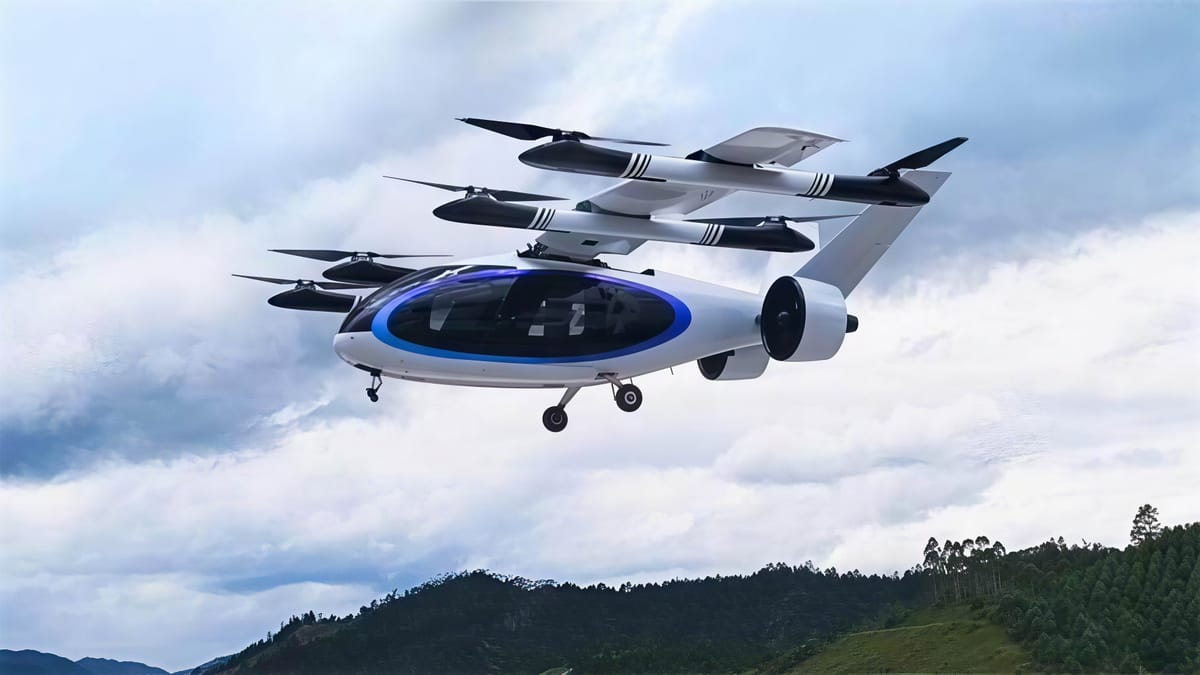
China’s heavily hyped "low-altitude economy" is experiencing its first structural funding winter in 2026, transitioning rapidly from a subsidy-driven frenzy to a harsh capital reality check.
The deceleration is starkly visible in national flight data, where drone flight hours grew by just 8% in the first half of 2026 to 26.4 million hours, a steep plunge from the 149% year-on-year surge recorded in the same period in 2025. Investors are aggressively pulling back as local governments—previously the primary growth engines—suspend aggressive cash incentives to reassess regulatory and commercial viability.
Market sentiment soured after prominent manufacturers began abandoning capital-intensive projects. Companies have realized that the timeline for urban air mobility (UAM) commercialization remains fundamentally disconnected from current infrastructure capabilities, prompting a widespread strategic retreat across the supply chain.
Slashing Subsidies Signals Policy Pivot
The immediate catalyst for the 2026 sector contraction stems from municipal policy reversals. In September 2026, Hangzhou moved to revoke its comprehensive 21-point low-altitude support policy, while Guangzhou’s Tianhe District suspended its aerospace cash reward programs for revision.
These adjustments reflect a broader regulatory mandate to ensure fair competition and mitigate compliance risks associated with localized corporate registrations. Local governments are shifting away from blanket cash handouts aimed at attracting startups, opting instead for targeted investments. Hangzhou’s transition to a RMB 3 billion (US$416 million) industry fund strictly targets critical technologies, airworthiness certification, and operational routes. For startups optimized to harvest government grants rather than generate commercial revenue, this policy pivot eliminates their primary lifeline.
Divesting Assets Exposes Commercial Voids
Without municipal safety nets, the fragile unit economics of urban drone operations are breaking down. The high-profile divestment by Loncin Motor exemplifies the financial strain. In late 2025, the company offloaded a 49.99% stake in Zhuhai Longhua Helicopter Technology for a nominal 1 RMB. The subsidiary carried a negative net asset value of RMB 63.17 million (US$8.77 million) and owed its parent company nearly RMB 69.9 million (US$9.7 million) in debt.
Public markets are mirroring this caution. Aviation heavyweights AVICOPTER PLC and JOUAV have both terminated drone-related private placements and fundraising initiatives over the past year. Capital is refusing to underwrite indefinite R&D and manufacturing costs for use cases—such as urban coffee delivery—that cannot compete with the cost and stability of mature ground logistics networks.
Bifurcating Markets Force Strategic Retreats
The Civil Aviation Administration of China (CAAC) explicitly warned in May 2026 that the industry faces severe bottlenecks in low-altitude safety supervision, communication infrastructure, and airworthiness certification. Consequently, the sector is violently bifurcating.
Utility-driven B2B applications have established clear product-market fit. Agricultural drones, with a fleet exceeding 300,000 units servicing 460 million acres, alongside powerline inspection and surveying, provide measurable ROI. Conversely, passenger eVTOLs and mass urban delivery lack the requisite air traffic management grids and consumer demand. The 2026 funding winter marks the end of the hardware hype cycle, forcing the Chinese low-altitude sector into a necessary phase of consolidation where only entities with verifiable cash flow will survive.