
China's GPU Challengers Outpace Nvidia in R&D Ratios as 2025 Sector Spending Hits Record
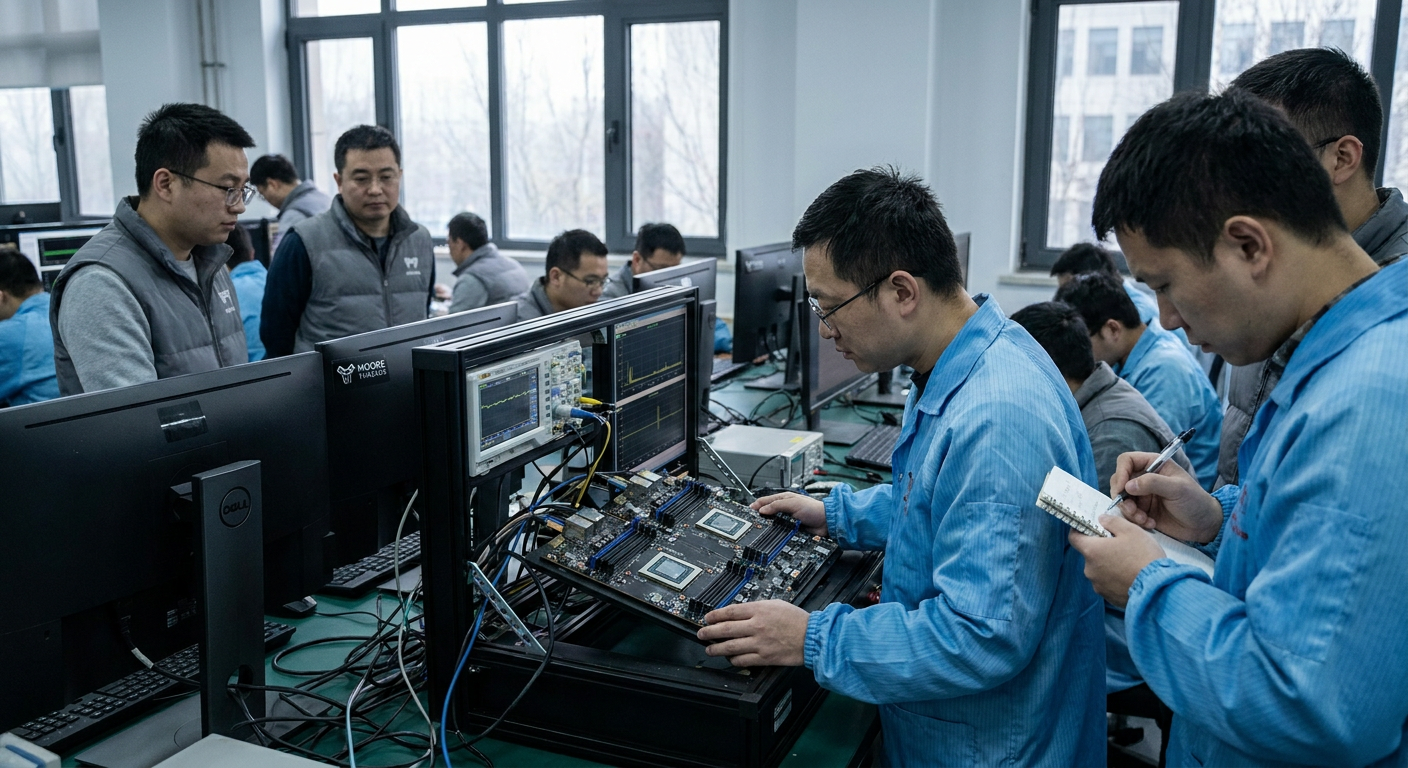
China's semiconductor sector is structurally decoupling from global supply chains through sheer capital force, with domestic GPU developers now burning a higher percentage of their revenue on research and development than global leader Nvidia Corp.
In a stark indicator of Beijing's aggressive localization mandate, total R&D expenditure across China's A-share listed semiconductor companies surged to an unprecedented RMB 107 billion (US$15.51 billion) last year. Industry data from 2025 reveals that prominent domestic AI chip challengers, specifically Moore Threads and MetaX, have pushed their R&D-to-revenue ratios past Nvidia's historical benchmarks.
This capital-intensive strategy reflects a market prioritizing technological sovereignty over near-term profitability. It signals to global investors that state-aligned imperatives will continue to override standard commercial metrics in the world's second-largest economy as the industry navigates the trade and policy complexities of 2026.
State Mandates Accelerate Capital Burn
The R&D overdrive underscores a fundamental shift in capital allocation within China's tech ecosystem. By reinvesting outsized portions of their topline revenue into silicon design and advanced packaging, Moore Threads and MetaX (沐曦) are attempting to compress decades of processor evolution into a multi-year sprint. While Nvidia maintains absolute dominance in global computing volume and net R&D dollar value, the proportional spending metrics from these Chinese upstarts highlight an accelerated capital burn rate necessitated by tightening global export controls.
A-Share Markets Absorb Localization Costs
The RMB 107 billion (US$15.51 billion) aggregate R&D expenditure logged by A-share chipmakers in 2025 represents a structural peak driven by systemic policy support. As Beijing doubles down on semiconductor self-sufficiency throughout 2026, domestic foundries and fabless designers are largely shielded from immediate shareholder demands for high dividend yields or robust profit margins.
Instead, market valuations on the Shanghai and Shenzhen bourses are increasingly tethered to a company's ability to secure domestic procurement contracts and demonstrate self-reliant technological tape-outs. This dynamic is actively reshaping supply chain risk profiles, forcing international component suppliers and downstream electronics manufacturers to navigate a deeply bifurcated hardware landscape where state policy dictates capital flows.