
China's Humanoid Robot Frenzy: Hype Meets Reality as Startups Race to Commercialize
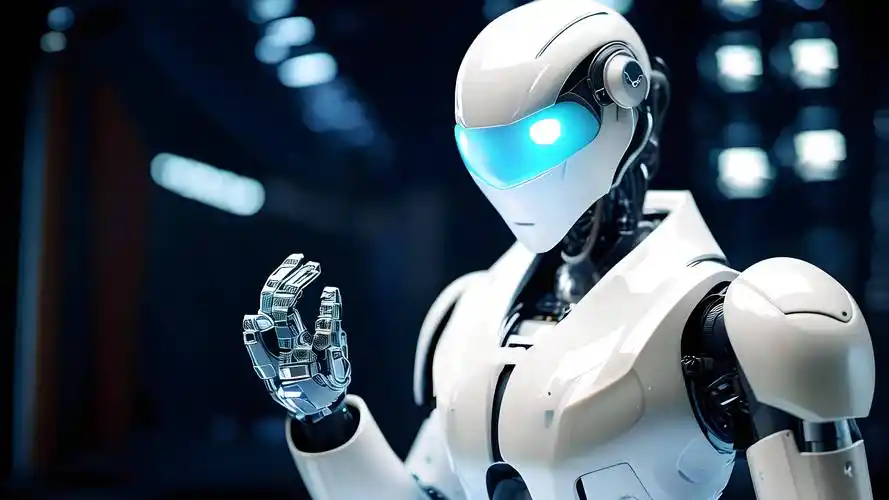
China's humanoid robot sector is experiencing an unprecedented investment boom, fueling a frantic race to commercialization that is drawing comparisons to the early days of the nation's electric vehicle industry. Flush with venture capital and buoyed by strong government support, a new generation of startups is securing massive orders and accelerating IPO timelines, betting that humanoid robots will become the next pillar of China’s high-tech manufacturing.
Yet, behind the market frenzy lies a stark reality: the technology remains nascent, production costs are high, and practical applications are still limited. As capital floods into the sector at a geometric rate, a critical question is emerging for investors and the industry alike: is this the dawn of a new industrial revolution, or a speculative bubble poised to burst?
The momentum is undeniable. In 2025 alone, leading players have announced a flurry of significant commercial deals. UBTECH Robotics has secured over RMB 630 million yuan (US$87.5 million) in orders for its Walker series robots this year. Agibot Robotics received a framework order worth several hundred million yuan from Longcheer Technology, while both companies, along with Unitree Technology, landed a joint order exceeding RMB 120 million from a China Mobile subsidiary.
This commercial traction is propelling startups toward the public markets at breakneck speed. Unitree, whose robots gained national fame performing in a televised Spring Festival Gala, is preparing to file for an IPO in the fourth quarter. Meanwhile, Zhiduomeng executed a backdoor listing in July by taking control of SWANCOR Advanced Materials, sending the latter's stock soaring by more than 1,800% this year. The market's feverish response underscores a powerful narrative driven by the promise of AI and automation, but it also glosses over the fundamental challenges that lie ahead on the path to profitability.
The New Wave of Founders
At the heart of this boom are "geek-like entrepreneurs," primarily from a post-90s, academic generation. Founders like Wang Xingxing of Unitree, "Zhihui Jun" Peng Zhihui of Zhiduomeng, and Jiang Zheyuan of Songyan Dynamics have rapidly transitioned from industry newcomers to coveted targets of capital. They are navigating uncharted territory, where the convergence of advanced AI models with robotics has created a wide-open field without established leaders or proven technological paths.
This journey contrasts sharply with previous tech waves, such as the rise of smartphones. When entrepreneurs like Lei Jun founded Xiaomi or Yu Chengdong took over Huawei's mobile division, they were seasoned industry veterans building upon a relatively mature ecosystem with established operating systems like iOS and Android. Today's robot pioneers, however, are venturing into a frontier defined by fundamental research and development, making their endeavor inherently more challenging and precarious.
Policy Tailwinds and Capital Flood
The industry's rapid expansion is heavily underwritten by both government policy and private capital. In October 2023, China’s Ministry of Industry and Information Technology (MIIT) released guidance designating humanoid robots as a strategic industry, laying out a clear roadmap for technological development and industrialization. This was followed by a raft of supportive local policies in tech hubs like Beijing, Shanghai, and Shenzhen.
Capital has responded with overwhelming force. According to IT Juzi, 132 investment deals were recorded in the sector as of mid-October 2025, a dramatic jump from 69 in 2024, 40 in 2023, and just 14 in 2022. The sentiment has spilled into the secondary market, where UBTECH, the first humanoid robot stock, has seen its price climb over 157% this year. The speculative fervor is reminiscent of past tech bubbles, most notably the early electric vehicle gold rush, which saw hundreds of startups emerge before a painful market consolidation left most by the wayside. "Investment earns money from non-consensus," said Zhou Quan, a partner at InnoAngel Fund, an early backer of Songyan Dynamics. "Many core technical problems have not yet been solved."
The Rush for Commercial Orders
While nine-figure orders suggest a commercial breakthrough, practical applications remain limited and rudimentary. At the 2025 World Robot Conference, onlookers were unimpressed by a robot on a simulated assembly line, comparing its slow movements to the sloth character in "Zootopia." Currently, robots in factory settings are largely confined to simple tasks like sorting, loading, and material handling.
Efficiency is not the only hurdle; cost remains a primary barrier to widespread adoption. Although prices have fallen—with full-size models like the LimX Dynamics Oli now starting at RMB 158,000 yuan, down from the RMB 650,000 price tag of Unitree’s H1 in February—the total cost of ownership is prohibitive. A key dilemma is that pursuing the generalized capabilities of human-like form factors results in high complexity and power consumption, making them less cost-effective than specialized robotic arms and AGVs for most factory tasks. Furthermore, deploying a single robot in a new environment requires immense customization, with one case study showing adaptation costs exceeding the hardware price itself.
A Gap Between Hype and Reality
The current wave of orders may not entirely be driven by immediate economic returns. "The current capital enthusiasm is significantly higher than the technological maturity," said Yu Naigong, Director of the Robotics Research Center at the Beijing Academy of Artificial Intelligence. Experts suggest these initial deployments are primarily for data collection, allowing the robots' AI models to learn and iterate in real-world environments.
Xing Boyang, R&D director at a national humanoid robot innovation center, noted that many orders serve strategic purposes. Automakers, for instance, are early adopters because humanoid robot technology shares similarities with autonomous driving, and early investment gives them a foothold in a potentially convergent field. For some robot makers, a large order book is also a crucial storytelling asset for an impending IPO. The question remains: once these strategic, data-gathering deployments are complete, will the technology and cost have improved enough to attract the next wave of purely commercial orders?
The Global Race
China's pragmatic, "market-driven, fast-iteration" approach leveraging its vast manufacturing ecosystem contrasts with strategies elsewhere. Experts note that Japan, a traditional robotics powerhouse, has been hampered by a focus on technical perfection over commercial viability, while the U.S., despite leading in AI algorithms with firms like Tesla and Boston Dynamics, faces challenges in scaling up due to a weaker domestic manufacturing base and supply chain.
This gives China a speed advantage in commercialization. However, the nation still faces critical dependencies. "The U.S. remains the global leader in the robot's intelligence due to its leadership in AI chips and algorithms," said Yuan Bo, an expert at the Wisdom Reference think tank. Industry insiders, including executives from UBTECH and Agibot, readily admit that China relies on imports for high-end chips and still lags in embodied AI development.
The Ultimate Human Question
Beyond the technical and financial hurdles, the rise of humanoid robots forces a deeper societal conversation. Public anxiety over job displacement is palpable, echoing fears from past industrial revolutions. "The development of humanoid robotics is not about replacing humans, but about restructuring productivity to move social division of labor into higher-value areas," argued investor Zhou Quan.
As these machines grow more capable, questions of safety and ethics become paramount. The industry is in a "savage growth" phase, but the physical presence of robots in human environments necessitates robust safety protocols. This brings to mind science fiction author Isaac Asimov's "Three Laws of Robotics," conceived over 80 years ago as a framework for human-robot interaction. Ultimately, the trajectory of humanoid robots will be determined not by their code, but by the choices and wisdom of their human creators.