
China's Humanoid Robot Race Heats Up as Unitree, Agibot Vie for IPO Crown
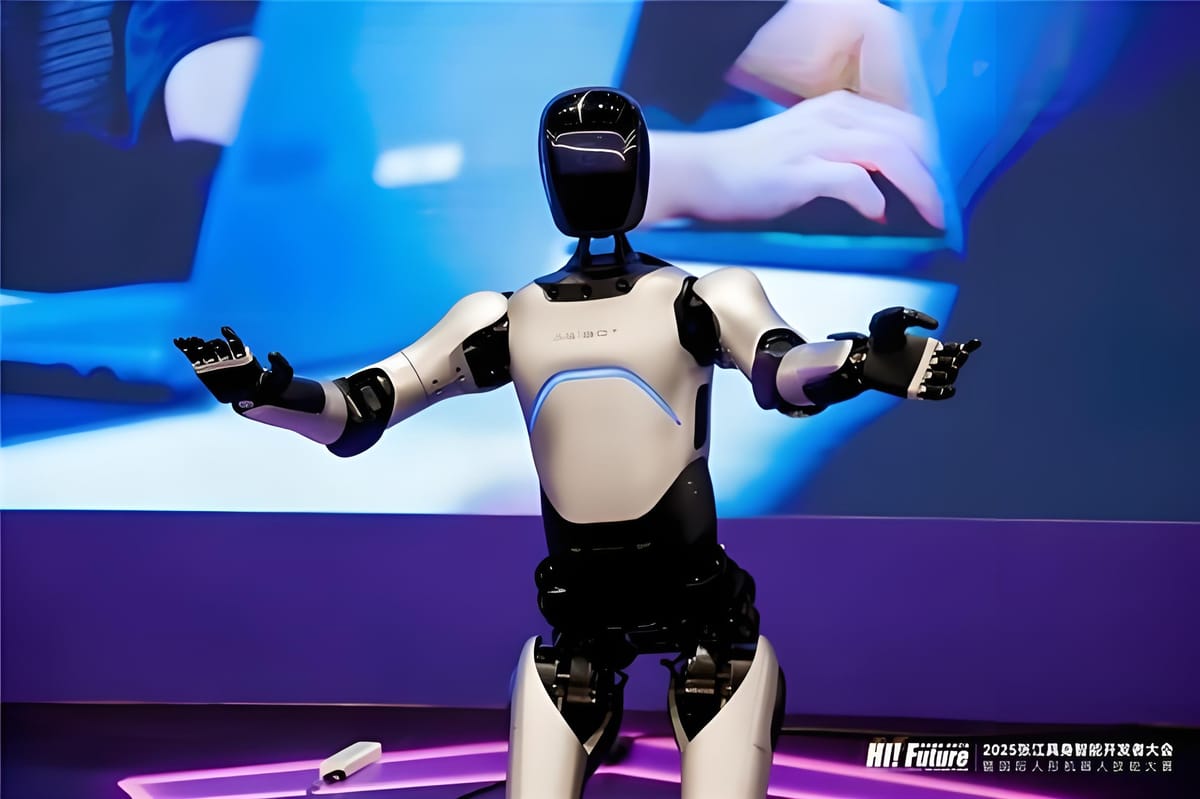
Two of China’s most prominent humanoid robot startups, Unitree Technology and Agibot, are locked in an intense race to go public, vying for the title of the sector's first listed company and the investor attention that comes with it.
Unitree Technology has moved aggressively toward a traditional initial public offering, announcing on September 2 that it expects to submit its listing application between October and December 2025. The plan follows the company's registration for pre-listing tutoring with the China Securities Regulatory Commission in July, signaling a clear and direct path to market.
Its rival, Agibot, has pursued a less direct route, sparking widespread market speculation. In July, the company announced its intention to acquire a controlling stake in A-share listed SWANCOR Advanced Materials, a move seen by many as a potential "backdoor listing." Though Agibot has denied recent rumors of a separate Hong Kong IPO and stated it has no plans for a backdoor listing within three years, its actions have already driven SWANCOR's stock up over 1,100%.
The dueling IPO strategies underscore the escalating competition in China's burgeoning robotics industry. The contest is not just about securing capital but also represents a clash between the distinct philosophies of their founders, as both companies race to commercialize a technology seen as the next frontier in artificial intelligence.
A Scramble for a Public Listing
The race for a public debut intensified in mid-2025. Agibot, founded by former Huawei "genius" Peng Zhuhui, made the first move. On July 9, A-share listed SWANCOR Advanced Materials announced that Agibot intended to acquire a stake of up to 66.99%, which would make Peng its new actual controller. The move immediately fanned speculation about a "backdoor listing," given SWANCOR's lack of involvement in the robotics sector.
Nine days later, on July 18, Hangzhou Unitree Technology countered by filing for pre-listing tutoring, a formal step toward an IPO in mainland China. It later provided a concrete timeline, targeting a Q4 2025 submission.
Despite Unitree's clearer timeline, the outcome remains uncertain. "Generally, it takes at least three months or more from submitting an application to listing," said Jiang Yi, founding partner at Hengye Capital. He noted that if Unitree files as planned, a listing would likely occur in the first quarter of 2026, barring unforeseen interventions.
Jiang added that Agibot's strategy of first controlling a listed entity could offer a capital advantage. "Agibot can leverage the listed company to capitalize on secondary market expectations," he explained, suggesting a path to "gradually inject assets" after a 36-month window to achieve a curveball listing.
Contrasting Playbooks
The rivalry is rooted in the founders’ different backgrounds and business strategies. Both Wang Xingxing of Unitree and Peng of Agibot entered the humanoid robot field around early 2023, spurred by advancements in AI. However, their approaches have been markedly different.
The first public clash came in August 2023, when the companies launched their debut humanoid robots just three days apart. Unitree unveiled its H1 model first, which it claimed was China’s first full-sized humanoid robot capable of running.
Since then, the two have engaged in an accelerating cycle of product iteration and price competition. In May 2024, Unitree launched its smaller G1 robot starting at 99,000 yuan. Agibot followed with five new robots, including the small-sized Lingxi X1. By March 2025, Agibot had priced its Lingxi X2 model at 98,000 yuan, slightly undercutting Unitree, which later responded with an even smaller R1 model priced at just 39,900 yuan.
Unitree's founder, Wang Xingxing, has earned a reputation as a "price butcher," leveraging six years of experience in quadruped robots to build a self-reliant supply chain and control costs. In contrast, Agibot’s leadership has expressed skepticism about the current price war. Yao Maoqing, a partner at Agibot, argued that competing on price is meaningless at this stage if the products cannot yet deliver sufficient value to users, calling it an "unhealthy" trend for the industry.
A Clash of Strategies
Underpinning the price war are fundamentally different corporate philosophies. Wang has unapologetically positioned Unitree as a "hardware" company, stating its investment in AI has been "relatively restrained" due to the high costs. This hardware-first, cost-conscious approach has paid off: Unitree has been profitable since 2020, with annual revenue now exceeding 1 billion yuan. In 2024, humanoid robots already accounted for 30% of its sales.
Agibot, meanwhile, has championed an "AI + hardware" integrated model. "For a robotics company, if you don't do large models, you have a futureless robot," Yao stated, highlighting Agibot's heavy investment in its proprietary AI models. This focus is reflected in the company’s patent portfolio, where design patents make up only 8% of its filings, compared to 36% for Unitree.
This strategic competition is now playing out in the open market. In a June 2025 procurement by a China Mobile subsidiary, Agibot secured a contract for full-sized humanoid robots worth RMB 78 million yuan ($10.8 million), while Unitree won the bidding for smaller robots, valued at 46.05 million yuan.
The Widening Battlefield
As the industry matures, the two rivals are beginning to encroach on each other's territory. Wang, once cautious about AI spending, now says large models are the key bottleneck for the industry and has expressed regret for having "missed AI" earlier. In September, Unitree open-sourced its "World Model-Action" architecture, UnifoLM-WMA-0. Just days later, Agibot followed suit, open-sourcing its GO-1 general-purpose embodied AI model.
Simultaneously, AI-centric Agibot is pushing into hardware, launching a quadruped robot in July to compete in a market segment where Unitree holds a dominant global share. "In the field of embodied intelligence, we have always made saturated investments," Peng has said, underscoring his comprehensive, "big company" approach.
With their product lines and technological focuses increasingly overlapping, direct confrontations are set to become more frequent. However, the humanoid robot marathon is still in its early stages. The industry continues to grapple with technological immaturity and a challenging path to widespread commercialization, constrained by the capabilities of embodied AI models and a scarcity of training data. As more players enter the field, the search for viable, large-scale applications remains the ultimate challenge for Unitree, Agibot, and all their competitors.