
China's Humanoid Robot "Seven Dragons": Who's Selling, Who's Storytelling?
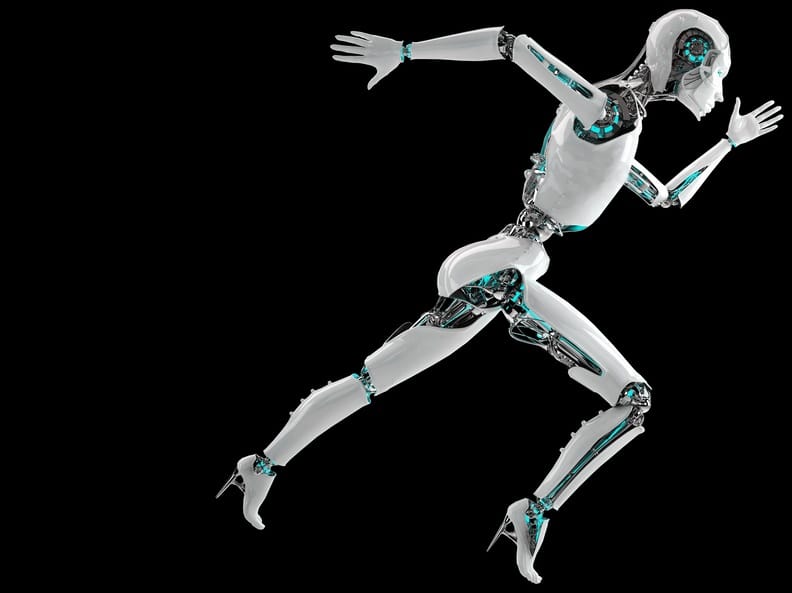
What Are Humanoid Robot Companies, and Why Does China Have Seven Major Players?
Humanoid robots—machines designed to replicate human form and movement—have become one of China's hottest deep-tech sectors. In Q1 2026 alone, Chinese embodied intelligence companies raised between RMB 20-30 billion ($2.8-4.2 billion), far exceeding 2025 levels. This investment wave has crystallized around seven companies now collectively known as the "humanoid robot seven dragons": Unitree, Agibot, Leju, Zhongqing, Galbot, Noetix Robotics, and AgiBot Evolution.
The term echoes the earlier "AI six tigers" that emerged during China's large language model boom, representing market consensus on which startups have achieved escape velocity. But unlike software-focused AI companies, these robotics firms face fundamentally different challenges: manufacturing at scale, proving real-world utility, and bridging the gap between laboratory demonstrations and factory floors.
Why These Seven Companies Stand Out
The "seven dragons" designation reflects three tangible achievements that separate these companies from dozens of other humanoid robot startups:
Capital validation: Each has secured over RMB 10 billion ($1.4 billion) in valuation, with recent funding rounds exceeding RMB 1 billion or IPO filings in progress.
Strategic manufacturing partnerships: Major industrial players—particularly automakers like BYD and battery makers like CATL—have invested, signaling belief that humanoid robots will eventually work alongside humans in production facilities.
Demonstrated production capacity: Each company has publicly disclosed or third-party verified annual shipments exceeding 1,000 units, with at least pilot-scale deployment in one vertical application.
These criteria reveal which companies have moved beyond PowerPoint demonstrations to actual commercial traction, however early-stage.
The Valuation-Revenue Paradox
Despite sharing "unicorn" status, these seven companies occupy vastly different positions:
Galbot leads in valuation at approximately RMB 20 billion ($3 billion), yet has not achieved mass production. The premium reflects investor conviction in its "universal brain" approach—developing AI systems that could theoretically control any humanoid platform. This represents a bet on infrastructure rather than hardware.
Unitree, Agibot, and Leju cluster in the RMB 12-15 billion range. Unitree and Agibot each shipped over 5,000 units in 2025, while Leju has completed IPO counseling verification. These companies balance product shipments with technology development.
AgiBot Evolution, Noetix Robotics, and Zhongqing sit around RMB 10 billion, each distinguished by specialized approaches: Evolution's "mini humanoids" target education markets, Noetix Robotics' biomimetic robots achieved mainstream visibility through 2026 Spring Festival Gala appearances, and Zhongqing emphasizes load-bearing capacity for industrial applications.
Critically, valuation and shipment volume don't correlate linearly. The market appears to value different things: proven manufacturing efficiency for some companies, technical moats for others, and market positioning for a third group.
Where the Revenue Actually Comes From
Despite "humanoid robot" branding suggesting futuristic applications, current revenue concentrates in prosaic channels:
Research and education dominate. Unitree's disclosed financials show 73.6% of humanoid robot revenue came from academic institutions in the first three quarters of 2025. Industrial applications contributed just 9%. Industry participants confirm similar patterns elsewhere, though most companies don't publish breakdowns.
This makes sense: Universities need robots for research programs, can absorb higher costs, and tolerate imperfect reliability. They represent stable, predictable demand while industrial and consumer markets remain speculative.
Industrial validation remains experimental. Agibot secured a RMB 78 million order from China Mobile, and several companies have pilot programs in automotive or logistics facilities. But these deployments typically involve dozens of units, not hundreds or thousands. Factories must reorganize workflows around robots' limitations—a multi-year investment that most manufacturing companies can't yet justify.
Consumer applications barely exist. Despite viral videos of robots doing backflips or folding laundry, almost no one buys humanoid robots for home use. The technology isn't reliable enough, the price points (RMB 99,000-690,000 / $14,000-97,000) remain prohibitive, and the value proposition remains unclear.
Why Only One Company Is Profitable
Of the seven dragons, only Unitree achieved full-year profitability. In 2024 it turned profitable; by 2025 it generated RMB 600 million in non-GAAP net income on RMB 1.7 billion revenue—a remarkable 60% gross margin.
This outlier status stems from founder Wang Xingxing's decade-long focus on motion control systems. By engineering cost efficiency into joint modules and power trains, Unitree priced its G1 model at RMB 99,000—roughly one-seventh the cost of competitors' comparable products. This opened a market segment others hadn't addressed: price-sensitive research institutions and smaller manufacturers.
The other six companies remain unprofitable or don't disclose finances, burning through capital on R&D and production scaling. Investors currently accept this because the industry hasn't consolidated. As one venture capitalist noted: "In early-stage markets, securing technical advantage and market share matters more than quarterly profits. These companies are investing in capabilities that may not pay off for three to five years."
This tolerance has limits. Companies must demonstrate progress on customer acquisition and unit economics, even if they're not profitable yet. The funding environment, while generous in 2026, may not remain so indefinitely.
Two Distinct Strategic Approaches
The seven dragons have coalesced into two camps with fundamentally different theories of success:
The Volume-First Approach
Unitree, Agibot, and Zhongqing prioritize production scale, believing that manufacturing learning curves and customer relationships will create durable advantages.
Unitree's cost engineering: By controlling costs at the component level, Unitree underprice competitors while maintaining healthy margins. Its 2025 revenue grew 335% year-over-year, demonstrating that a viable mass market exists if prices drop sufficiently.
Agibot's solution integration: Rather than competing purely on hardware cost, Agibot positions itself as providing complete scenario solutions. Its messaging emphasizes "sustainable customer demand in real environments" over unit shipments—suggesting it's bundling software, services, and ongoing optimization into higher-value contracts.
Zhongqing's capacity buildout: With framework orders exceeding RMB 500 million and production capacity for 4,000-5,000 units in 2026, Zhongqing is preparing for scale. CEO Zhao Tongyang has publicly committed to 30,000-50,000 annual units by 2027-2028—an aggressive target that requires either massive industrial adoption or significant consumer market emergence.
The volume-first logic: Establish manufacturing efficiency and customer relationships now, before market structure solidifies. Even if current applications are limited, these companies will be positioned to scale when broader adoption arrives.
The Technology-First Approach
Galbot, Noetix Robotics, Leju, and Evolution emphasize technical differentiation over immediate shipment volume, betting that superior capabilities will command premium value as the market matures.
Galbot's AI infrastructure play: Priced near RMB 700,000 ($97,000), Galbot's humanoid robots remain expensive and low-volume. But the company's actual product is its "universal brain"—a vision-language-action (VLA) model trained on massive simulation data that theoretically enables robots to adapt to new tasks with minimal retraining. This represents infrastructure that could eventually control multiple hardware platforms. The RMB 20 billion valuation prices this potential, not current hardware sales.
Noetix Robotics' biomimetic specialization: Noetix Robotics differentiates through human-likeness rather than task capability. Its robots feature 32 motors in the head alone to replicate facial expressions, plus audio-to-face algorithms that synchronize lip movements with speech at 60Hz. The 2026 Spring Festival Gala appearance demonstrated capabilities other companies haven't attempted. Whether this creates defensible commercial value remains unproven, but it's a distinct technical position.
Evolution's developer platform strategy: Targeting the "small humanoid" category (shorter, simpler robots), Evolution has open-sourced its development stack to build an ecosystem. The Booster K1 provides hardware, development tools, and training resources, aiming to become the "developer's choice" platform. This trades immediate hardware margins for potential long-term platform network effects.
Leju's manufacturing maturity: Founded in 2016, Leju brings the longest operational history and deepest supply chain relationships. Its "Kuafu" series achieves 90%+ domestic component sourcing—critical for cost control and supply chain resilience. Rather than betting on a single breakthrough, Leju is optimizing production engineering.
Neither approach is obviously superior at this stage. Volume-first companies risk commoditization if they can't maintain technical differentiation. Technology-first companies risk being leapfrogged while they perfect solutions for markets that may not materialize.
The Technical Challenges No One Has Solved
Despite impressive demonstrations, fundamental limitations constrain all humanoid robots today:
The simulation-to-reality gap: Training robots in simulated environments is orders of magnitude cheaper and faster than real-world training. But research shows that models achieving high success rates in simulation experience roughly 40% performance degradation when transferred to unstructured real-world settings. True success rates in novel environments often fall below 30%.
This "sim-to-real" problem is why factory pilots often disappoint. A robot that performs reliably in controlled laboratory conditions may fail frequently when facing the lighting variations, obstacles, or task ambiguities of actual production floors. Closing this gap requires either much more real-world training data (expensive and slow) or breakthrough algorithmic improvements (uncertain timing).
Task generalization remains elusive: Current humanoid robots excel at specific, well-defined tasks in structured environments. They struggle with the adaptability humans take for granted: encountering an unexpected obstacle, using an unfamiliar tool, or interpreting ambiguous instructions. Most deployed robots operate in scenarios engineered around their limitations rather than adapting to human workflows.
Economic justification is unclear: Even where robots technically work, the investment case is weak. A RMB 150,000 robot must deliver value exceeding a human worker's annual cost (typically RMB 50,000-80,000 in manufacturing), accounting for the capital cost, maintenance, workflow redesign, and downtime. Industry participants privately estimate 3-5 year payback periods under optimistic assumptions—hard to justify when technology evolves rapidly and business conditions are uncertain.
Who Faces the Greatest Risk
The seven dragons' positions vary substantially in defensibility:
Relatively secure: Unitree and Agibot have demonstrated commercial traction through actual shipment volumes and customer diversity. Unitree's profitability provides runway independent of fundraising cycles. Agibot's industrial customer relationships, while still pilot-scale, represent potential for major expansion if technology improves incrementally.
At critical junctures: Zhongqing and Evolution must prove their strategies in 2026. Zhongqing has orders and production capacity but must demonstrate it can actually deliver thousands of units to industrial customers. Evolution must show that developer ecosystems and "small humanoids" represent substantial markets, not niche segments.
Facing execution pressure: Galbot, Noetix Robotics, and Leju confront heightened expectations.
Galbot's valuation prices in technology breakthroughs that haven't materialized in shipping products. If commercial deployment doesn't accelerate, or if competitors achieve similar AI capabilities, valuation multiples could compress sharply.
Noetix Robotics is attempting to create a consumer market for biomimetic robots with its Bumi product at more accessible price points. But consumer robotics remains speculative, and Noetix Robotics could face price competition as other manufacturers pursue similar strategies.
Leju is transitioning from educational robots (its founding business) to industrial humanoids—essentially attempting to build a second company while maintaining the first. This requires proving that operational maturity in one robot category translates to another, a non-obvious assumption.
The Global Competitive Landscape
Chinese companies currently dominate global humanoid robot shipment volumes, but face formidable international competition:
U.S. technology leaders: Tesla applies its full self-driving (FSD) technology stack to humanoid robots, leveraging data infrastructure and AI talent that Chinese companies can't easily replicate. Figure, another U.S. startup, raised an average of RMB 1.3 billion ($180 million) per funding round in 2025—nearly 8x the Chinese average. American companies benefit from access to cutting-edge AI research, global talent pools, and deeper capital markets.
Different competitive advantages: Chinese companies excel at rapid iteration, manufacturing scale, and cost engineering—advantages built on China's manufacturing ecosystem. American companies lead in foundational AI research and can attract top global talent. Japanese companies (though not detailed here) hold decades of robotics expertise but have struggled to commercialize humanoid platforms.
The relevant question isn't which country will "win" humanoid robotics, but rather which capabilities prove most valuable as the industry matures. If the constraint is AI sophistication, American advantages compound. If manufacturing efficiency and cost matter more, Chinese companies have structural edges.
What Happens Next
Industry participants broadly agree on the timeline, if not the outcome:
2026 as a watershed year: The current period represents transition from technology demonstration to commercial validation. Companies must prove they can manufacture at scale, deploy in real environments, and retain customers—not just raise capital on potential.
Mass commercialization after 2029: Widespread adoption in industrial settings likely requires another 3+ years of technical improvement, cost reduction, and customer education. The technology must become reliable enough, cheap enough, and integrated enough that manufacturers can justify reorganizing workflows.
Consolidation is inevitable: Seven "dragons" is almost certainly too many. As with other hardware-intensive sectors (electric vehicles, solar panels, battery manufacturing), market leadership will likely concentrate among 2-3 dominant players within 5-7 years. The relevant question is which companies that will be.
The humanoid robot "seven dragons" represent genuine technical achievement and entrepreneurial ambition. But their current valuations price in futures that remain highly uncertain. Some will establish durable competitive positions. Others will become cautionary tales about overfunded moonshots.
The companies that survive won't necessarily be the ones with the most impressive demonstrations or the highest valuations today. They'll be the ones that solve the unglamorous problems: manufacturing reliability at scale, real customer economics, and organizational transformation that makes robots genuinely useful rather than merely impressive.
This analysis is based on disclosed financial information, industry participant interviews, and public company statements through Q1 2026. Valuations and shipment figures represent best available estimates in a sector where comprehensive disclosure remains limited.
Related Coverage:
The Great Cost Divide in Humanoid Robotics: China vs. the US