
China's ICE Car Survivors Are Playing a Winner-Takes-All Game — And Most Will Lose
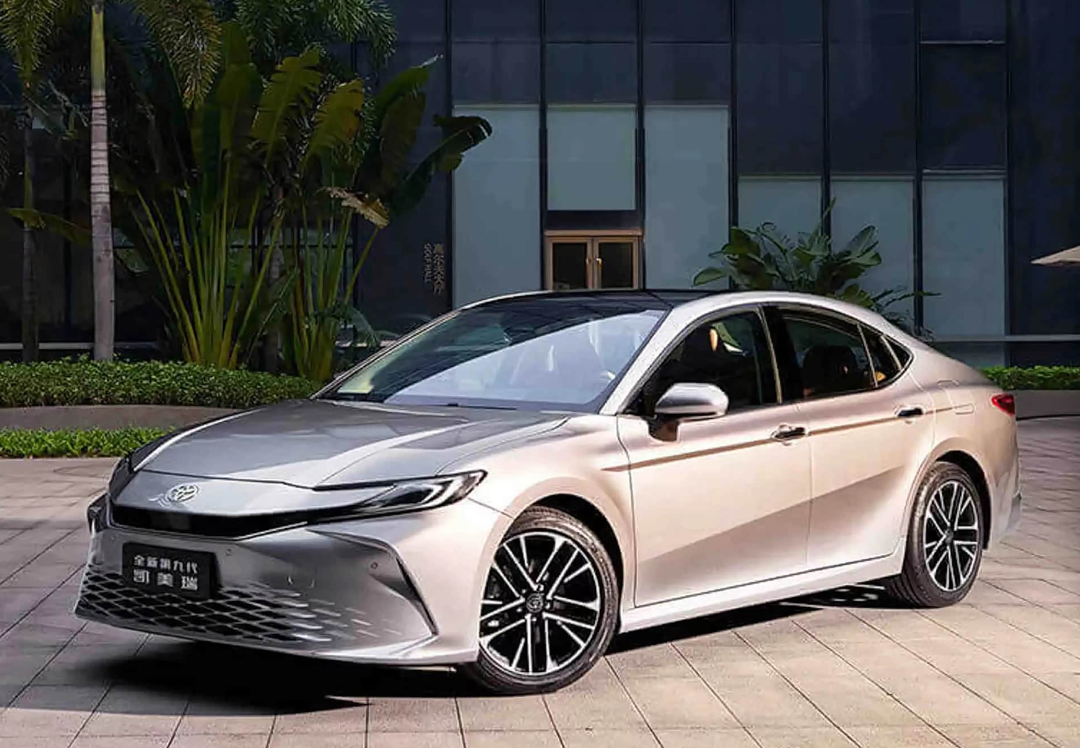
Toyota Camry and Volkswagen Lavida reclaimed spots in China's top-10 passenger car sales rankings in June 2026, but their comeback masks a brutal consolidation: a handful of combustion-engine models are cannibalizing peers even as the entire segment structurally contracts against a 62.8% EV penetration rate.
The re-entry of two legacy nameplates into the monthly leaderboard — after combustion vehicles were completely shut out in May — triggered a wave of premature "ICE revival" narratives. The data tells a more precise and more sobering story. Toyota Camry sold 17,114 units in June to rank ninth, while Volkswagen Lavida moved 15,444 units to claim tenth place, according to Dongchedi's retail sales rankings. What those headline numbers obscure is the accelerating destruction happening across the rest of the combustion fleet.
Fuel-Price Relief and Deep Discounts Engineered a Tactical Rebound
Two cyclical tailwinds, not structural reversal, drove the June uptick. China's domestic refined-fuel prices fell for the third time this year on June 19, cutting gasoline and diesel prices by RMB 515 and RMB 495 per metric ton respectively. The retail price of 92-octane gasoline slipped back below RMB 7 per liter — more than 6% below the Q1 2026 peak — reducing the cost-per-kilometer gap between combustion and electric vehicles.
Simultaneously, joint-venture manufacturers absorbed margin pain to push transaction prices to historic lows. The Camry Elite gasoline trim, listed at RMB 171,800 (US$23,860), is clearing dealerships at approximately RMB 143,000 (US$19,860) after a RMB 43,000 dealer discount plus a RMB 3,000 first-purchase subsidy — effectively pricing a B-segment sedan at what a top-spec Lavida or Nissan Sylphy cost two years ago. Lavida Pro, launched in November 2025, is transacting below RMB 80,000 (US$11,110) despite a RMB 88,800 sticker price.
Zhang Xiang, researcher at North China University of Technology's Automotive Industry Innovation Research Center, told Caijing Tianxia that the H1 2026 policy calendar amplified the volatility: a subsidy vacuum in Q1 gave combustion vehicles a relative price advantage, but the government's trade-in stimulus program rolled out in March and April redirected consumers back toward new-energy vehicles.
Camry and Lavida Eat Rivals' Share Before EVs Get the Chance
The more structurally significant dynamic is intra-segment predation. While Camry posted 17,114 June units, the combined June sales of Honda Accord, Nissan Teana — its two traditional B-segment rivals — totaled approximately 11,800 units, less than Camry alone. Industry insiders note that Camry's hybrid-plus-discount strategy is primarily consuming Accord and Teana share before EVs even enter the equation.
The divergence is equally stark in the compact sedan segment. Nissan Sylphy recorded just over 10,000 June retail units, a year-on-year decline of approximately 58%, falling out of the sedan top ten entirely. Volkswagen Sagitar dropped 54% year-on-year to 9,221 units — roughly 6,000 units behind Lavida in the same month, from the same parent company's dealer network.
In the first half of 2026, only Lavida exceeded 100,000 cumulative units among combustion sedans. Sylphy and Camry each reached approximately 85,000 units. Models including Toyota Corolla, Geely Xingrui, Geely Emgrand, and Honda Accord have fallen materially behind the top tier, according to Caijing Tianxia's sales data analysis.
A Camry sales representative noted that the model accounts for nearly half of monthly dealership revenue, with personal monthly volumes running seven to eight units. The buyer profile has shifted: trade-in customers from aging Toyota Corolla or Volkswagen models, and — notably — households that already own a battery-electric SUV and want a conventional sedan as a range-anxiety hedge.
Product Upgrades Attempt to Strip the "Tech Laggard" Label
Both models have made targeted investments to neutralize the intelligence deficit that has been their primary vulnerability against domestic NEV brands.
Lavida Pro extended body length to 4,720mm from 4,561mm, crossing into A+ segment competitive territory against Volkswagen Sagitar, Geely Xingrui, and Xpeng MONA M03. The upgrade introduced four-wheel independent suspension — previously reserved for higher-priced models — and integrated a Qualcomm 8155 chip with an AI large-model interface, matching the baseline smart-cockpit spec now standard among new-force brands. The demographic response has been measurable: buyers under 30 now represent the primary purchasing cohort, and female buyers increased their share by 12 percentage points relative to the pre-Pro Lavida, per SAIC Volkswagen internal data through December 2025.
The 2026 Camry lineup similarly integrates the Qualcomm 8155 chip and Toyota Safety Sense 3.0 PRO driver-assistance. More critically, 13 of its 17 on-sale variants carry Toyota's THS hybrid system — a powertrain architecture with a 30-year commercial track record that eliminates the conventional automatic transmission, historically a primary failure point. One Camry owner interviewed by Caijing Tianxia cited the 10-year reliability horizon as the decisive purchase factor, explicitly contrasting it with uncertainty around first-generation EV battery degradation curves.
Structural Contraction Accelerates Even as Survivors Stabilize
The cyclical rebound does not alter the secular trajectory. New-energy vehicle retail penetration reached 62.8% in June 2026, sustaining above 60% for three consecutive months. H1 2026 average NEV penetration stood at 57.4%, according to the China Passenger Car Association. Secretary-General Cui Dongshu stated explicitly that the current combustion-vehicle stabilization "cannot fundamentally reverse the long-term contraction trend."
The product pipeline confirms the strategic retreat. Of 542 new passenger vehicle models launched in China in the first five months of 2026 — an average of 3.6 per day, each requiring over RMB 1 billion (US$138.9 million) in investment and more than two years of development, per BYD Executive Vice President He Zhiqi — combustion-only new entries were minimal. SAIC Roewe i5, Chery Arrizo 8, Nissan Sylphy, Honda Fit, the new-generation Audi Q5L, and Volkswagen Talagon were all facelifts or revisions, not clean-sheet combustion programs.
Cui projects that the combustion segment will bifurcate into a "premium-niche plus utility-specialist" structure: vehicles above RMB 300,000 (US$41,670) anchored by mechanical heritage and enthusiast demand, and sub-RMB 150,000 (US$20,830) commercial and rural-mobility applications where charging infrastructure remains a constraint. "Mid-market family combustion vehicles will be comprehensively replaced by new-energy models," he said.
OEMs Walk a Dual-Track Tightrope to Manage the Transition
Major manufacturers are using combustion cash flows to fund the electrification pivot rather than abandoning either track. SAIC Volkswagen's approximately 360,000 H1 units were predominantly supported by Lavida, Passat, Tiguan L, and Tharu. GAC Toyota's approximately 340,000 H1 units relied on Camry, Sienna, Frontlander, and Venza.
Both are simultaneously accelerating electrification. SAIC Volkswagen has launched the Passat ePro and Tiguan L ePro plug-in hybrids, and its extended-range six-seat SUV ID.ERA 9X entered market; the PHEV sedan ID.ERA 5S is scheduled for Q3 2026. GAC Toyota's compact electric SUV bZ3X surpassed 40,000 H1 units at an accessible price point; the D-segment bZ4 sedan is targeting the RMB 200,000+ tier, with dealership staff now actively steering Camry-intending buyers toward the electric alternative on a "save approximately RMB 30,000 over three years" energy-cost argument.
Geely Automobile CEO Gan Jiayue articulated the dependency most directly at the company's 2025 interim results briefing: "Geely cannot and will not abandon combustion vehicles. Combustion-vehicle profits determine how much we can invest in new energy." Changan Automobile Executive Vice President Yang Dayong forecasts a long-term market structure of 65% pure-electric and 35% hybrid — framing HEV as "new combustion" with a durable 35% floor.
The Camry and Lavida June recovery is therefore best read not as a market inflection but as a competitive filter: the combustion segment is consolidating around three or four brands capable of sustaining the investment required to remain relevant, while the remainder face an accelerating exit. For investors tracking joint-venture exposure at SAIC Motor and GAC Group, the divergence between their flagship combustion nameplates and the broader portfolio deterioration is the signal that matters.
Related Coverage:
China Auto Market Slumps in May as Fuel Vehicles Fall 40%, Exports Offset Weakness