
China's Semiconductor Strategy Pivots as Xiaomi and NIO Drive Private Silicon Development
China’s semiconductor localization strategy has fundamentally decoupled from its traditional reliance on state-backed funding, with consumer electronics and electric vehicle manufacturers spearheading the development of advanced silicon in 2026.
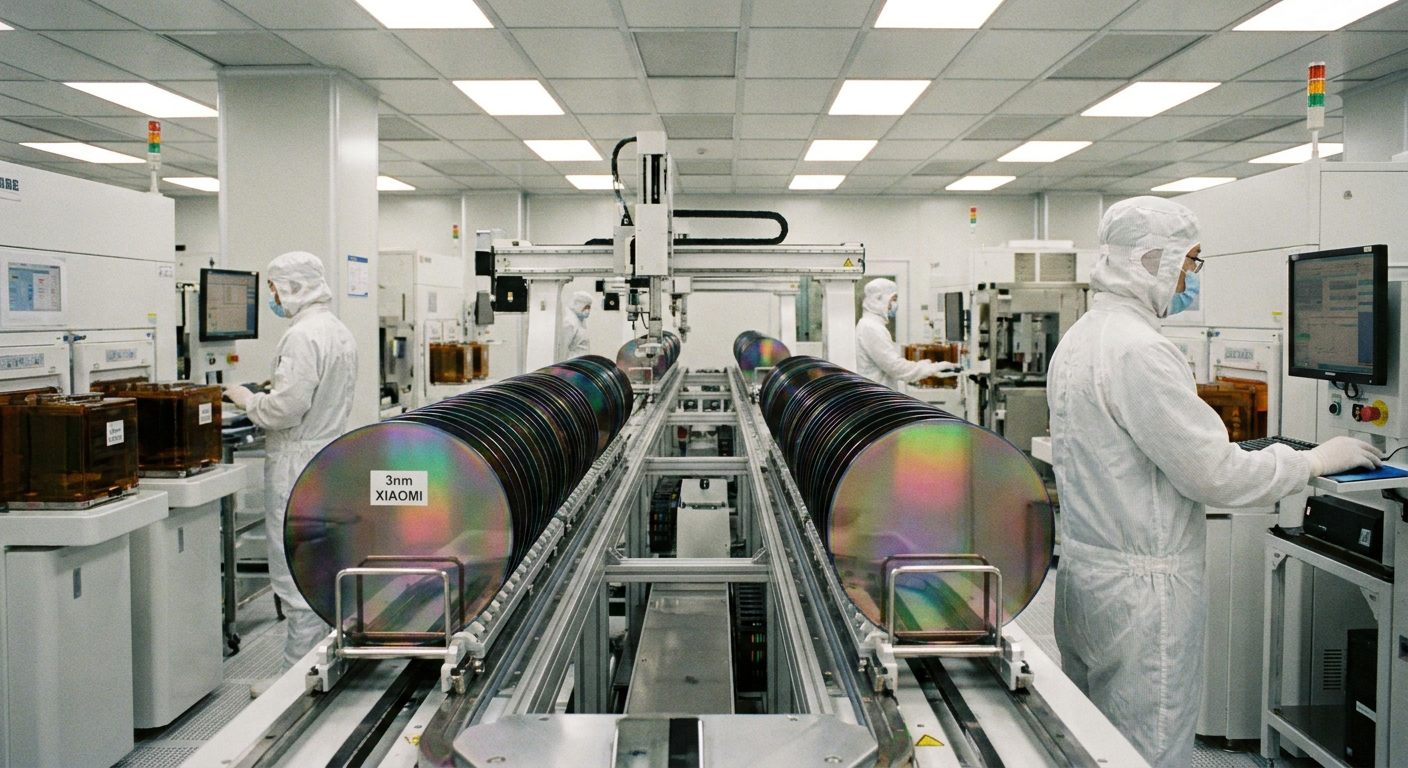
The structural transition is anchored by Xiaomi, which is advancing a 3-nanometer system-on-chip (SoC), and NIO, which is aggressively deploying in-house designed autonomous driving processors. This marks a definitive pivot from top-down government mandates to market-driven vertical integration, as domestic tech giants seek to insulate their supply chains against prolonged geopolitical volatility.
For investors evaluating the Chinese technology ecosystem, this shift signals a maturation of domestic fabless design capabilities. Rather than relying solely on the state-backed "Big Fund" subsidies, publicly traded hardware companies are allocating billions in R&D to own their core architecture, aiming to capture higher gross margins and software-hardware synergies in an increasingly saturated market.
Xiaomi Accelerates 3nm SoC Development
Xiaomi’s push into the 3nm node represents one of the most aggressive semiconductor roadmaps by a consumer electronics original equipment manufacturer (OEM). By designing its own high-end SoC, the company aims to differentiate its premium handset segment and reduce historical dependency on traditional merchant silicon vendors like Qualcomm and MediaTek. The 2026 landscape indicates that Chinese consumer brands are no longer settling for trailing-edge nodes; they are actively competing in the advanced packaging and high-performance computing arenas to secure global market share.
NIO Internalizes Autonomous Driving Silicon
Concurrently, the electric vehicle sector has emerged as a primary catalyst for custom silicon. NIO's development of proprietary autonomous driving chips reflects a broader industry mandate to control the vehicle's entire digital nervous system. As the EV price war maintains its intensity through 2026, in-house silicon allows automakers to optimize power consumption, enhance algorithmic efficiency for neural networks, and fundamentally lower the bill of materials (BOM) over the vehicle's production lifecycle.
Private R&D Reshapes Global Supply Chain Dynamics
This aggressive internalization by Chinese tech conglomerates forces a reassessment of global semiconductor demand models. While these companies must still navigate complex foundry relationships for physical manufacturing, their emergence as formidable fabless designers dilutes the pricing power of legacy chipmakers. The structural shift from state-directed semiconductor funds to commercially viable, application-specific silicon R&D proves that China's chip sector is building organic resilience, driven directly by the commercial imperatives of its largest technology enterprises.
Related Coverage: