
China’s Robotaxi Race Reaches Europe: WeRide and Pony.ai Break Through the Regulatory Wall
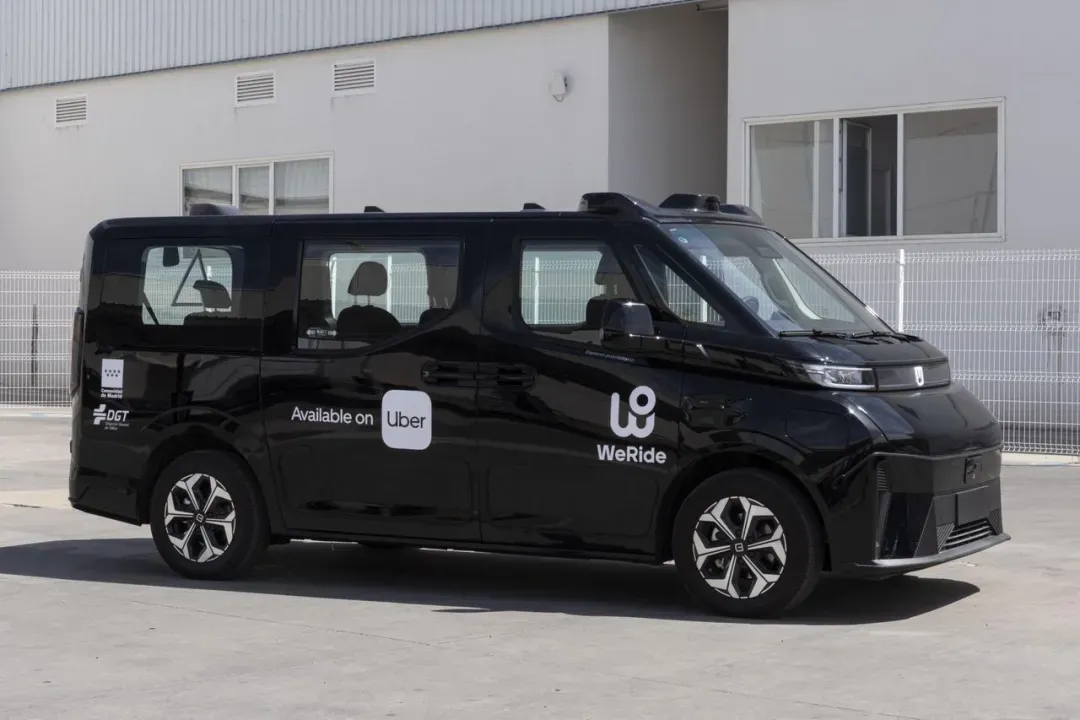
WeRide and Pony.ai land back-to-back regulatory and operational milestones in Madrid and Zagreb on the same day, signaling a coordinated — if competitive — Chinese assault on Europe's fragmented AV market.
On September 10, 2026, two Chinese autonomous driving companies executed their most consequential European moves yet within hours of each other: WeRide secured Spain's first-ever national L4 robotaxi operating license, while Pony.ai launched Europe's first fully driverless passenger-carrying test in Zagreb — a one-day double strike that fundamentally alters the competitive landscape for autonomous mobility on the continent.
The timing is unlikely to be coincidental. Both companies are dual-listed — WeRide trades on Nasdaq (WRD) and the Hong Kong Stock Exchange (0800), while Pony.ai has its own public market obligations — and both face mounting pressure from investors to demonstrate that Chinese AV technology can generate recurring revenue outside the domestic market. Europe, with its premium ride-hailing economics and nascent regulatory frameworks, offers precisely that opportunity.
Market observers noted that the simultaneous announcements effectively crowd out any single narrative, forcing institutional investors to evaluate the two companies as a category rather than in isolation. That framing benefits both.
Spain License Unlocks WeRide's Fourth Uber City, Validating Asset-Light Expansion
WeRide's license — issued by Spain's Directorate General of Traffic (DGT) under the ES-AV regulatory framework — is the first national-level L4 robotaxi operating permit granted in Spain, and the first such EU-member-state license secured by WeRide's GXR vehicle platform. The permit was granted jointly to WeRide, Uber (NYSE: UBER), and AVOMO, the autonomous driving unit of fleet operator Moove Cars Group, with explicit backing from the Madrid municipal government.
The commercial significance is layered. Madrid is the fourth city in WeRide's global Uber partnership, which targets 15 cities and tens of thousands of vehicles by 2030. Spain receives approximately 100 million tourist arrivals annually, and Madrid's commuter density and mature ride-hailing ecosystem provide immediate demand-side support. The city is also WeRide's first European beachhead following Zurich, where a separate WeRide-Uber robotaxi service launched in June 2026.
Under the license terms, an initial fleet of "dozens" of GXR vehicles — each equipped with a safety operator — will begin pre-commercial deployment across high-demand zones in Madrid. Full public commercial service is targeted before year-end 2026. As key operational metrics are met, the parties plan to expand coverage toward a fully driverless configuration across Madrid's core urban districts.
WeRide CFO and Head of International Li Xuan stated the Madrid license "further consolidates our global leadership in robotaxi commercialization," noting that WeRide is now the only company globally holding autonomous driving licenses across nine countries: China, Spain, Switzerland, Belgium, France, Singapore, the UAE, Saudi Arabia, and the United States.
The asset-light model is central to WeRide's investment thesis. By contributing the technology stack while Uber supplies demand aggregation and AVOMO handles fleet operations, WeRide avoids the capital-intensive vehicle ownership burden that has historically pressured AV company balance sheets. The Madrid structure is designed to be replicated — a modular franchise template for high-value markets globally.
Uber's head of autonomous mobility and delivery Sarfraz Maredia described Madrid as "rapidly becoming one of Europe's most forward-thinking regions for autonomous vehicle development," language that signals Uber's intent to accelerate its own AV platform strategy through Chinese technology partners rather than waiting for domestic U.S. solutions to mature.
Pony.ai Removes the Safety Driver in Zagreb, Crossing the Commercialization Threshold That Matters Most
Pony.ai's announcement carries a different but equally significant valence. The Zagreb driverless passenger test — conducted on a 22-kilometer route connecting Verne's headquarters to Franjo Tuđman Airport, Zagreb's primary commercial hub — marks Europe's first fully unattended robotaxi passenger operation on public roads.
The milestone arrives just over five months after Pony.ai, its local partner Verne, and Uber jointly launched what they described as Europe's first commercial robotaxi service in Zagreb in April 2026. Since that launch, the fleet has accumulated over 200,000 kilometers of operational mileage and completed thousands of passenger trips, with an average passenger rating of 4.7 out of 5. The transition from safety-operator-supervised to fully driverless operation within five months is a materially faster progression than most European regulators and investors had anticipated.
Pony.ai CEO James Peng framed the Zagreb result as proof of concept for Chinese AV technology's portability: "The phased results in Zagreb also lay a solid foundation for us to promote fully driverless mobility services in Europe and broader international markets." The subtext is clear — Pony.ai's four-city China commercial operation (Beijing, Shanghai, Guangzhou, Shenzhen) has generated the operational data and safety validation needed to compress the regulatory learning curve in new geographies.
The technical foundation underpinning the Zagreb test is Pony.ai's seventh-generation robotaxi, built on an NVIDIA DRIVE AGX compute platform running safety-certified DriveOS. The vehicle integrates 360-degree sensor fusion, multiple redundancy layers, and fail-operational capability — the last of which is increasingly a non-negotiable requirement for regulators issuing fully driverless permits. Pony.ai reports that its global autonomous test mileage has surpassed 100 million kilometers, of which more than 40 million kilometers were accumulated in fully driverless mode.
Fleet Scale Ambitions Reveal the Real Stakes: Capital Efficiency vs. Speed
The fleet numbers embedded in both companies' announcements deserve close scrutiny from investors. Pony.ai has stated that its overseas deployment pipeline now exceeds 4,000 robotaxis, including a confirmed plan to deploy more than 2,000 vehicles in Europe in partnership with Uber. The company targets a global fleet of over 3,500 robotaxis across more than 20 cities by end-2026.
WeRide's comparable figure — "tens of thousands" of vehicles across 15 cities by 2030 with Uber — is a longer-horizon commitment, but the Madrid license accelerates the near-term deployment calendar. WeRide's nine-country license portfolio also provides a regulatory runway that competitors cannot easily replicate in the short term.
Both companies are pursuing what the industry calls the "co-fleet" or shared-fleet model: the AV technology provider contributes the stack, a platform partner (Uber in both cases) aggregates rides, and a local operations partner manages vehicles and compliance. This structure distributes capital expenditure while concentrating technology revenue — a model that, if it scales, produces economics fundamentally different from traditional ride-hailing.
The critical variable remains unit economics at scale. Neither company has disclosed per-trip revenue or vehicle utilization rates for their European operations. Until those figures become visible — likely through quarterly earnings disclosures — the fleet expansion targets function primarily as competitive signaling rather than financial guidance.
Europe as Regulatory Arbitrage: Why Madrid and Zagreb, Not London or Paris
The geography of these announcements is instructive. Spain's DGT and Croatia's transport authorities have moved faster than their counterparts in Germany, France, or the United Kingdom in establishing workable L4 licensing frameworks. Madrid's ES-AV structure and Croatia's permitting process represent regulatory environments where Chinese AV companies can accumulate operational data and safety records that will, in turn, support applications in larger European markets.
This is regulatory arbitrage executed as strategy. WeRide's nine-country license portfolio — built incrementally from Abu Dhabi to Singapore to Brussels — demonstrates a deliberate approach of selecting jurisdictions where approval timelines are manageable, then using those approvals as reference cases for harder markets. The EU's cross-border recognition dynamics mean that a DGT-issued license under the ES-AV framework carries implicit credibility in Brussels-level policy discussions.
For Pony.ai, Zagreb serves a similar function. Croatia's EU membership means that operational data accumulated on Zagreb's public roads meets the evidentiary standards that other EU regulators will eventually require. The 22-kilometer airport corridor is also a pragmatic choice: airport-to-city routes are among the most commercially viable and operationally predictable environments for early-stage robotaxi deployment globally.
Competitive Implications: Two Chinese Players, One Uber Platform, Zero Margin for Error
The most structurally significant aspect of September 10's announcements is that both WeRide and Pony.ai are scaling European operations through Uber. This creates an unusual dynamic: Uber holds leverage over both companies' European distribution simultaneously, while the two Chinese firms compete for fleet share, regulatory priority, and ultimately, Uber's long-term platform commitment.
For Uber, the arrangement is strategically rational — it sources best-in-class L4 technology from multiple vendors without committing exclusively to either, preserving negotiating power as the technology matures. For WeRide and Pony.ai, the shared platform dependency is a near-term necessity but a long-term vulnerability, particularly if either company seeks to build direct consumer relationships in Europe.
WeRide's dual listing (Nasdaq and HKEX) and Pony.ai's public market profile both create quarterly disclosure obligations that will progressively illuminate whether the European expansion is generating revenue or consuming capital. The next two earnings cycles — covering the period through year-end 2026 — will be the first real test of whether the Madrid and Zagreb milestones translate into financial inflection points or remain, for now, regulatory trophies.
Related Coverage:
Pony.ai and Uber Expand European Robotaxis to 2,000 Vehicles Across Five Cities
WeRide's Asset-Light Pivot Validates as ADAS Revenue Soars 26x, Overseas Sales Jump 164%