
China’s Robotics Sector Hits Commercial Inflection Point as Tech Giants Rush In
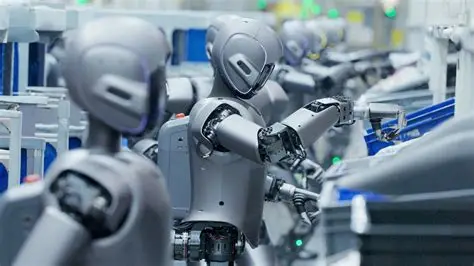
China’s robotics industry has reached a critical commercial inflection point as of late 2025, transitioning from theoretical laboratory concepts to a phase of accelerated mass production and scenario deployment. The sector, particularly embodied artificial intelligence and humanoid robots, has recorded a growth rate exceeding 50% this year, signaling the imminent emergence of a trillion-yuan market ecosystem.
The surge in activity is underpinned by a significant influx of capital, with primary market financing in the robotics sector reaching RMB 38.62 billion yuan (US$5.36 billion) in the first eight months of 2025 alone. This figure represents 1.8 times the total funding raised throughout the entirety of 2024, reflecting high investor confidence in the sector’s scalability.
This year marks a structural shift from niche exploration by specialized firms to a broader competitive landscape dominated by "cross-border" entrants. Major players from the automotive, consumer electronics, and internet sectors have aggressively entered the field, leveraging established supply chains and algorithmic expertise to drive industrialization.
The convergence of these industries has moved the sector beyond mere technical demonstrations. By the close of 2025, the industry focus has squarely landed on cost reduction, stability in complex environments, and the validation of business models in real-world scenarios, setting the stage for a "knockout round" of market consolidation in 2026.
Automakers Drive the Charge
The automotive industry has become the most aggressive new force in robotics, driven by a 60% overlap in supply chains and shared technological foundations. By the end of 2025, at least 20 automotive companies have formalized their entry into the humanoid robot market, viewing the technology as an extension of intelligent vehicles.
Prominent developments include Chery Automobile, which has released its "Mornine" humanoid robot, and BYD, which has achieved mass production of core robot components. Similarly, Geely has collaborated with Ubtech to deploy the "Walker S1" robot in its 5G smart factories. XPeng has gone further, rebranding its strategic positioning to a "Global Embodied AI Company" and integrating its "Iron" robot into a broader ecosystem that includes electric vehicles and Robotaxis.
Automotive executives, such as Chery Chairman Yin Tongyue, have articulated the strategic logic that cars are essentially "mobile intelligent robots," justifying the dual-track development. This integration allows automakers to amortize R&D costs across vehicle and robot production lines, accelerating the path to commercial viability.
Tech and Appliance Titans Join the Fray
Beyond automotive, China’s home appliance and internet giants are leveraging their respective strengths in manufacturing precision and AI algorithms to capture market share.
In the appliance sector, Midea Group has established a dedicated humanoid robot innovation center, successfully mass-producing proprietary servo motors and reducers. Haier Group and Beijing Roborock Technology are similarly expanding their product portfolios, moving from single-function devices to complex, intelligent ecosystems capable of household and industrial tasks.
Internet companies are focusing on the "brain" of the robot. ByteDance has expanded its "Seed" team to 150 researchers, releasing the GR-3 general-purpose robot model designed for complex household tasks. Huawei has introduced the "Kuafu" robot based on its HarmonyOS, emphasizing multi-device synergy. Xiaomi continues its aggressive investment strategy, committing over RMB 15 billion yuan (US$2.1 billion) to the sector to build a comprehensive "Human x Car x Home" ecosystem.
Market Scale and Projections
The influx of diverse players is fueled by robust market projections. In 2024, global industrial robot sales reached 542,000 units, with China accounting for 295,000 units, or 54% of the global total.
Data indicates that the scale of China’s robot market is expected to exceed RMB 150 billion (US$21.45 billion) in 2025. Looking further ahead, the market for embodied AI in China is projected to reach RMB 400 billion (US$57.20 billion) by 2030 and surpass RMB 1 trillion (US$143.00 billion) by 2035, potentially accounting for more than 50% of the global market share.
Barriers to Mass Adoption
Despite the capital influx, significant challenges remain as the industry heads into 2026. Technical routes are still fragmented, with companies divided on visual versus multi-sensor fusion solutions, and hydraulic versus electric drive systems. Cross-border entrants face hurdles in adapting their existing capabilities—such as automotive perception algorithms or internet LLMs (Large Language Models)—to the precise physical control required for robotics.
Cost remains the primary bottleneck for widespread commercial adoption. Manufacturers are targeting a price point below RMB 200,000 yuan (US$27,700) for humanoid robots, a goal that requires substantial optimization in supply chain integration and manufacturing processes. While the consensus is that 2026 will be a year of high growth, it is also expected to be a period of intense competition where companies failing to solve the cost-capability equation will be eliminated.