
China’s Semiconductor Bet Is Showing Up at the Ports: UBS Sees Lithography Imports Signal Front-End Capacity Expansion
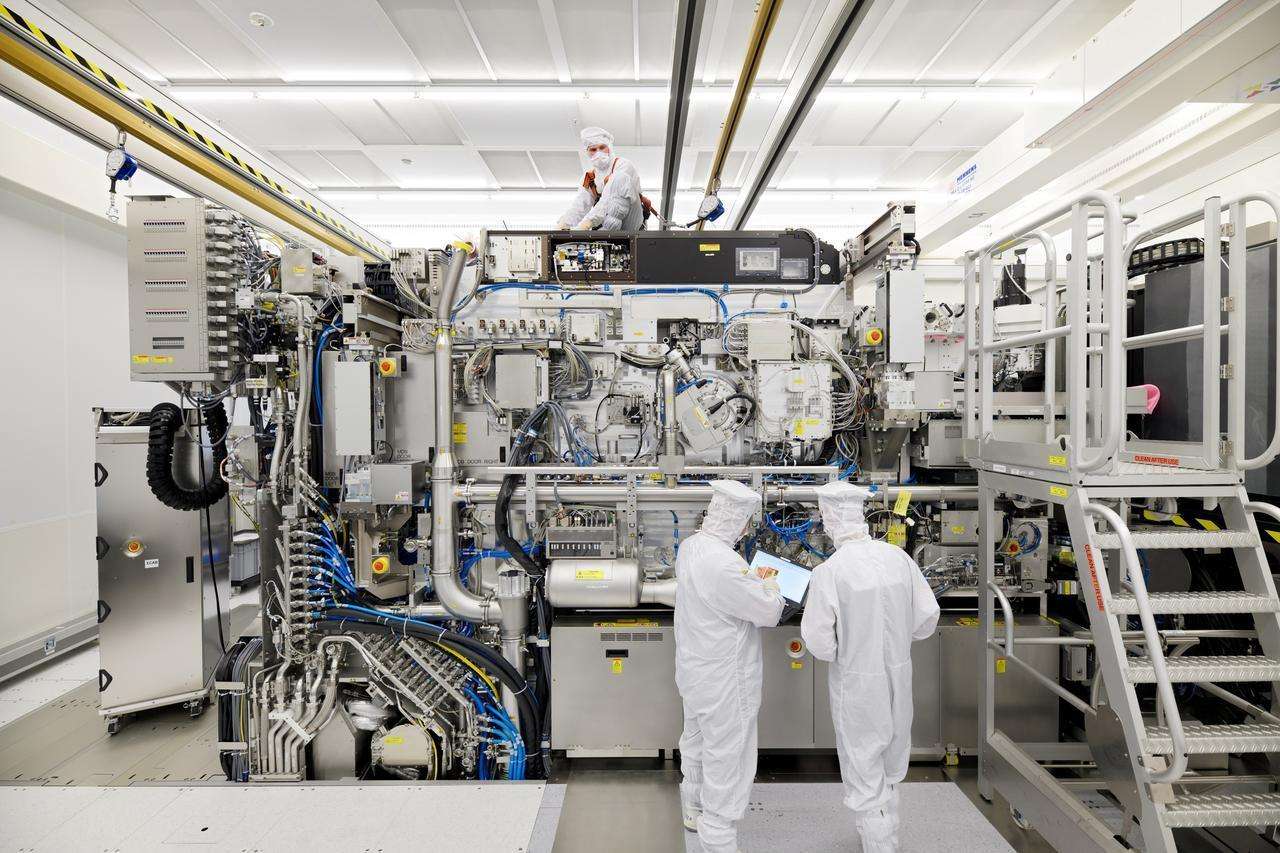
In a research note published in early 2026, UBS turned its focus to an unusual but telling data point in China’s semiconductor sector: a surge in lithography tool imports. The report, centered on China’s semiconductor equipment market, argues that despite structural headwinds and export controls, the country’s leading chipmakers are accelerating front-end capacity expansion. For investors trying to separate policy noise from real industrial momentum, the numbers are worth a closer look.
UBS’s core message is straightforward. Strong imports of lithography equipment—widely seen as the most critical and constrained part of the chipmaking process—suggest that demand at China’s “tier-one” semiconductor fabs is not only holding up, but expanding faster than many had expected.
A Data Point the Market Can’t Ignore
UBS notes that China’s imports of lithography tools rebounded sharply, both year-on-year and sequentially, through late 2025 and into 2026. While the report stops short of framing this as a full-cycle recovery, it emphasizes that lithography imports tend to be a leading indicator of wafer-fab investment, particularly in logic and mature-node manufacturing.
“Lithography equipment imports are closely correlated with front-end capacity expansion,” UBS writes, adding that the latest figures point to “accelerating build-out at leading domestic fabs.”
This matters because lithography tools are not purchased for marginal upgrades. They are typically ordered when fabs are committing capital to new lines or meaningful capacity additions—often with multi-year utilization targets in mind.
Front-End, Not Packaging: Where the Money Is Going
One key distinction in the UBS report is between front-end wafer fabrication and back-end assembly, testing, and packaging. While China has long been active in back-end processes, the recent import data suggest a renewed emphasis on front-end manufacturing, where technological barriers and capital intensity are far higher.
According to UBS, the strength in lithography imports indicates that China’s leading fabs are pushing ahead with capacity expansion at mature and specialty nodes, rather than retreating into purely defensive investment.
This expansion is concentrated among top-tier players, including Semiconductor Manufacturing and Hua Hong Semiconductor, which UBS identifies as key beneficiaries of sustained domestic demand and policy support.
Policy Pressure, Industrial Reality
The backdrop to the UBS analysis is well understood. Export controls and technology restrictions have raised persistent questions about how far China’s semiconductor ambitions can go, particularly in advanced logic. UBS does not dispute those constraints. Instead, it reframes the debate.
The report argues that even under tighter controls, there is ample room—and economic incentive—for China to expand capacity at mature nodes, which remain essential for automotive chips, power management ICs, industrial semiconductors, and a wide range of consumer electronics.
In that context, lithography imports are less about chasing cutting-edge nodes and more about scaling what is already commercially viable. UBS notes that this type of expansion can still deliver solid returns, especially when domestic customers prioritize supply security over marginal performance gains.
Equipment Makers: Indirect Winners
While the report focuses on China, UBS highlights implications for the global semiconductor equipment supply chain. Strong lithography imports suggest that, at least for now, Chinese fabs are still able to source critical tools—often older-generation systems that remain highly productive at mature nodes.
UBS stops short of naming individual non-Chinese suppliers as direct beneficiaries, but the implication is clear: as long as China continues to expand front-end capacity, demand for a broad range of wafer-fab equipment will persist, even if the most advanced tools remain restricted.
A Signal, Not a Victory Lap
UBS is careful to temper optimism. The report stresses that import strength alone does not guarantee long-term profitability or technological self-sufficiency. Overcapacity risks remain, particularly if end-market demand softens or if multiple fabs expand simultaneously in the same segments.
Still, the message is unmistakable. At a time when headlines often focus on what China cannot access, lithography import data show what it is actively building.
For markets, this is not just a policy story—it is a capital-expenditure story. And as UBS frames it, capital tends to move first, explanations later.