
China’s Tianmu Kongka Completes Maiden Flight of AL-100 STOL Cargo Drone
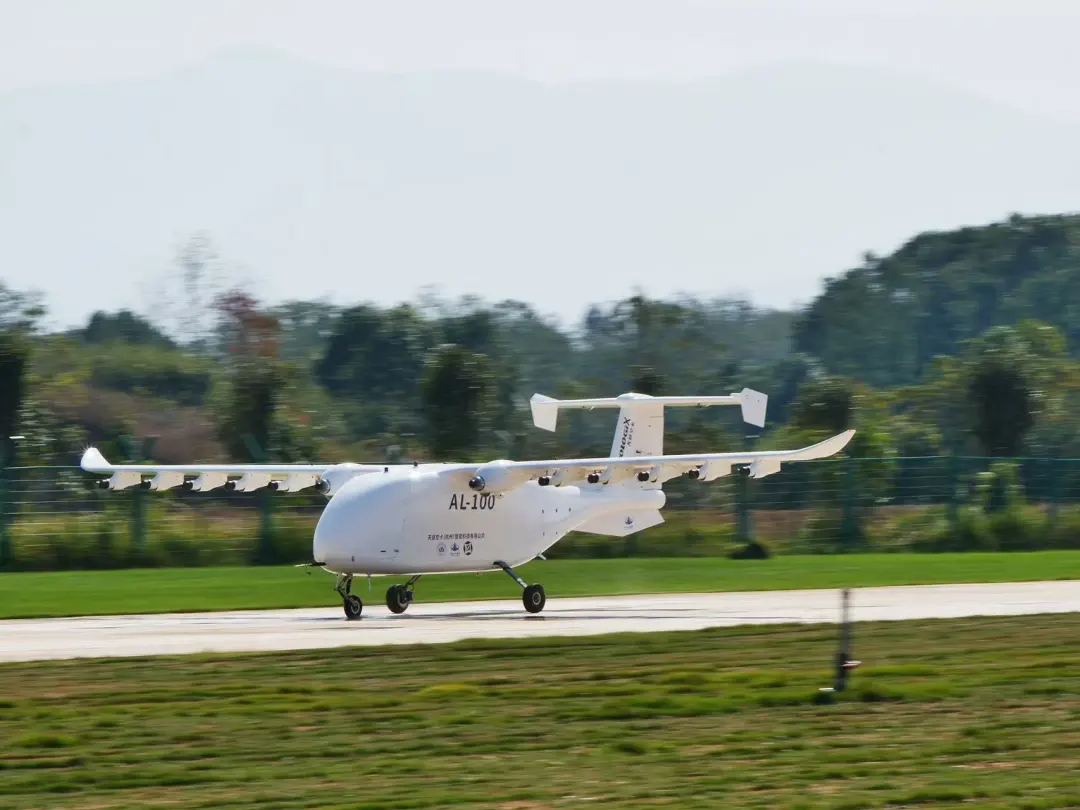
Tianmu Kongka (Hangzhou) Intelligent Technology has successfully completed the maiden flight of its proprietary AL-100 cargo drone, marking a significant advancement in the development of short-takeoff-and-landing (STOL) aerial logistics.
The tests, conducted in November 2025, validated the aircraft’s performance metrics under maximum payload conditions. The drone demonstrated a takeoff run of only 27.2 meters and a maximum climb rate of 10.5 meters per second, figures that the company stated met or exceeded initial design expectations for the 400-kilogram class vehicle.
This milestone confirms the viability of the AL-100’s distributed propulsion system for high-frequency logistics operations. The aircraft is positioned to address urban delivery bottlenecks caused by traffic restrictions and to establish supply lines for hard-to-reach areas, such as islands and mountainous regions, within a 300-kilometer radius.
Following the successful flight, the Hangzhou-based manufacturer plans to advance the program toward airworthiness certification. The validated design reliability paves the way for product finalization and subsequent commercial deployment in the low-altitude logistics market.
Operational Validation
During the recent flight tests, the AL-100 systems maintained stability across flight control and mission coordination protocols. The aircraft’s handling characteristics aligned with simulation data, confirming the reliability of earlier theoretical models.
The trials specifically tested the drone at its maximum takeoff weight (MTOW) of 350 kilograms. The successful execution of a sub-30-meter takeoff verified the platform's core advantage: the ability to operate heavy loads from constrained spaces without traditional runway infrastructure.
Technical Specifications and Utility
The AL-100 is engineered specifically for small-batch, high-frequency transport. It features a wingspan of 9.9 meters, a length of 5.5 meters, and a height of 2.1 meters. The fuselage houses a 0.9-cubic-meter cargo hold capable of carrying a 100-kilogram payload.
Logistical efficiency is enhanced by an upward-opening nose door and standardized sliding trays for rapid loading. Beyond commercial freight, the modular design supports public service payloads, allowing the aircraft to be retrofitted with optical pods or fire-extinguishing rounds for emergency response missions.
Rapid Development Timeline
The flight marks the culmination of an accelerated development cycle that officially began in December 2024. In less than a year, Tianmu Kongka completed the integrated design of propulsion and aerodynamics, followed by structural manufacturing and static testing.
Prior to the November maiden flight, the engineering team conducted comprehensive ground evaluations. These included systems integration testing on an "iron bird" rig, landing gear drop tests, and high-speed taxiing trials to ensure full system readiness.
Path to Commercialization
Tianmu Kongka views the successful maiden flight as a critical milestone for confirming the engineering deliverability of the platform. Data gathered from these initial sorties will drive the next phase of product optimization.
The company stated it will now focus on continuous flight testing to meet regulatory standards. The immediate strategic priority is to finalize the design for airworthiness compliance, accelerating the timeline for mass production and industrial application.