
China's Tiantai Robot Lands Record 10,000-Unit Order for Humanoid Robots
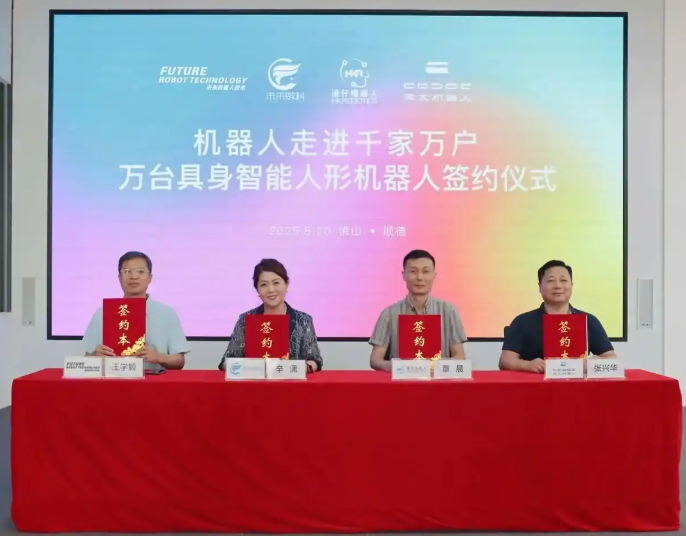
Tiantai Robot Co., Ltd. has secured a record-breaking order for 10,000 of its humanoid robots, a landmark deal signaling a potential shift towards mass commercialization for a sector long defined by research and development. The transaction, described as the largest single order in the industry's history, targets China's burgeoning in-home elderly care market.
The Beijing-based company announced on Wednesday it had signed the agreement with a group of strategic partners that includes Shandong Future Robot Technology Co., Ltd. , Shandong Future Data Technology Co., Ltd. , and Gangzai Robot Group . Tiantai said the order validates its ability to overcome the scaling challenges that have historically limited the industry, moving from prototypes to reliable mass production.
The robots from this order will be primarily deployed as assistants and companions for the elderly, a key demographic focus in China. "We never just make machines; we build bridges to a warmer, more convenient, and safer future life," said Tiantai Robot founder Zhang Xinghua. He added that the company aims to have its robots in over one million Chinese homes within three years.
The deal comes just days before Tiantai is set to unveil a new generation of lower-cost joint modules, a critical component in robotic articulation. The planned announcement on August 26 underscores the industry’s intense focus on driving down costs to unlock widespread adoption and move humanoid robots from industrial settings into consumer households.
A Bet on In-Home Care
Tiantai is positioning this initial mass deployment squarely within the family care sector. The company's robots are designed to function as both safety guardians and versatile home assistants for seniors.
According to the company, the robots' capabilities will include helping users navigate stairs, autonomous driving within the home, and real-time interaction. Beyond physical assistance, the machines are intended to serve as "life butlers," integrating functions such as health monitoring, emotional companionship, educational activities, and other digital life services. This focus on a specific, high-demand use case is a strategic move to establish a clear value proposition in the consumer market.
Scaling Production
The 10,000-unit order is underpinned by what Tiantai describes as a vertically integrated and tested production system. The company claims it has resolved the critical challenge of ensuring durability and reliability at scale, moving beyond simple functionality.
In its announcement, the firm credited its success to proprietary technologies, including high-efficiency joint modules, precise motion control algorithms, and stable turnkey system solutions. Tiantai reports it has established a full-chain capability—from core component design to final assembly and quality control—to ensure performance consistency and cost management. This is supported by an integrated "network-cloud-edge-device" infrastructure developed with computing and network partners to manage a large fleet of robots operating simultaneously.
Driving Down Costs
A key factor in the push toward mass adoption is component cost, which Tiantai is directly addressing. On August 26, the company plans to globally launch its next-generation radial and axial joint modules.
Tiantai claims the new modules will be ultra-light, ultra-thin, and more powerful than previous versions. Critically, the company stated their price will enter the "three-digit-yuan era" for the first time, implying a price point under RMB 1,000 (US$138). Such a significant cost reduction for a core component could dramatically lower the overall production cost of a humanoid robot, making the technology more accessible to a broader market.
An Ambitious Vision
The record order is framed by Tiantai's leadership as a major step toward fulfilling its corporate mission to "make robots ubiquitous." Founder Zhang Xinghua called the 10,000-unit deal the "most powerful practice" of this vision.
The company has set an aggressive target for domestic expansion, aiming to deploy its "robot partners" in more than one million Chinese households within the next three years. This ambition highlights the scale at which Chinese firms are pursuing the commercialization of embodied AI, seeking to transform advanced robotics from a niche technology into a mainstream consumer product.