
Chinese AI Startup Kimi Secures US$700 Million, Valuation Surpasses US$10 Billion as Alibaba and Tencent Double Down
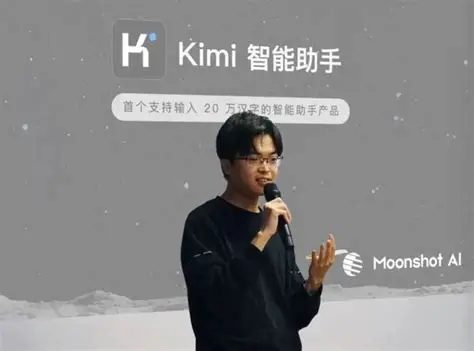
Moonshot AI, the Chinese artificial intelligence startup behind the Kimi chatbot, has closed a US$700 million funding round just over a month after completing a previous US$500 million raise, according to people familiar with the matter. The financing pushes the company's valuation past the US$10 billion mark and represents the largest capital influx in China's large language model sector over the past year.
Alibaba, Tencent, 5Y Capital, and Jovance Capital jointly led the round, with all participants being existing shareholders. The company has already initiated discussions for a subsequent funding round at a valuation between US$10 billion and US$12 billion, effectively doubling its worth in a matter of weeks.
The back-to-back financings, totaling more than $1.2 billion, arrive as China's AI industry consolidates around a handful of well-capitalized players. JPMorgan Securities (China) noted in a recent research report that the number of viable model developers in China has contracted from over 200 to fewer than 10, as the sector transitions from a "battle of hundreds of models" to a phase where commercial execution, innovation capability, and global expansion determine survival.
Moonshot AI founder and CEO Yang Zhilin, a former assistant professor at Tsinghua University's Institute for Interdisciplinary Information Sciences, told employees in late December that the company held over 10 billion yuan ($1.38 billion) in cash following its Series C round. In an internal memo, Yang stated the company sees greater fundraising potential in private markets than through a public listing, noting that its Series B and C rounds exceeded the capital raised by most initial public offerings and secondary offerings by listed companies.
"We are not in a rush to go public in the near term, nor do we aim for an IPO as a goal," Yang wrote, contrasting Moonshot's strategy with recent listings by domestic peers Zhipu AI and MiniMax, both of which debuted on the Hong Kong Stock Exchange in January.
The fresh capital will fund an aggressive expansion of GPU infrastructure to accelerate training of the company's K3 model, according to Yang's memo. A portion will also support employee incentive programs and share buyback schemes in 2026, with average employee equity compensation planned to reach 200% of 2025 levels. The talent war in China's AI sector has intensified, with algorithm-related positions remaining in acute shortage even as job postings for AI roles surged tenfold in the first seven months of 2025, according to workplace platform Maimai.
Moonshot has differentiated itself through long-context processing capabilities and a rapid product release cadence. Since May, the company has launched multiple agent-based features including Kimi Researcher, OK Computer, and Kimi Code. Yang disclosed that global paid users grew at an average monthly rate exceeding 170% from September through November, while overseas API revenue quadrupled during the same period following the release of its K2 Thinking model.
For 2026, Yang outlined three strategic priorities: scaling K3 to match frontier models in pre-training performance through at least a tenfold increase in effective floating-point operations; vertically integrating model training with agent product development to create differentiated capabilities; and focusing commercialization efforts on agent products to achieve order-of-magnitude revenue growth rather than pursuing absolute user numbers.
The financing underscores investor conviction in Moonshot's technical trajectory, even as the economics of large language models remain unproven at scale. Sustained capital-intensive GPU investments represent an inescapable cycle for foundation model developers, with better models serving as the bedrock for both market narratives and monetization strategies. Despite its substantial war chest, Moonshot must still demonstrate it can construct a sustainable and profitable business model in an increasingly competitive landscape.