
Chinese Automaker Debates Signal Shift in Extended-Range EV Market Dynamics
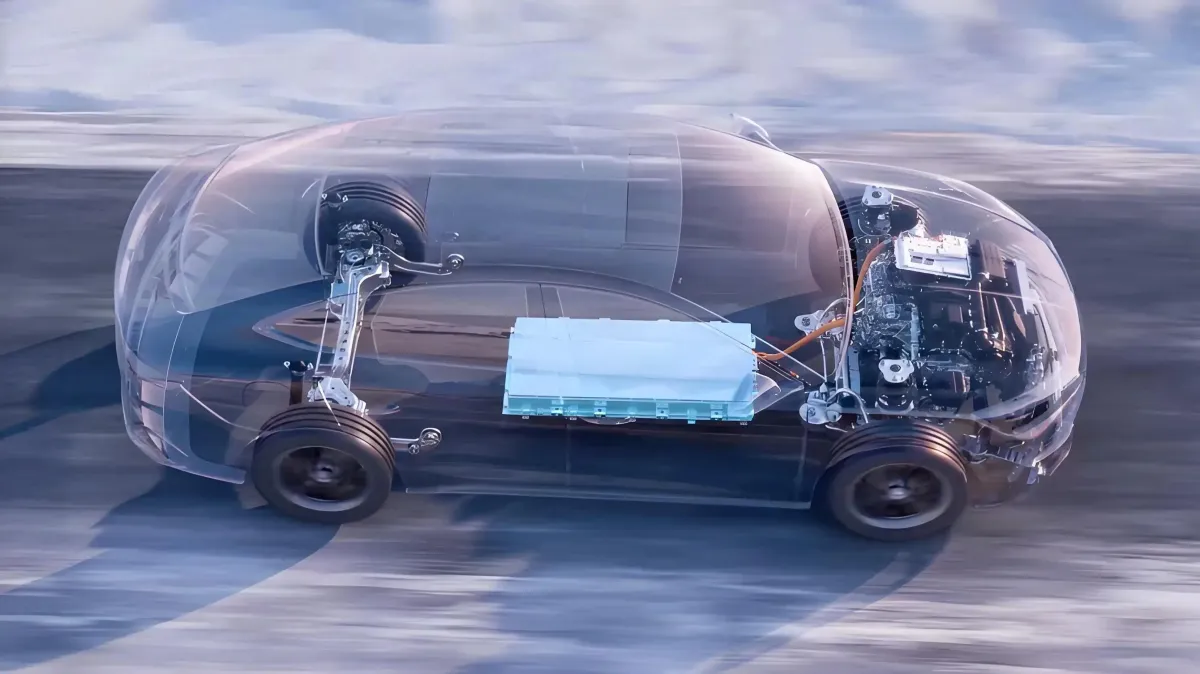
China's electric vehicle sector is witnessing a strategic realignment as industry leaders reassess the viability of extended-range electric vehicles (EREVs) amid shifting market dynamics and technological advances.
Nio founder Li Bin suggested in August that the "golden age" of extended-range SUVs is ending, citing multiple EREV manufacturers' recent launches of pure battery-electric alternatives. Li's comments came as Li Auto, the pioneer of China's EREV market, reported its third consecutive month of declining sales.
The debate reflects broader questions about the future of automotive electrification pathways in the world's largest EV market, where extended-range technology has served as a bridge between traditional combustion engines and full electrification.
Market data shows EREVs posted a 9.5% year-over-year decline in August 2025, contrasting sharply with 38.5% growth for pure EVs and 5.0% for plug-in hybrids, according to industry statistics.
Li Auto's Challenges Fuel Industry Speculation
Li Auto reported delivering 28,529 vehicles in August, down 41% from 48,000 units in the same period last year. The Beijing-based company has experienced declining sales for three consecutive months, with year-over-year drops of 24.1%, 39.74%, and 40.72% respectively.
The sales decline has prompted industry observers to question whether EREV technology has reached its market ceiling. Critics argue that as pure EV battery costs decline and charging infrastructure expands, the core advantage of EREVs—eliminating range anxiety—is being eroded.
However, SoCar Product Strategy Consulting CEO Zhang Xiaoliang disputed this assessment, telling industry publication Automotive Business Review that user demand for comprehensive solutions combining electric drive advantages with convenient refueling remains strong. He argued that EREVs with 40-50 kWh batteries can cover most daily commuting needs while providing backup power for long-distance travel.
Traditional Automakers Embrace Extended-Range Technology
Despite market skepticism, several major Chinese automakers have recently launched EREV models, suggesting continued confidence in the technology's commercial viability.
GAC Group unveiled its "Star Source" extended-range technology in August, launching the Hyper HL EREV with a 60 kWh battery pack providing 350 km pure electric range and 1,369 km total range. The model is priced between RMB 269,800 and RMB 299,800 (US$37,400−−41,600).
IM Motors opened pre-orders for its new LS6 model offering both pure EV and EREV variants, with the extended-range version featuring 450 km electric-only range. The company reported receiving 10,000 orders within 30 minutes of launch.
Buick's premium sub-brand also announced its first EREV model, the Zhijing L7, scheduled for pre-sale on September 28. XPeng is preparing to launch an extended-range version of its X9 model with over 450 km electric range by year-end.
Technology Evolution Toward Larger Batteries
The latest EREV launches demonstrate a clear technological shift from "small battery, large fuel tank" configurations to "large battery, small fuel tank" designs, industry analysts note.
Early EREV models typically featured minimal battery capacity to control costs, with combustion engines primarily serving as power generators. Modern systems increasingly prioritize electric-first operation, with larger battery packs enabling hundreds of kilometers of pure electric driving.
Avatr Technology Vice President Hu Chengtai said the company believes future EREVs should feature larger batteries for better electric driving experiences and smaller fuel tanks to address low-probability long-distance scenarios.
This evolution represents EREVs moving closer to pure EV technology while maintaining the flexibility of liquid fuel backup. Zhang Xiaoliang noted that Li Auto's original success stemmed from increasing battery capacity from 2-3 kWh to approximately 40 kWh, fundamentally transforming the user experience.
Market Outlook Remains Divided
Industry executives remain split on EREVs' long-term prospects. At the World Intelligence Industry Expo, Changan Automobile Executive Vice President Yang Dayong predicted that 35% of consumers will continue choosing gasoline vehicles due to charging infrastructure limitations, suggesting sustained demand for hybrid solutions.
Shanghai-based automotive consultant Zhang Yu told Automotive Business Review that EREVs represent "gasoline cars for the electric era" and will maintain viability as long as electric vehicles continue gaining market share.
The debate highlights fundamental questions about China's electrification timeline and consumer preferences as the world's largest auto market navigates competing technological pathways toward reduced emissions and energy independence.