
Chinese Automakers Command Growing Presence at Munich Motor Show After Two-Decade Journey
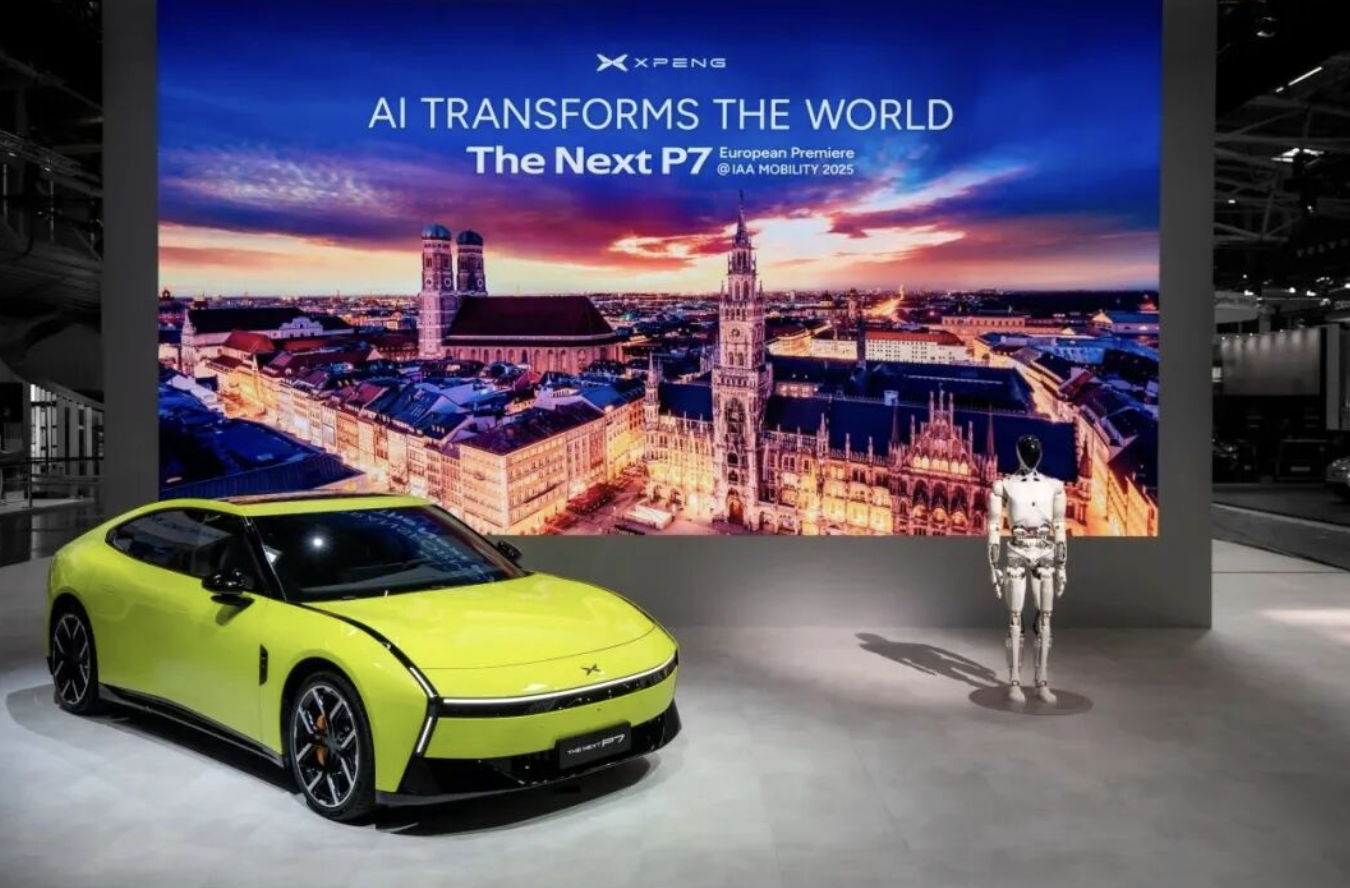
Chinese automotive manufacturers and suppliers have reached a milestone at the 2025 Munich Motor Show, with 116 companies participating in the exhibition that opened September 8, marking a dramatic expansion from a single pioneer two decades ago.
The surge in Chinese participation underscores the country's automotive industry transformation from a marginal player to a formidable force in Europe's automotive heartland. Major Chinese brands including BYD, GAC Group, Changan Automobile, and XPeng Motors showcased their latest electric vehicles and advanced technologies at the prestigious European auto show.
The expanded presence reflects China's accelerating automotive exports, particularly in electric vehicles. According to the China Association of Automobile Manufacturers, automotive exports reached 3.68 million units in the first seven months of 2025, up 12.8% year-on-year, with new energy vehicle exports surging 84.6% to 1.308 million units.
From Single Exhibitor to Industry Force
China's journey at the Munich Motor Show began modestly in 2005 when Geely Automobile became the first Chinese automaker to participate in the Frankfurt Motor Show, the event's predecessor, displaying five vehicle models.
Chinese participation remained sparse in subsequent years, with Brilliance China Automotive participating in 2007, Changan appearing in 2011 and 2013, and no Chinese companies exhibiting in 2015. The breakthrough came in 2017 when Chery Automobile and Great Wall Motor jointly participated.
The transformation accelerated as Chinese automakers capitalized on the electric and intelligent vehicle revolution. By 2021, when the show relocated from Frankfurt to Munich and refocused on future mobility, Chinese electric vehicle startups began appearing alongside traditional manufacturers. XPeng utilized the official platform's online exhibition hall for technical presentations, while NIO expanded into the Norwegian market during the same period.
Technology Leadership on Display
Chinese exhibitors at the 2025 show demonstrated technological prowess beyond traditional automotive manufacturing. XPeng displayed five vehicle models alongside humanoid robots, flying cars, and its SEPA architecture platform, signaling expansion into broader mobility solutions.
"Two years ago when we came to the Munich Motor Show, we were outdoors, not inside the venue," XPeng Chairman He Xiaopeng said in an interview. "Last year we were among Chinese automakers the company selling the most cars priced above 40,000 euros. We now sell a few hundred cars monthly in Germany."
Leapmotor Technology unveiled its new Lafa5 pure electric model while officially launching its B10 model in overseas markets with European deliveries. The company's CEO Zhu Jiaming reported global deliveries exceeding 320,000 units from January to August 2025, with overseas markets contributing over 30,000 units.
GAC Group showcased five new energy vehicles and announced the official European launch of its AION V model, while also displaying its first mass-production autonomous multi-rotor flying car GOVY AirCab.
Supply Chain Expansion
Chinese suppliers demonstrated growing international presence at the show. Contemporary Amperex Technology participated in a global battery circular economy forum alongside BMW AG, Mercedes-Benz Group AG, and BASF SE.
Autonomous driving technology providers including Horizon Robotics and Momenta Global exhibited their solutions. Momenta has established partnerships with over 20 global mainstream automakers, with its systems recently deployed in overseas versions of IM Motors vehicles launched in the UK market.
Market Competition and Collaboration
European automakers responded with their own innovations, as BMW AG unveiled its new-generation iX3 based on an intelligent platform, Mercedes-Benz premiered its all-electric GLC, and Volkswagen AG showcased its ID.CROSS concept SUV.
Despite competitive dynamics, Chinese and European companies are pursuing collaborative opportunities. XPeng's partnership with Volkswagen has expanded from pure electric to fuel and plug-in hybrid vehicles. "Chinese companies going global should have strong cooperative partners," He Xiaopeng noted.
Leapmotor leveraged its partnership with Stellantis N.V. to establish operations across over 30 countries and regions with more than 1,700 sales and service outlets. However, market penetration remains challenging, with regulatory certification and localization requirements creating lengthy development cycles for Chinese manufacturers entering European markets.