
Chinese EV Makers Dethrone Japanese Brands in Southeast Asia’s Auto Market
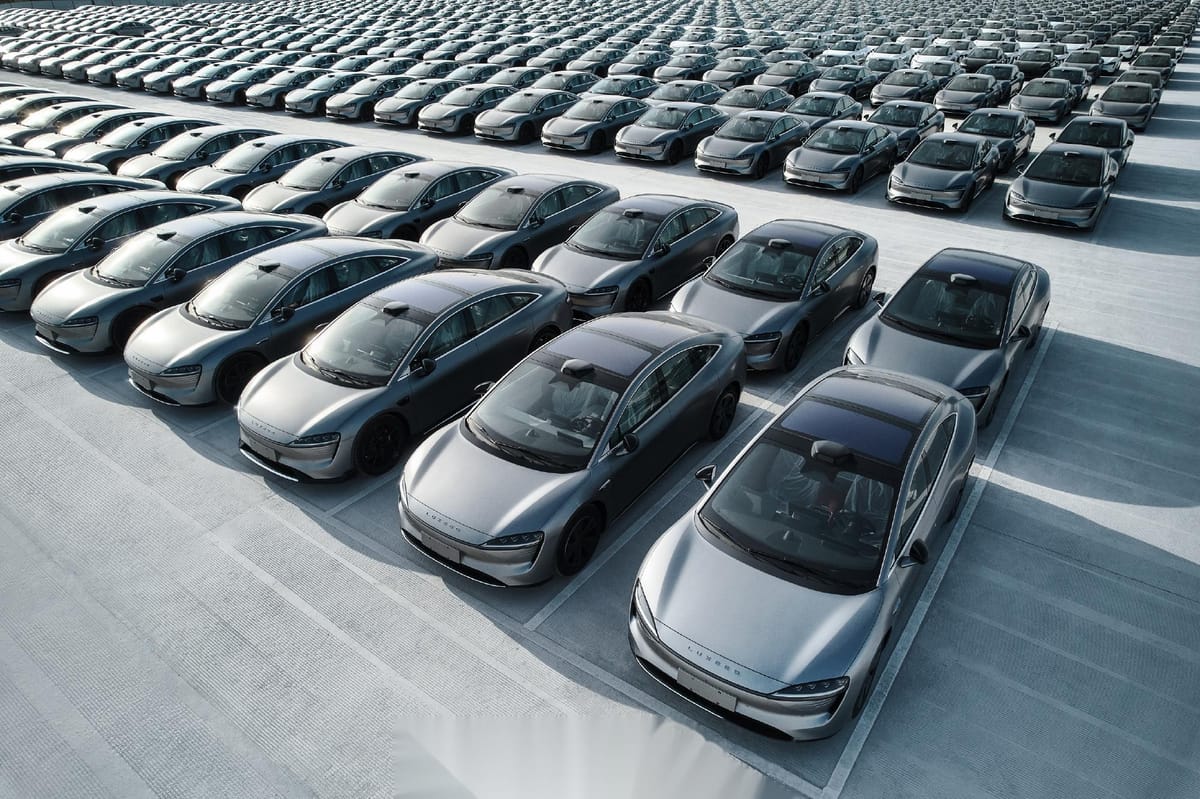
Chinese automakers have ended Japanese carmakers’ six-decade dominance in Southeast Asia, seizing the top market share in Thailand— the region’s auto hub—for the first time in January 2026, driven by electric vehicle (EV) strength, competitive pricing and smart technology. The milestone upends a market long ruled by Toyota and Honda, yet Chinese players face steep localisation and after-sales hurdles that will define their long-term success.
Thailand’s Federation of Thai Industries (FTI) data shows Chinese brands captured 47.34% of the country’s auto market in January 2026, narrowly beating Japanese brands’ 47.338%. Six Chinese firms made the top 10 sales ranking, with BYD at second and Chery Automobile third; Chinese brands hold over 75% of Thailand’s pure EV market, with monthly EV sales surging 354% year-on-year to 31,860 units.
The Thai win reflects a broader regional slump for Japanese automakers. Nikkei Asian Review data notes their sales in six key Southeast Asian economies fell 22% in 2025 from 2019, with market share dropping to 81% in Indonesia, 68% in Thailand and 33% in Vietnam. Chinese brands doubled their Indonesia market share to 14%, with BYD becoming the country’s third-largest automaker in October 2025, and Chery outperformed Japanese rivals in Malaysia’s SUV and hybrid segments.
The shift reshapes global auto industry dynamics: Japanese brands face threats to their long-standing regional manufacturing and sales core, while Chinese EV makers extend their global expansion from the domestic market. Investors are tracking the trend closely, with Chinese auto stocks rising on strong overseas sales and Japanese automakers under pressure to speed up their Southeast Asian EV transition.
Japan’s Six-Decade Reign: Reliability and Localisation
Japanese carmakers’ regional dominance was built on six decades of product fit and deep localisation, turning brands into part of Southeast Asia’s social and economic fabric. Toyota Motor Corp. and Honda Motor Co. became the gold standard for practicality—durable, fuel-efficient and easy to repair—with late 2025 YouGov research showing 90% of Indonesian consumers rated Japanese brands “high quality” and 83% “good value”.
Toyota pioneered localisation, setting up a Bangkok branch in 1957 and local assembly in Thailand in 1962, bringing manufacturing, supply chain and talent training to a region with no domestic auto industry. It deepened ties by retaining all Thai employees during the 1997 Asian financial crisis and investing in community projects: nursing student funding in Thailand, tyre-made school playgrounds in Vietnam and vehicle training schools in Cambodia.
This localisation created an unrivalled after-sales network, a key moat. Thai drivers report 10-day average repair cycles for Japanese cars, with spare parts and workshops available across cities and suburbs. For consumers reliant on cars for livelihoods, this reliability made Japanese brands the default choice, spawning the regional adage: “two types of cars—Japanese, and everything else”.
China’s Winning Formula: EVs, Pricing and Smart Tech
Chinese automakers avoided head-to-head competition in fuel cars, instead leveraging their global EV tech and scale, aggressive pricing and region-tailored smart features to capture market share. Cost efficiency is the core draw for price-sensitive Southeast Asian buyers: Indonesian Wuling Motors Air EV owners saw a 90% drop in monthly running costs versus fuel cars, with electricity bills at one-tenth of gasoline expenses.
Chinese brands undercut global EV rivals and Japanese fuel cars alike. In Singapore, a BYD Seal costs S$7,000-S$8,000 less than a Tesla Model 3 and S$90,000 less than a BMW iX1; in Malaysia, Chery’s 80,000-120,000 ringgit hybrid SUVs poached buyers from Toyota Vios and Honda City. 2025 Thai price cuts—38% for the BYD Seal (RMB 135,000 or US$18,600) and 27% for SAIC Motor’s MG4—drove over 20% monthly EV sales growth in the country that October and November.
Smart features address regional pain points: Xpeng ’s automatic parking solves Thailand’s tight urban parking; BYD’s rotating central screens and app connectivity ease Bangkok’s traffic delays; and remote air conditioning—standard on Chinese EVs— is a game-changer in the region’s 35°C+ year-round temperatures, a feature missing from most Japanese models. Government EV subsidies and rising marine tourism further boosted demand, with Wuling’s Air EV holding 40% of Indonesia’s EV market by 2024 and Jakarta adding 420 BYD electric buses to its fleet.
The Hurdles Ahead: Localisation and After-Sales Gaps
Short-term sales success masks critical structural challenges for Chinese automakers: low localisation and underdeveloped after-sales networks, gaps Japanese brands closed over six decades of investment. As of December 2025, only 5 of 58 models from 21 Chinese firms in Malaysia were locally assembled, with most imported as complete or semi-knocked-down units, per Malaysian auto media PaulTan.org.
This conflicts with Southeast Asian governments’ “market for industry” policies, which tie subsidies and tax breaks to local production. Thailand’s EV3.5 policy requires 1.5 local units for every imported EV in 2026, rising to 3 in 2027; Neta Auto faces Thai legal action in January 2026, with the government seeking to recoup over 2 billion Thai baht (RMB 400 million or US$55.2 million) in subsidies after it built just 4,000 local units against a 16,000-unit 2024 commitment. Indonesia ended EV import tax exemptions in 2026, mandating 1:1 local production and a jump in local components from 40% to 60%.
A weak after-sales network erodes consumer trust. Japanese brands have over 80% local component production in Thailand, with spare parts widely available; Chinese EVs face 30-40 day repair cycles as key parts ship from China, per local drivers. Thai industry advisors note local suppliers’ reluctance to partner with Chinese firms, worsening spare part shortages—an issue mirrored in Europe, where EU certification hurdles and non-standard diagnostic protocols delay Chinese EV repairs.
The Next Battle: Sustaining Gains Through Local Roots
China’s market share win in Southeast Asia is a landmark for global EV expansion, proving Chinese automakers can translate domestic leadership into regional success with tech, pricing and consumer-centric design. But the victory is only the first half of the battle: long-term success hinges on replicating Japan’s localisation playbook—building factories, nurturing supply chains, training regional talent and building reliable after-sales networks—rather than relying on short-term price cuts and imports.
For Japanese automakers, the shift is a wake-up call to accelerate their Southeast Asian EV transition. While their brand loyalty and after-sales networks remain strong, slow smart tech and EV development have left them vulnerable to Chinese competitors, who tap into the region’s young, tech-savvy consumers.
Southeast Asia’s auto market is in profound transition, moving from fuel car dominance to EV-led competition. For investors, the trend highlights Chinese EV makers’ global potential but also the risks of incomplete expansion. For both Chinese and Japanese firms, the next decade will be defined by aligning products and strategies with regional policies and consumer needs—a race that will reshape Southeast Asia’s auto industry for decades to come.