
Chinese Game Developers Capture Dominant Share of Japan's Mobile Gaming Market
Chinese gaming companies have established a commanding presence in Japan's once-insulated gaming market, with mainland developers now occupying six of the top ten spots in mobile game revenue rankings as of July 2025. The shift marks a significant power transition in a market historically protected by cultural barriers and consumer loyalty to domestic products.
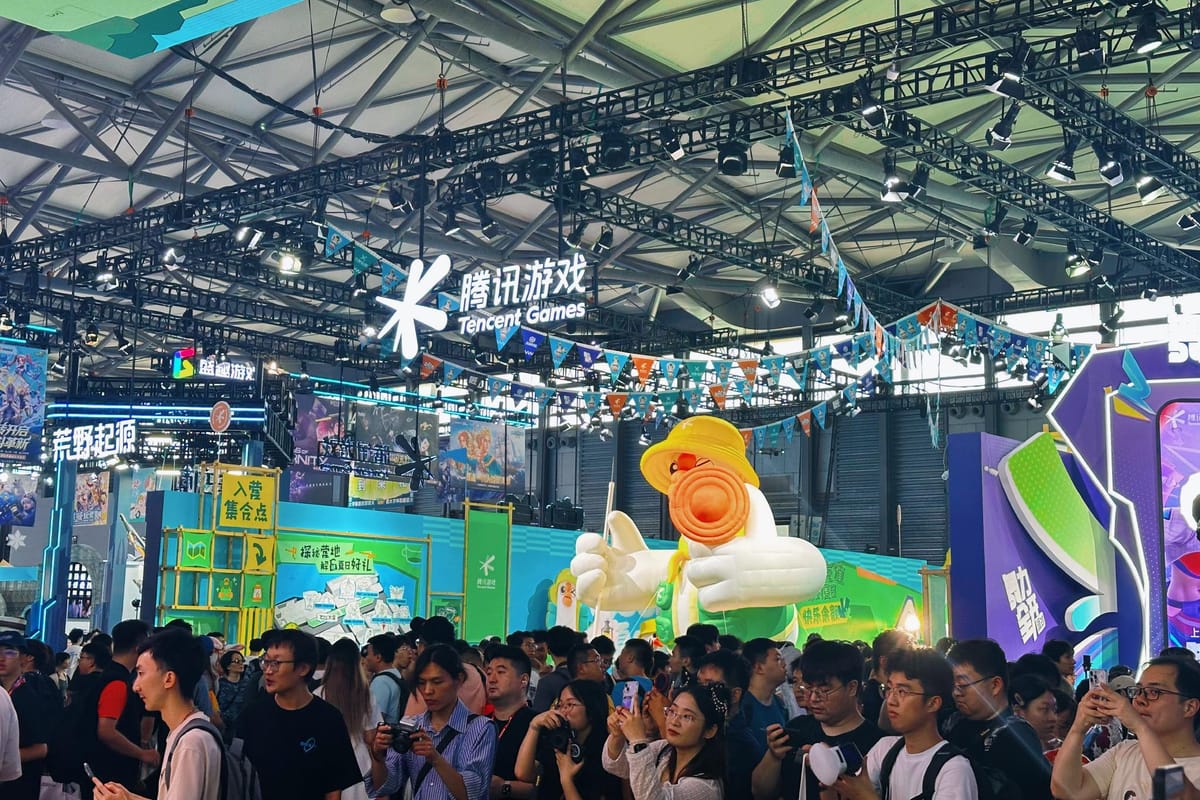
The transformation was on full display at Tokyo Game Show 2025 last September, where Chinese exhibitors accounted for nearly half of the 299 non-Japanese companies present, according to official data. Major Chinese developers including miHoYo, Manjuu, and Perfect World Games drew massive crowds, with wait times exceeding two hours at their booths as Japanese players lined up for new anime-style game releases.
The growing dominance extends beyond mobile platforms. Chinese titles now represent half of the free-to-play games on Sony's PlayStation platform in Japan as of early 2025, according to Sensor Tower's "2025 Japan Gaming Market Insights" report. Since Tokyo Game Show resumed operations in 2022, virtually all expansion in attendance has been driven by Chinese companies.
Japan's gaming sector, which controlled 70% of the global market in the 1990s, has struggled to adapt to mobile and online gaming trends, creating an opening for technically sophisticated Chinese developers.
The Fortress Weakens
Japan's gaming industry rose to global prominence following the 1983 "Atari Crash," when North America's video game market collapsed from 3.2 billion to under 100 million. Nintendo's 1985 entry into North America with its Famicom console rebuilt quality standards through licensing controls and encryption technology, capturing 70% of worldwide market share by the late 1990s.
The industry flourished within Japan's unique "loneliness economy" that emerged during the country's economic bubble period. As lifetime employment systems eroded and single-person households rose from 19.2% in 1980 to 23.5% in 1990, according to Ministry of Health data, arcade gaming and console entertainment filled expanding leisure time. Extreme work cultures—with average monthly overtime reaching 90 hours in 1988—further drove demand for escapist entertainment.
This environment created a self-sustaining ecosystem. The otaku subculture fostered extreme player loyalty, with consumers maintaining long-term commitments to specific franchises. The interconnected anime, manga, and gaming sectors formed closed-loop production systems, exemplified by publishers like Shueisha's Jump magazine, which incubated properties across media formats entirely with domestic teams.
Technology Gap Exposes Vulnerabilities
Japan's gaming industry entered structural decline after 2010, with market share dropping to 30% even as global gaming revenues tripled, according to documentary "The World Game Revolution." The industry's early weakness in PC gaming—where domestic computers cost 150,000 yen versus 30,000 yen for PlayStation 2 consoles—left developers unprepared for mobile and online gaming transitions.
Hardware conservatism compounded challenges. Nintendo's reluctance to advance console specifications, documented in "Game Over," resulted in repeated technical disadvantages. When smartphone gaming emerged, Japanese developers lacked networking infrastructure expertise, forcing companies like Nintendo to partner with DeNA in 2015—a collaboration that produced server failures in "Animal Crossing" mobile releases.
The domestic mobile market reflected these struggles. Japanese titles held 18 of the top 20 mobile gaming positions in 2016 but just 11 by 2020, according to market data. Even traditional console players shifted behaviors, with Sony reporting in 2023 that Japanese PlayStation users spent disproportionately more time on free-to-play games compared to other regions.
Underlying these trends is Japan's demographic crisis. The population aged 65 and older reached 36.19 million—29.4% of total population—as of September 2025, per Ministry of Internal Affairs data. Aging development teams and shrinking youth populations have constrained innovation capacity.
Chinese Technical Superiority
MiHoYo's "Genshin Impact" topped Japan's mobile revenue charts in 2021, establishing a template for Chinese market entry. The game demonstrated China's ability to transplant console-quality graphics and mechanics to mobile platforms while maintaining Japanese aesthetic preferences.
Chinese developers deployed strategies that disrupted traditional Japanese monetization models. "Genshin Impact" offered high reward rates and low-pressure gameplay, achieving 1.5 times the average revenue per user of "Fate/Grand Order" despite an 18% payment rate among Japanese players in 2023. The approach built trust through generosity rather than content scarcity.
Beyond anime-style games, casual titles like 4399's "Mogu Brave Legend" achieved over 1 billion yuan ($138 million) in annual revenue by adapting Chinese mini-game formats for Japan. The developer added "Valkyrie" characters and reconfigured mechanics to align with anime gaming conventions while maintaining accessible gameplay and hybrid advertising-purchase revenue models.
Japan's gaming market demonstrates extreme monetization potential despite modest download volumes. Mobile game downloads ranked ninth in Asia through July 2025, yet in-app purchase revenue placed second, according to Sensor Tower data. The disparity reflects persistent Japanese player loyalty and retention patterns—characteristics that reward developers capable of meeting localized content expectations.
The convergence of Japan's technical stagnation, demographic pressures, and Chinese developers' platform expertise has fundamentally altered competitive dynamics in a market once considered impenetrable to foreign entrants.