
Chinese Robot Vacuum Giants Conquer Vietnam With Old-School Retail
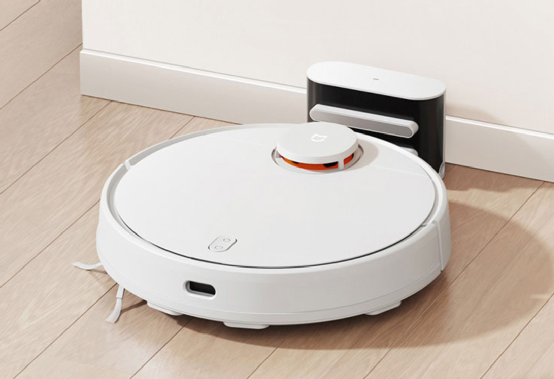
Chinese robot vacuum makers, honed in their home country’s hyper-competitive e-commerce landscape, are deploying a surprisingly traditional strategy to dominate Vietnam: a ground game built on physical stores, local distributors, and personal trust. This pivot away from the online-first playbook is rapidly securing their leadership in one of Southeast Asia’s fastest-growing markets.
The tactical shift is yielding significant results. Chinese brands including Ecovacs Robotics, Roborock Technology, and Dreame have captured over 80% of Southeast Asia's robot vacuum market share by sales value in 2024, according to data from market research firm GfK. Their main casualty has been former global leader iRobot, which has been pushed to fifth place in the global market, according to IDC.
In Vietnam, this dominance is built offline. Ecovacs, which holds over 40% of the Vietnamese market, generates approximately 70% of its local sales through physical channels, a stark contrast to its online-heavy model in China, said Ma Xianbin, the company's public relations director. This offline network serves as a crucial foundation for building consumer trust, which local e-commerce and logistics infrastructure has yet to fully establish for high-value purchases.
The move abroad is less a choice than a necessity. Facing intense competition and product homogenization in a maturing Chinese market, these firms are aggressively targeting overseas territories for growth. With robot vacuum penetration in Vietnam below 10%, companies see a vast runway for expansion, mirroring the strategic logic that drove the adoption of washing machines decades ago.
A Shift From 'Traffic' to 'Trust'
In China, selling robot vacuums is a business of "traffic"—mastering e-commerce algorithms, optimizing livestream conversions, and leveraging data analytics. In Vietnam, that sophisticated online model has been sidelined in favor of a network of "people and places," an ecosystem built on tangible locations and relationships.
"A Vietnamese customer buying a machine for several thousand yuan online will worry, 'Who do I turn to if something goes wrong?'" Ma explained, highlighting local consumer apprehension.
To solve this, Ecovacs has established over 1,000 physical sales points across Vietnam. These range from dozens of small, dedicated brand stores—often run as family "mom-and-pop" businesses—to hundreds of counters within larger electronics retailers. The entire operation is managed through a "single country, single distributor" model, where Ecovacs entrusts a sole, well-capitalized local partner with full responsibility for sales, marketing, and after-sales service.
This hyper-localized structure addresses a core consumer need: trusted, accessible service. Customers can get in-person assistance, from initial setup and app installation to future repairs and accessory replacements, directly from a local store owner they know. This "old-school" approach has proven highly effective in a market where trust is paramount.
New Battleground, Old Foes
Vietnam's market dynamics are highly favorable. With a population exceeding 100 million and an average age of just 32, consumers are tech-savvy and receptive to new products. A culture of spending over saving means that even a salaried worker earning the equivalent of RMB 3,000 to 5,000 yuan per month is willing to purchase a robot vacuum that costs around RMB 2,600 yuan (US$360).
This aspirational consumer behavior has fueled explosive growth. According to GfK, Vietnam’s robot vacuum retail sales surged by over 70% year-on-year from January to July 2025. Ecovacs anticipates its sales in the country will grow by approximately 80% for the full year.
However, the competition in this new arena is intensely familiar. While Ecovacs once competed primarily with the American brand iRobot, its main rivals in Vietnam today are the same Chinese companies it battles at home: Roborock, Dreame, and Xiaomi Corp. (小米). The fight has simply shifted from a war over online traffic and pricing in China to a contest of channel coverage and service capability in Vietnam.
Domestic Pressures Fuel Overseas Push
The aggressive push into Southeast Asia is directly linked to the increasingly challenging conditions in the Chinese domestic market. "The predicament for cleaning appliance manufacturers is that the unit price of products is too high, products are gradually homogenizing, and industry competition is fierce," stated consumer electronics research firm All View Cloud (AVC).
While China's market is still growing—retail sales of robot vacuums reached RMB 117 billion yuan (US$16.4 billion) from January to August 2025, a year-on-year increase of over 40%, according to AVC—the ceiling is becoming visible for companies accustomed to exponential growth. "The landscape in the domestic market for cleaning appliances has basically stabilized, but there is still great growth potential overseas," said You Danny, an industry expert and general manager of Suzhou Rongcai Innovation Technology Co.
This potential lies in the low penetration rates abroad. Ecovacs estimates that if robot vacuums can one day achieve the market penetration of washing machines, the growth opportunity is immense. Southeast Asia, with its burgeoning middle class, is now a top strategic priority.
De-Risking Supply Chains, Localizing Operations
As Chinese firms deepen their overseas presence, their strategy is evolving beyond sales and distribution to include local production and organization. Roborock is a prime example, having launched production at its Vietnam factory in the fourth quarter of 2024, making it one of the first in the industry with overseas manufacturing capabilities.
According to the company, this move aims to both "meet overseas order demand" and "respond to potential risks." By combining its Vietnam facility with its self-owned production base in Huizhou, China, Roborock can better control product quality while leveraging an international footprint to navigate supply chain volatility.
This localization extends to talent and management. Roborock is building professional local teams and appointing regional managers in key markets. "The goal is to better understand consumer preferences and respond to local market demands," the company stated, signaling a deeper commitment to integrating into the fabric of its new markets. This is complemented by a push to introduce higher-value products, such as Ecovacs' new fully-integrated floor-cleaning robot priced at RMB 10,999 yuan (US$1,530) in China, demonstrating a broader strategy to export not just products, but a premium brand ecosystem.