
Chinese Robotaxi Startups Face Market Reality Check as Losses Mount and Stocks Tumble
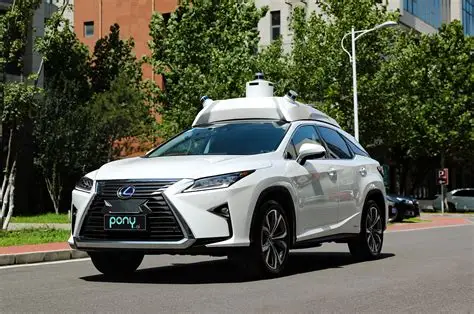
Independent autonomous driving companies in China are facing a crisis of confidence as capital markets shift focus from technological potential to profitability, a transition highlighted by the lackluster dual listings of industry leaders in Hong Kong. While global giants like Tesla Inc. accelerate their expansion, smaller players without the backing of massive parent conglomerates are grappling with collective anxiety over their survival in a capital-intensive sector.
Pony.ai and WeRide, two of the sector's most prominent startups, saw their shares break the issue price by over 9% on their debut in Hong Kong in November 2025. This sharp market decline signals deep investor skepticism regarding the valuations of standalone Robotaxi firms. The gloom was further compounded yesterday when Tesla launched its Robotaxi App across eight countries and regions including Hong Kong and Taiwan, intensifying the competitive pressure on Chinese startups that are still struggling to demonstate a viable commercial model.
The pressure to secure funding has strained industry alliances, culminating in a public dispute shortly before the companies listed. In late October, WeRide publicly accused Pony.ai of fabricating data in its roadshow materials to mislead investors, shattering the facade of "friendly competition." Analysts suggest this conflict underscores the desperation within the sector to seize limited liquidity as the window for financing narrows and financial losses continue to widen.
Despite projections of declining hardware costs, these companies face a harsh reality check. The era of raising billions based on "stories" and technological promises has ended, replaced by a demand for operational metrics and cash flow. As investors scrutinize their inability to generate sustainable revenue from ride-hailing operations, the "Robo" capabilities of these firms are being overshadowed by their lack of "Taxi" business acumen.
Fractured Alliances and Public Disputes
The inherent instability of the sector was laid bare on October 30, just days before the companies’ Hong Kong listings. WeRide CFO Li Xuan publicly alleged that Pony.ai’s roadshow materials contained false data concerning operating regions and technical capabilities, accusing the rival firm of intentionally deceiving investors. This conflict marked a significant departure from the previously harmonious relationship between the two companies, who had appeared together at the Hong Kong Stock Exchange for their listing ceremonies on November 6.
This public "war of words" is symptomatic of a broader anxiety. Without the safety net of a major tech ecosystem or automotive parent company, independent firms are forced to compete aggressively for investor attention. The dispute highlighted the opacity of operational data in the Robotaxi sector, where firms are incentivized to present the most favorable metrics to justify valuations in a skeptical market.
From Narrative to Hard Numbers
The capital environment for autonomous driving has deteriorated significantly since the peak of 2021, when the industry saw 58 financing events totaling 24.2 billion yuan. In the current economic climate of 2025, investors have pivoted from valuing "team pedigree" and "technological narrative" to demanding tangible commercial progress.
Both companies have failed to inspire confidence with their recent financial performance. WeRide’s revenue has declined for three consecutive years from 2022 to 2024. In the first half of 2025 alone, WeRide reported a cumulative loss of approximately 6.6 billion yuan (US$916 million). Pony.ai has fared slightly better in revenue growth, yet it has accumulated losses of 4.58 billion yuan over three and a half years. The third-quarter 2025 financial reports show continued bleeding, with Pony.ai’s operating loss widening to US$69.7 million and WeRide incurring a loss of US$53.3 million in the same period.
The precipitous drop in their stock prices—falling more than 9% on their listing day in Hong Kong—reflects the market’s difficulty in identifying a clear winner. Analysts note that while the "long-term value" of the technology is recognized, the lack of a clear path to break-even is driving away long-term capital, leaving the stocks vulnerable to short-term speculative trading.
Tech-Rich but Operationally Poor
A fundamental disconnect exists between the companies' technological prowess ("Robo") and their operational capability ("Taxi"). Investors seeking the "Taxi"—or cash flow—component of the business are finding the startups lacking. Unlike Baidu’s Apollo Go, which operates as a comprehensive mobility service platform with over 8 million cumulative rides, independent startups rely heavily on B2B project orders rather than consumer service revenue.
Operational data illustrates this gap. As of October 2025, WeRide’s fleet consists of approximately 750 Robotaxis, while Pony.ai operates 961. Estimates suggest daily orders for WeRide hover around 15,000, while Pony.ai manages approximately 22,000. These figures pale in comparison to Apollo Go, which averages over 100,000 daily orders and is approaching break-even in valid individual cities.
Lacking their own ride-hailing user base, these startups depend on partnerships with traditional automakers for survival. Pony.ai has tied itself to Toyota and BAIC Group, while WeRide works with Nissan and GAC Group. However, industry experts warn that automakers are likely to reclaim control over intelligent driving software in the future, potentially squeezing the independent software vendors further.
Policy Remains the Key Variable
Despite the gloomy financial snapshot, the path to profitability is technically visible: cost reduction and scale. Pony.ai projects that the bill of materials (BOM) for its seventh-generation autonomous driving kit will drop by another 20% in 2026. As hardware costs approach parity with human labor costs, the unit economics of Robotaxis could theoretically turn positive.
However, achieving the necessary scale requires significant policy support. Analysts argue that technology is no longer the primary bottleneck; rather, regulatory approval for massive deployment is the critical factor. Until government policies allow for large-scale commercial operation across multiple cities to dilute costs, independent Robotaxi firms remain in a precarious position, burning cash while waiting for a commercial turning point that has yet to arrive.