
Chinese Snack Brands Push Global Expansion as Domestic Market Pressures Mount
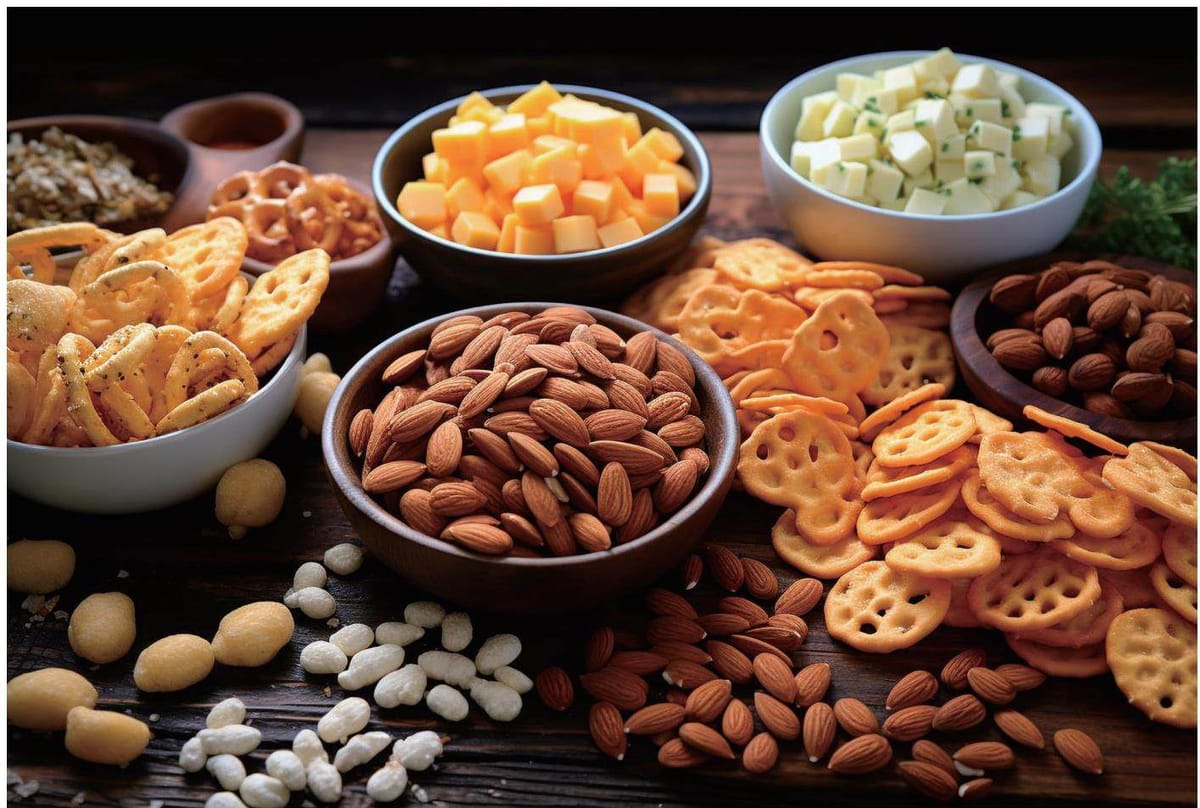
Chinese snack manufacturers are accelerating overseas expansion as intensifying domestic competition squeezes margins and growth at home. Brands ranging from seed producer Qiaqia Food to spicy snack maker Weilong are transforming from niche diaspora products into mainstream offerings on foreign shelves, though international operations remain a fraction of total revenue.
Financial results underscore the strategic pivot. In the first half of 2025, Qiaqia's domestic revenue fell 6.4% year-on-year while overseas sales climbed 13.18%. Weilong posted 54.4% international growth, far outpacing roughly 20% domestic expansion. Yanjin Shop Food, starting from a low base, recorded overseas revenue growth of 67,800% over the same period.
The push comes as discount bulk snack chains like Zhao Yiming and Haoxianglai capture market share with rock-bottom pricing, forcing established brands to seek growth beyond China's saturated retail landscape. Industry observers note that for many companies, failing to secure international footholds now could mean future obsolescence.
The transformation from diaspora comfort food to global consumer product marks a critical inflection point for China's snack industry, testing whether brands built on domestic scale can compete with entrenched international players.
From Passive Exports to Active Brand Building
Chinese snack exports began in earnest around 2000, when Qiaqia found its first overseas distributor—a Hong Kong agent who discovered the sunflower seeds at a diaspora event in Beijing. The company opened its first overseas office in Vietnam in 2008, but early efforts amounted to product sales through Chinese-owned supermarkets rather than genuine brand development.
The strategic shift came in 2015 when Qiaqia's board formally incorporated internationalization into its five-year plan. The company registered international trademarks including CHACHA and CHACHEER, and established a dedicated foreign trade division. Overseas revenue surged 48.58% in 2016, maintaining double-digit growth in most years since except 2022-2023.
A second wave emerged in 2018 as new retail snack brands like Three Squirrels and Bestore expanded internationally alongside traditional manufacturers facing domestic disruption.
Geographic strategies have diverged based on brand DNA. Qiaqia prioritizes offline retail, famously cracking the Thai 7-Eleven system—which holds 70% of the country's convenience market across 15,000 stores—through partnerships with local distributors and factory tours for procurement executives. Three Squirrels pursued e-commerce, launching over 100 SKUs on Lazada, Amazon, and JD.ID in 2018, later integrating offline distribution with TikTok and international social media marketing.
Niche Categories as Market Entry Wedge
Chinese brands face entrenched competition from PepsiCo, Mondelez, Nestlé, Calbee, and Morinaga in mainstream snack categories. Rather than frontal assault, companies are deploying distinctly Chinese products—spicy latiao strips, konjac snacks, roasted seeds, and quail eggs—to establish beachheads in uncontested categories.
Weilong demonstrates the potential. According to TikTok analytics platform FastMoss, its 106-gram classic gluten snack sold over 5,100 units in Italy in 28 days, generating €8,400, claiming top spots in both food sales and volume rankings. The product commands significant premiums—€1.62 per pack on TikTok and €1.50 in physical stores, compared to RMB 5-7 domestically.
Localization extends beyond distribution. Weilong offers mild versions in Italy where spice tolerance is lower, wasabi flavors in Japan, and lemongrass variants plus durian-flavored latiao in Southeast Asia.
Regulatory compliance presents steeper challenges. Indonesia limits preservatives to below 0.1%, and Chinese products have failed inspections for potassium sorbate exceeding limits by 1.8 times. Since October 2024, Indonesia mandates halal certification for all imported food, with penalties including customs seizures and administrative sanctions. European markets demand comprehensive allergen warnings, nutritional panels, and multilingual labeling.
Such requirements underscore that sustainable growth requires deep local market understanding beyond viral product launches.
Supply Chain Localization Replaces Channel Dependency
Leading brands are shifting from distribution partnerships toward capital-intensive local manufacturing. In January 2025, Yanjin Shop established a Vietnamese subsidiary; in February, the company announced a RMB 220 million ($30.3 million) investment in a Thai production base. The Bangkok Post characterized the move as Chinese snack companies transitioning "from product exports to industrial chain exports."
Qiaqia pioneered this approach with a RMB 500 million (US$ 68.9million) sunflower seed factory in Thailand that began operations in 2019—the first overseas facility for a Chinese seed snack manufacturer in Southeast Asia. Phase two added nut processing lines, launching localized products like coconut−flavored seeds that generated RMB 10 million(US$ 1.38 million) in sales within three months.
Yanjin Shop has built seven fresh fruit processing plants across Cambodia, Thailand, and Vietnam since opening its first mango facility in Cambodia in 2018, handling mangoes, durians, and other tropical fruits.
Local production reduces logistics costs, enables rapid market response, and creates synergies with domestic facilities. Financial performance validates the strategy: Qiaqia's overseas revenue reached RMB 278 million ($38.3 million) in the first half of 2025, representing 10.1% of total revenue with gross margins 8.7 percentage points above domestic operations—the highest scale among industry peers.
The asset-heavy model signals long-term brand commitment over quick profits, though transforming Chinese snacks into household names on par with Oreos remains a multi-year endeavor. From placing seeds and spicy strips on foreign shelves to channel-based localization and finally supply chain integration, the progression marks measurable progress in Chinese brand globalization.