
Chagee Tops 7,000 Stores as Same-Store Sales Test Its Expansion
Chagee's Q2 2025 results show rapid overseas growth alongside weaker same-store sales. CBI examines the figures, profit adjustments and expansion risks.
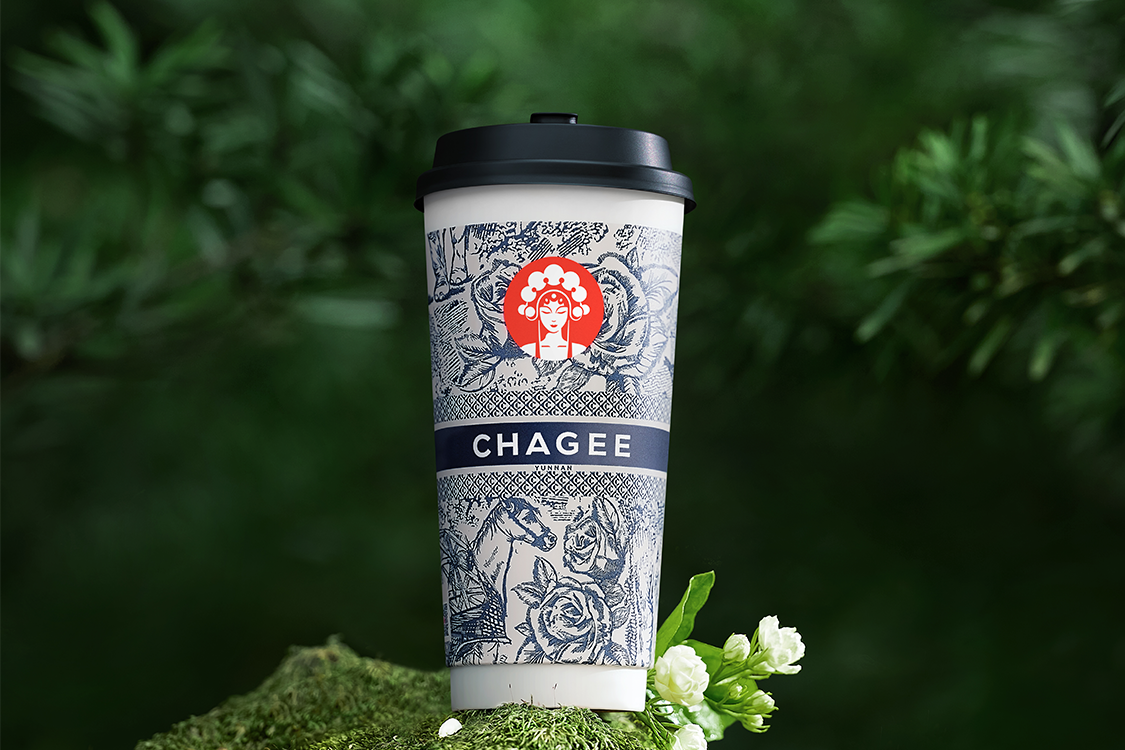
Editorial update: November 12, 2026. This revised analysis retains its original September 4, 2025 publication date and examines information available at that time.
Chagee Holdings Limited passed 7,000 teahouses in the second quarter of 2025, but its expansion raised a question that the store count alone cannot answer: were existing outlets becoming more productive?
The company's August 29 earnings release reported 7,038 teahouses and quarterly gross merchandise value, or GMV, of RMB8.1031 billion, up 15.5% year on year. At the same time, global same-store GMV fell 23.0%. More locations were supporting aggregate sales while established locations faced pressure.
Overseas growth is rapid, but starts from a small base
Overseas GMV reached RMB235.2 million, up 77.4% year on year. CBI calculates that this represented approximately 2.9% of global GMV: RMB235.2 million divided by RMB8,103.1 million. This is a share of merchandise sales, not of Chagee's reported revenue or profit.
That distinction changes how the international story should be read. A fast-growing small business can provide a promising expansion route without yet being large enough to determine the group's results. The overseas growth rate should therefore be read alongside its absolute contribution, rather than used alone as evidence that the company has diversified away from its core market.
Management's second-quarter earnings-call transcript records 52 net overseas additions during the first half, taking the overseas network to 208 stores by June 30. Those are period-end figures, not a live store count. The transcript is hosted by Chagee and carries a third-party transcription disclaimer.
Opening demand and mature-store demand answer different questions
Indonesia offers a concrete example of the expansion model. In an April 11 announcement, local partner Erajaya described Chagee's first Indonesian store at PIK Avenue in Jakarta. The announcement identifies the partnership with PT Era Boga Nusantara, an Erajaya Food & Nourishment subsidiary.
A local partner can help a new entrant establish operations, but a store opening does not establish repeat demand or a profitable rollout. Launch queues and first-day sales are useful indications of interest; they are poor substitutes for comparable-store sales once the opening period has passed.
Chagee's own same-store measure covers teahouses operating for at least 13 months without material operational changes in either comparison period. It therefore addresses a different question from total network GMV. Neither measure should replace the other: expansion can lift total sales even when existing outlets are selling less.
Profitability needs both accounting measures
Second-quarter GAAP net income was RMB77.2 million, while adjusted net income was RMB629.8 million. The company's adjustment excludes share-based compensation. Its adjusted net margin nevertheless declined to 18.9% from 20.8% a year earlier. These figures and the reconciliation appear in the official results.
On the earnings call, management linked the quarter's elevated share-based compensation to awards vesting on the successful IPO. It also acknowledged pressure from delivery-platform subsidies and investment in overseas capabilities. The gap between GAAP and adjusted profit should not be presented as if it were entirely a deterioration in day-to-day trading.
Equally, a positive adjusted profit does not prove that avoiding aggressive discounting protected margins. Establishing that causal claim would require a meaningful comparison with what would have happened under another pricing strategy. The available results show profitability alongside pressure; they do not isolate the financial effect of the pricing decision.
What would demonstrate healthier expansion?
The company was also building its North American management team. Its results announcement names Emily Chang as Chief Commercial Officer for North America and Aaron Harris as Chief Development Officer. The appointments describe organizational investment, not evidence that the international network has already reached mature profitability.
For subsequent reporting, three questions matter more than another store milestone:
- Repeat demand: does same-store performance improve as new locations mature?
- Economics: can revenue growth support margins after the costs of staffing, marketing and international expansion?
- Contribution: does overseas growth become material to the group, rather than merely impressive in percentage terms?
These tests keep the expansion story measurable. Opening stores establishes reach. Sustained sales at existing stores and clearly explained earnings establish whether that reach is creating a stronger business.
Reporting method: This is desk analysis of the linked company disclosures and partner announcement, with calculations identified above. CBI did not independently audit the company's figures or conduct store-level fieldwork for this article.
Correction and revision, November 12, 2026: We corrected the company's English name and Emily Chang's title, removed an inconsistent U.S. team-building timeline and details whose original sources could not be verified, and added same-store performance, profit reconciliation and overseas GMV context. The earlier suggestion that the pricing strategy protected profitability has been replaced with a qualified assessment.
Subsequent coverage: Chagee's third-quarter 2025 results and its first-quarter 2026 rebound. These later articles are separate from the historical analysis above.