
CXMT Hits STAR Market, Pricing Discipline Signals Rare Restraint in China's Chip Race
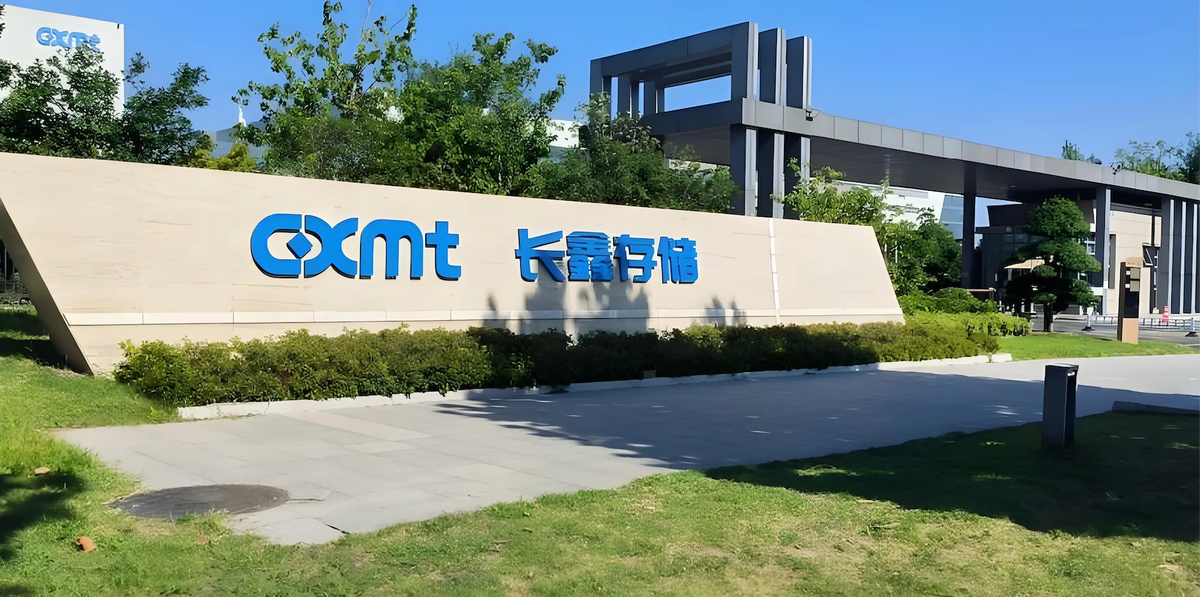
ChangXin Memory Technologies, China's dominant DRAM manufacturer and the world's fourth-largest memory chipmaker, makes its public market debut on Shanghai's STAR Market on July 27 at a valuation that analysts say deliberately leaves money on the table — a calculated signal of stability in a sector rattled by AI-cycle anxiety.
The company priced its initial public offering at RMB 8.66 per share on July 14, following institutional bookbuilding, assigning a total post-listing market capitalization of approximately RMB 579.2 billion (US$80.4 billion) based on 66.88 billion shares sold in the primary offering — before exercise of a greenshoe option. If the stabilization mechanism is fully activated, total shares issued rise to 76.91 billion. China International Capital Corporation (CICC) acts as joint lead underwriter and holds authority under the greenshoe to purchase shares in the open market at or below the issue price for 30 calendar days post-listing, deploying up to 15% of the initial offering size.
The timing is far from straightforward. Since early July 2026, semiconductor and memory equities globally have entered a corrective phase, and the narrative underpinning the trade — that AI infrastructure spending would sustain indefinitely elevated memory prices — is fraying at the edges. Six of the U.S. "Magnificent Seven" technology companies underperformed the Nasdaq Composite in the first half of 2026, with Microsoft and Meta Platforms posting share-price declines exceeding 23% and 14%, respectively, according to market data cited by industry participants. The question driving institutional positioning has shifted, in the words of multiple buy-side desks, from whether AI capital expenditure will peak to when.
Financials Outrun Expectations, But Structural Gaps Demand Scrutiny
ChangXin Memory's first-quarter 2026 revenue reached RMB 50.8 billion (US$7.06 billion), with non-recurring adjusted net profit surpassing RMB 26.3 billion (US$3.65 billion) — year-on-year growth of 719% and 1,993%, respectively. The company guided for first-half 2026 net profit attributable to parent shareholders of RMB 50 billion to RMB 57 billion (US$6.94 billion–US$7.92 billion), exceeding prior consensus estimates.
Those headline numbers, however, sit alongside a structural reality that informed investors cannot ignore. ChangXin Memory holds less than 8% of global DRAM market share. Micron Technology, ranked third globally, commands roughly 22%. More critically, the defining product of the current AI hardware cycle — High Bandwidth Memory (HBM) — remains dominated by SK Hynix and Samsung Electronics, with Micron accelerating its own HBM ramp via a US$9.3 billion fab under construction in Hiroshima. ChangXin has not yet disclosed a competitive HBM roadmap at volume scale.
On valuation, the IPO price implies a price-to-book ratio of approximately 3x and a price-to-earnings ratio of roughly 5x against 2026 estimated earnings — both landing below the midpoint of the range commanded by Samsung, SK Hynix, and Micron, whose forward PB multiples range from 2x to 6x and forward PE multiples from 5x to 8x, based on mid-July 2026 pricing. One senior investment banker described the positioning as intentional: "Even within a prolonged upcycle, a stock cannot rationally price in the full growth thesis at listing. Doing so leaves no room for the market to function."
Supply Expansion Threatens to Extinguish the Memory Price Premium
The supply side is where the cycle argument becomes most acute. SK Hynix raised US$26.5 billion in its recent U.S. listing, with proceeds directed entirely toward capacity — covering the Yongin wafer complex, Cheongju advanced packaging lines, and a new packaging facility in Indiana. Samsung has accelerated the first fab at its Yongin campus by one to two years and is in final review for a new packaging base in Gwangju, its first in 35 years. Micron's fiscal 2026 capital expenditure stands at US$27 billion, a year-on-year increase exceeding 70%.
History is unambiguous on the consequence: memory industries have repeatedly cycled through the sequence of price appreciation, margin expansion, capacity investment, oversupply, and price collapse — with peak-to-trough price moves of several multiples. A greenfield memory fab requires US$10 billion or more in capital and two to three years from equipment procurement through stable high-yield production. The lag between today's investment decisions and tomorrow's supply glut is baked in.
Micron's reported gross margin of approximately 85% in recent quarters is the metric most exposed to this dynamic. Whether that figure is sustainable as new wafer capacity comes online across three continents is, in the view of several sector analysts, an open question that the market has not yet fully priced.
STAR Market Stakes Its Claim on Hard Technology Credibility
For China's capital markets, the listing carries significance beyond the company itself. ChangXin Memory represents the most prominent "hard technology" listing on the STAR Market since the board's inception, and its debut comes as Beijing continues to use equity markets as a strategic instrument in the semiconductor self-sufficiency drive. The greenshoe structure, moderate valuation anchor, and institutional messaging around "patient capital" all point to a deliberate effort to avoid the volatility that has undermined confidence in prior high-profile technology listings.
Market participants broadly characterized the RMB 8.66 pricing as a long-termist equilibrium — one that reflects the company's current development stage relative to global peers while preserving upside optionality as ChangXin narrows the technology gap. Whether the stock holds that discipline on its first trading day, July 27, will be the market's first real verdict.
Related Coverage: