
CXMT’s LPDDR6 Matches Samsung Speeds as Xiaomi Takes It Into Production
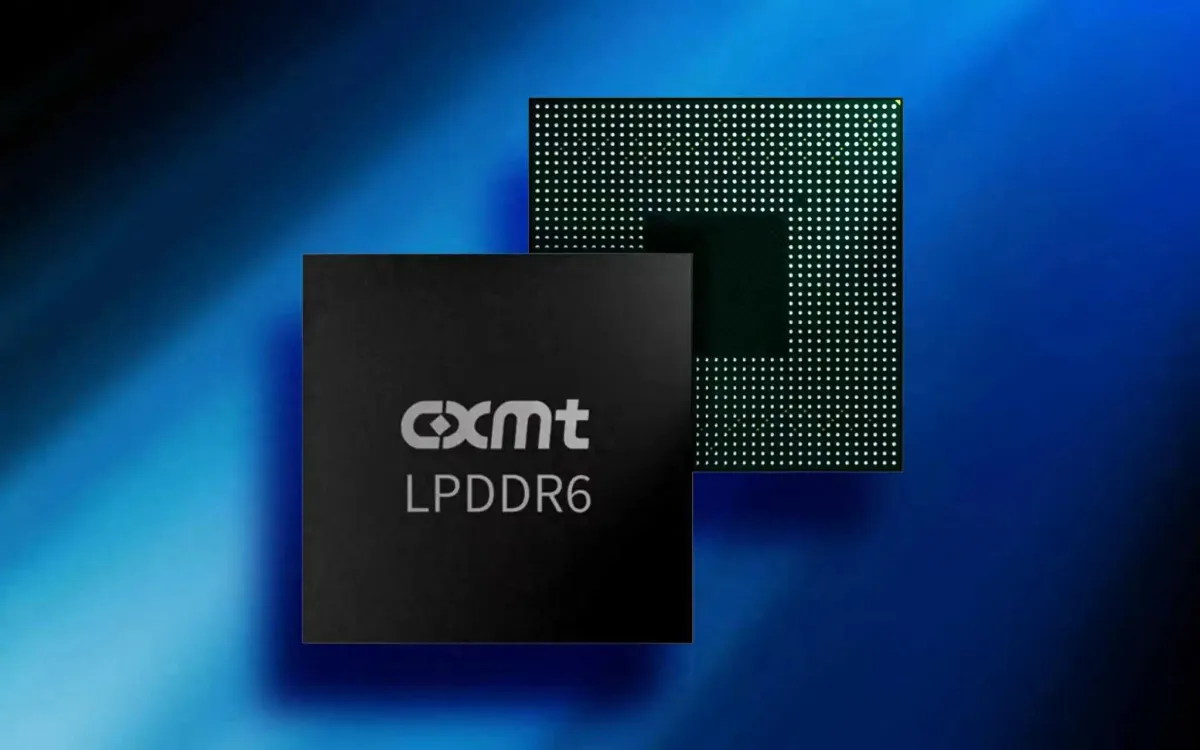
ChangXin Memory Technologies delivers a landmark first: a domestically produced LPDDR6 chip matching Samsung's peak transfer rate, entering mass production through an exclusive partnership with Xiaomi that signals a structural shift in China's semiconductor supply chain.
The milestone was confirmed on August 29, 2026, when Xiaomi founder Lei Jun publicly congratulated ChangXin Memory Technologies (CXMT) on achieving LPDDR6 mass production, simultaneously announcing that Xiaomi's proprietary Xuanjie O3 system-on-chip would become the world's first SoC to support the LPDDR6 standard—with the Xiaomi 18 Fold serving as the global launch vehicle. The device is scheduled to reach consumers in September 2026.
The announcement crystallizes what industry observers had suspected since the Xuanjie O3's specification sheet first circulated: CXMT had quietly become the memory partner behind China's most technically ambitious mobile processor. For investors tracking China's semiconductor self-sufficiency trajectory, the confirmation removes a critical uncertainty—domestic DRAM is no longer a generation behind at the high end.
CXMT's LPDDR6 Reaches Parity With Samsung on Peak Transfer Speed
The core technical claim demands scrutiny, and the numbers hold up. CXMT's first-generation LPDDR6 chip delivers a peak transfer rate of 12,800 Mbps—identical to the figure Samsung Electronics publicly cites for its own consumer-grade LPDDR6 production. Operating in tandem with the Xuanjie O3 SoC, the baseline working frequency runs at 10,667 Mbps.
The chip ships in a single-die capacity of 16GB, using a 1,295-ball POP (Package-on-Package) stacking configuration. Memory bandwidth on the Xuanjie O3 reaches 113.8 GB/s via a 4×24-bit dual-channel architecture—a 48% improvement over the preceding Xuanjie O1. CXMT disclosed these figures in its most recent semi-annual report, where it also confirmed that samples had been dispatched to key customers as early as March 2026, with mass production ramp-up now accelerating.
The gap that remains is capacity density. Samsung's LPDDR6 currently scales to 32GB per die, enabling 64GB smartphone configurations via dual-die stacking. CXMT's 16GB per-die ceiling means it cannot yet match Samsung at the extreme high end of memory configurations. Yield optimization and further capacity iterations represent the next phase of execution risk for CXMT's engineering teams.
Xuanjie O3 Architecture Validates the Memory Pairing
The Xuanjie O3 itself provides critical context for why LPDDR6 adoption is commercially credible rather than merely symbolic. Fabricated on a 3-nanometer process node, the SoC deploys a 10-core all-big-core CPU architecture alongside a 16-core G2-Ultra GPU. AnTuTu benchmark scores exceeded 5.22 million—making it the first domestically designed mobile SoC to break the 5 million threshold, according to AnTuTu Laboratory data.
The Xiaomi 18 Fold's wide-aspect-ratio foldable display, multi-window parallel processing, and on-device large language model inference collectively place extreme demands on memory bandwidth and read/write latency. The CXMT LPDDR6 pairing directly addresses the data throughput bottleneck that has historically constrained large-screen AI workloads on mobile devices.
Supply Chain Significance Extends Beyond Xiaomi
CXMT's strategic signaling extends beyond technical specifications. The company's newly launched official Weibo account—its first public social media presence—chose Xiaomi's official handset account as its first follow, a detail that functions as a public endorsement of the partnership in China's tech media ecosystem.
More substantively, CXMT's DRAM products have already penetrated the supply chains of Honor, OPPO, and Vivo — China's three other major Android OEM groups. This breadth of customer engagement suggests CXMT is not reliant on a single design win; the Xiaomi 18 Fold launch serves as a flagship proof point for a supply chain diversification story that is already unfolding across multiple tier-one brands.
CXMT's own characterization in its semi-annual filing is measured but pointed: this marks the first time a domestic DRAM producer has entered a new-generation mobile memory standard within the same commercial time window as the global market leaders. That framing—parity in timing, not just performance—is the metric that matters most for China's semiconductor policy objectives and for the procurement decisions of domestic OEMs seeking to reduce exposure to foreign memory suppliers.
Investors Should Watch Yield Ramp and Capacity Expansion
The transition from sample validation to high-volume manufacturing remains the execution challenge that will determine whether this milestone translates into meaningful revenue and margin contribution for CXMT. Yield rates at advanced DRAM nodes are notoriously difficult to optimize at scale, and CXMT has not publicly disclosed production volume targets or cost-per-bit trajectories for its LPDDR6 line.
Samsung and SK Hynix retain commanding advantages in manufacturing scale, process maturity, and customer qualification depth across global OEM supply chains. CXMT's path to displacing imported DRAM in China's premium smartphone segment will be measured in quarters, not months. However, the Xiaomi 18 Fold launch provides a commercially validated reference design that significantly lowers the qualification barrier for subsequent OEM adoption cycles.
For the broader China semiconductor supply chain, the CXMT-Xiaomi pairing represents a convergence of two domestic technology programs—advanced mobile SoC design and next-generation DRAM production—that were, until this announcement, progressing largely in parallel. Their intersection in a flagship commercial product marks a qualitative shift in China's ability to field a vertically integrated, domestically sourced premium smartphone platform.
Related Coverage:
CXMT Erases a Decade of Losses as Q2 Revenue Beats Estimates by 54%