
DeepRoute.AI Achieves Record 30,000 Monthly Vehicle Deliveries in September
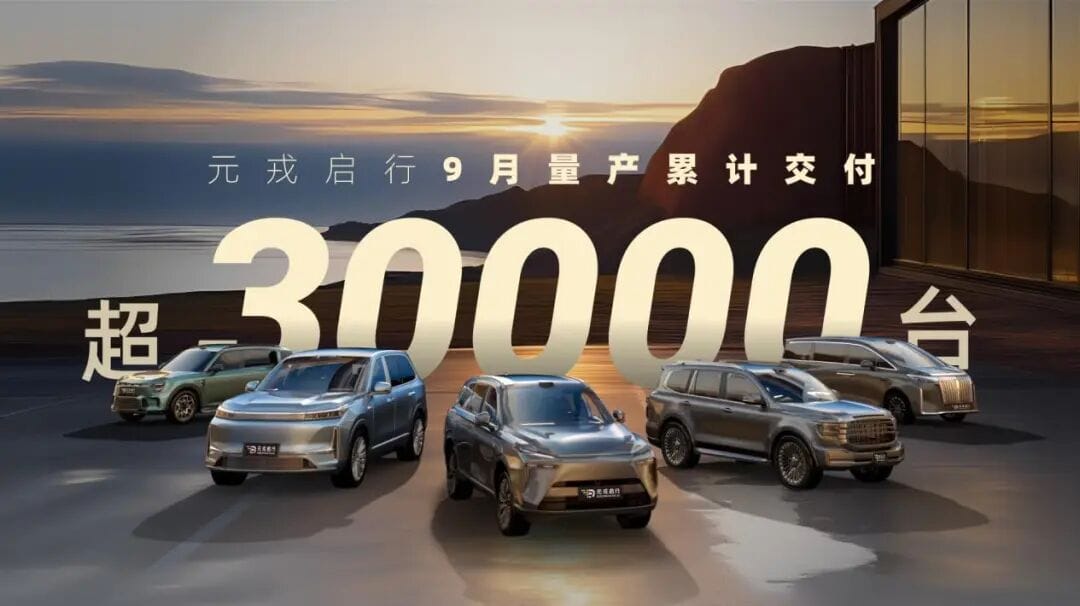
DeepRoute.AI reached a milestone in September 2025, with monthly deliveries of vehicles equipped with its autonomous driving technology surpassing 30,000 units for the first time. This represents significant growth from June, when the company first broke the 10,000-unit monthly delivery threshold.
The artificial intelligence company has now delivered over 100,000 production vehicles featuring its urban navigation assistance systems across multiple vehicle categories including SUVs, MPVs, off-road vehicles, and sedans. DeepRoute.AI projects that nearly 200,000 vehicles equipped with its combined assisted driving solutions will enter the consumer market by the end of 2025.
The delivery figures demonstrate the market adaptability of DeepRoute.AI's platform solutions and establish a foundation for the commercial deployment of its Vision-Language-Action (VLA) model technology. Since its establishment, the company has focused on developing what it terms "general artificial intelligence for the physical world."
DeepRoute.AI recently launched its next-generation assisted driving platform, DeepRoute IO 2.0, which incorporates VLA model technology. This positions the company among the first AI enterprises to deploy VLA models in the autonomous driving sector.
The VLA model integrates three core capabilities: vision, language, and action. Unlike traditional end-to-end models, VLA technology features advanced chain-of-thought reasoning abilities that address the "black box" limitations of conventional systems. The model can connect and analyze information to establish causal relationships while leveraging integrated knowledge databases for enhanced generalization capabilities in complex real-world driving environments.
DeepRoute.AI plans to continue advancing VLA model technology and expanding its platform ecosystem. The company aims to explore additional mobile intelligent agent scenarios while accelerating the evolution from assisted driving toward what it calls "Road AGI" (Artificial General Intelligence), with the goal of delivering more accessible, safer, and smarter mobility experiences for global users.
The company's growth trajectory reflects the broader expansion of China's autonomous driving technology sector and increasing consumer adoption of advanced driver assistance systems.