
DeepSeek Weighs Embodied AI Foray as GPT-6 Forces Strategic Pivot
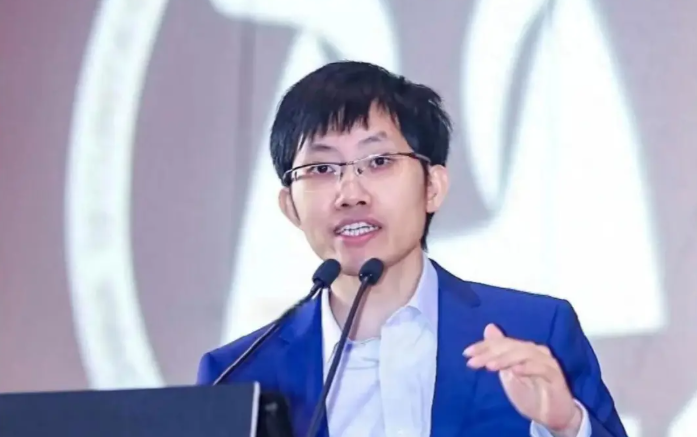
DeepSeek founder Liang Wenfeng is actively evaluating an expansion into embodied artificial intelligence, marking a critical strategic pivot from pure language models to physical-world AI applications.
The strategic reassessment, reported by Chinese tech outlet Phoenix Tech, comes as DeepSeek faces mounting pressure from OpenAI’s newly released GPT-6. Internal evaluations acknowledge a capability gap after GPT-6 Astra demonstrated a 95% success rate in robotic control tasks, significantly outperforming the 40% rate of legacy systems like Fable 5.1.
Industry analysts view this shift as a structural realignment in the 2026 global AGI race. Rather than competing solely on parameter scale and inference costs, Chinese foundational model developers are now scrambling to secure hardware integration capabilities, with rivals like Zhipu AI and Moonshot AI (Kimi) already accumulating reserves in the robotics sector.
GPT-6 Capabilities Force Strategic Realignment
For the past two years, the generative AI sector competed primarily on training efficiency and reasoning capabilities. However, a consensus is emerging in 2026 that models lacking spatial awareness and physical interaction cannot achieve Artificial General Intelligence (AGI).
According to sources familiar with Liang’s recent closed-door meetings with robotics founders, DeepSeek is confronting the limitations of text-only environments. While an LLM can generate the command to "pick up a cup," executing the task requires real-time processing of three-dimensional positioning, weight, and environmental feedback.
OpenAI’s aggressive push into this space extends beyond GPT-6. The US firm is reportedly training a standalone base model dedicated to embodied AI, viewing GPT-6's current physical capabilities merely as a baseline. Similarly, Google DeepMind and Tesla’s Optimus program are leveraging real-world production environments to train spatial models, forcing Chinese software-focused AI firms to adapt or risk obsolescence.
Capital Deployment Signals Ecosystem Building
DeepSeek is currently weighing two avenues for market entry: assembling an in-house robotics R&D team or establishing an ecosystem through strategic investments. Given the company's historical focus on algorithmic breakthroughs over commercial expansion, analysts suggest the investment route aligns closer to its corporate DNA.
Capital deployment is already underway. Prior to Unitree Robotics' IPO, Liang orchestrated a pre-IPO investment of RMB 141 million (US$19.58 million) into the company. Furthermore, DeepSeek has agreed to lead a multi-million dollar seed funding round for Winverse AI, a startup founded by former Tencent AI scientist Hu Han.
While Winverse focuses more on underlying infrastructure and model acceleration rather than pure robotics, the investment—made alongside Meituan’s Long-Z Investments at a projected post-money valuation of US$400 million—highlights DeepSeek's strategy to secure foundational layers of the embodied AI tech stack.
Physical Interaction Defines the 2026 AGI Battlefield
The pivot reflects a broader maturation of the Chinese AI industry. Startups such as Galbot and Xinghaitu are already pioneering the integration of AI models with motion control hardware.
For DeepSeek, the transition from a cloud-based "brain" to an autonomous agent capable of physical action is no longer optional. As the bottleneck for AGI shifts from compute power to proprietary physical-world data, DeepSeek’s ability to successfully bridge the gap between software and hardware will dictate its valuation and competitive standing in the next phase of the AI arms race.