
DJI Captures 64% of Japan's Video Camera Market in H1 2026
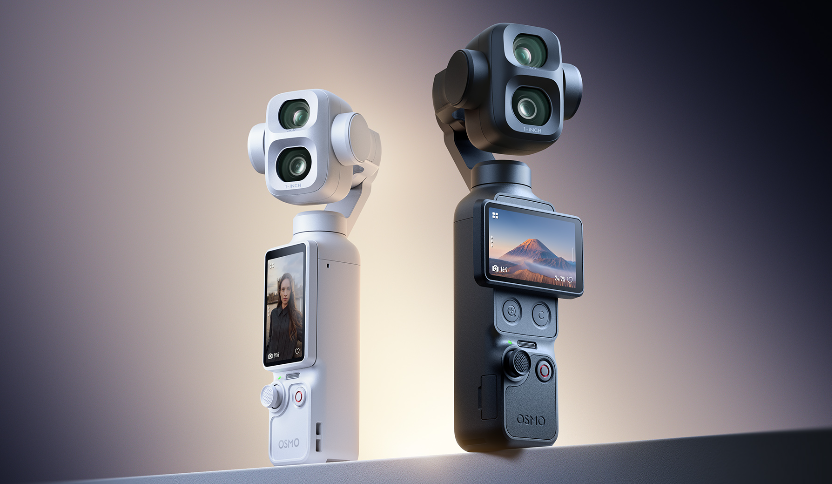
DJI has captured 64.3% of Japan's digital video camera market in the first half of 2026, cementing a three-year dominance that is fundamentally restructuring a sector historically monopolized by domestic legacy brands like Sony, Canon, and Nikon.
According to retail data provider BCN, nearly two out of every three digital video cameras sold in Japan today are manufactured by DJI. This concentration of market share indicates a critical turning point: consumer preference has decisively shifted away from traditional imaging conglomerates toward creator-focused, stabilization-first hardware. Maintaining the number-one position consecutively since 2024, DJI has proven that its traction in the highly insular Japanese electronics ecosystem is a structural trend rather than a cyclical anomaly.
The market reaction to recent product rollouts underscores the velocity of this transition. The April 2026 launch of the Pocket 4 series acted as a major demand catalyst, seizing 21.5% of the total market share within its first nine days of availability. This aggressive adoption curve propelled DJI’s single-month category share to an unprecedented 72.5% in April, an expansion rate rarely observed in Japan's brand-loyal retail landscape.
Dismantling Legacy Competitors Through Rapid Iteration
An analysis of BCN’s sales volume data illustrates the breadth of DJI's penetration. In the first half of 2026, the company occupied 10 of the top 15 best-selling digital video camera models. By June, DJI had completely swept the top eight positions across multiple form factors, including pocket gimbals, action cameras, and wearable devices.
Rather than cannibalizing its own hardware ecosystem, DJI is successfully driving dual-generation sales. The legacy Pocket 3 remains the absolute top seller by volume, while the newly introduced Pocket 4 series immediately captured premium demand. Together, these two generations account for approximately 30% of total market sales. This concurrent lifecycle management demonstrates that DJI is no longer reliant on single-product virality; it has established a durable upgrade cycle where existing users upgrade while entry-level buyers absorb discounted previous-generation inventory.
Cementing Institutional Consensus and Consumer Loyalty
Beyond raw shipment metrics, DJI has secured critical consensus from Japan's stringent consumer technology press. Mainstream industry evaluators have systematically validated the company's hardware superiority. GoodsPress named the Pocket series the "Best Vlog Camera of H1 2026," while testing-focused publication Kaden Hihyo awarded it the "Best Buy" designation. The Pocket 4 lineup also secured a cover feature and "Best Hit" recognition from GetNavi.
This institutional backing mirrors consumer sentiment on localized purchasing platforms. DJI's Pocket 4 ranks first on Mybest’s video camera popularity index, and the wider product family consistently dominates the trending charts on Kakaku, Japan's primary consumer tech aggregator. The company's expansion into adjacent categories is following a similar trajectory, with the Osmo 360 panoramic camera previously securing Kakaku’s "2025 Best Buy" award.
For global investors and supply chain observers, Japan serves as the ultimate litmus test for imaging hardware. By establishing an absolute majority market share through premium product execution rather than aggressive price discounting, DJI has effectively turned the most demanding consumer market into a foundational stronghold for its continued global hardware expansion.